
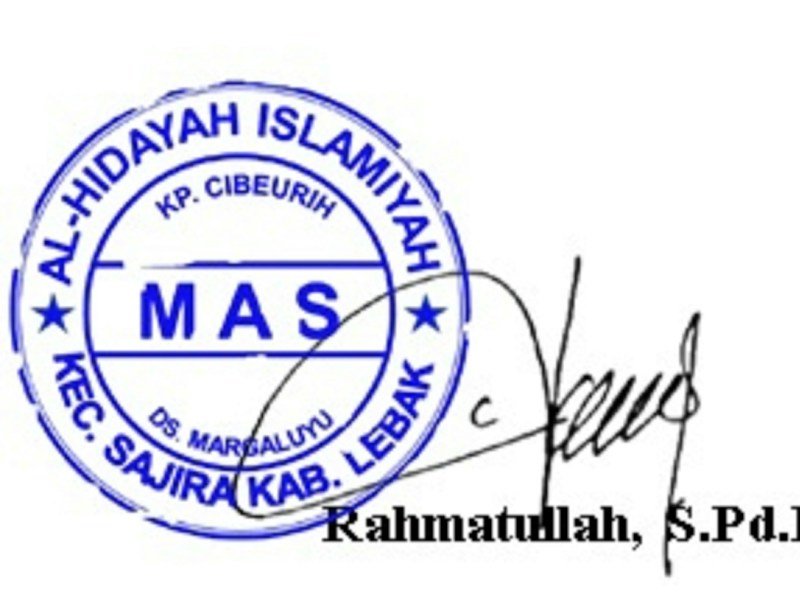
Short answer: No Singapore law requires a company to own or use a rubber stamp or company chop. Since 31 March 2017 even the common seal is optional under section 41A of the Companies Act 1967, and documents, including deeds, can be signed instead. A stamp remains a practical tool that some banks and overseas counterparties still expect.
A company stamp in Singapore is usually a self-inking rubber stamp, often called a company chop, that prints the company’s name and Unique Entity Number (UEN) onto a document. Many business owners assume it is a legal requirement, and many first-time directors are surprised to learn it is not. This guide explains what the company stamp is for, how it differs from the common seal, when someone may still ask you for one, what it should show, and how to stop it being misused.
Key facts at a glance
- No provision of the Companies Act 1967 requires a company to have a rubber stamp or company chop.
- Section 41A: a company may have a common seal but need not have one. It came into force on 31 March 2017 under the Companies (Amendment) Act 2017.
- Section 41B: a deed can be executed without a seal by a director and the secretary, by 2 directors, or by 1 director whose signature is attested by a witness.
- Section 41(4): a document needing authentication by a company may be signed by an authorised officer and need not be under its common seal.
- Section 144: the company name must appear on its seal (if any) and on invoices, receipts, cheques and other listed documents; the UEN must appear on business letters, statements of account, invoices, official notices and publications.
- Section 25B: a person dealing with a company in good faith need not check limits on the directors’ power to bind it, so a missing chop rarely gets a company out of a deal.
Raffles Corporate Services works with a panel of experienced Singapore law firms who offer cost-effective and efficient legal service and advice. This article is general information only and is not legal advice.
What is a company stamp in Singapore, and is it required?
A company stamp is an ink stamp that reproduces the company’s name and usually its UEN. It is not required by law: neither the Companies Act 1967 nor ACRA requires a Singapore company to buy, register or use one.
The habit comes from business practice rather than statute. In many Asian markets, a chop has long been the way a business shows that a document came from the company rather than from an individual. Singapore companies kept the custom because it is quick, it makes documents look official, and some counterparties are used to seeing it. Legally, though, what binds a Singapore company is the authority of the person acting for it and, for deeds, the signing formalities in the Act, not ink on paper.
The term also gets confused with two other things. A company stamp has nothing to do with stamp duty, which is a tax on certain documents paid to IRAS. It is also different from the common seal, which is an embossing device with a defined legal role, discussed next.
How does a company stamp differ from the common seal?
The common seal is recognised by the Companies Act as a way of executing documents; a rubber stamp is not. A seal impression, properly affixed and authorised, has legal effect. A chop impression is evidence of where a document came from, nothing more.
| Feature | Company stamp (chop) | Common seal |
|---|---|---|
| What it is | Ink or self-inking stamp | Metal embossing press that leaves a raised impression |
| Recognised by the Companies Act 1967? | No | Yes, sections 41, 41A to 41C, 123 and 124 |
| Compulsory? | No | No, optional since 31 March 2017 (section 41A) |
| Can it execute a deed on its own? | No | Yes, if affixed in the way the company’s constitution requires |
| Name requirement | None specific to stamps; the documents it is used on must comply with section 144 | Name must appear in legible romanised letters (section 144(1)(a)) |
| Typical uses | Invoices, delivery orders, bank and supplier forms, acknowledging receipt | Deeds, share certificates and formal instruments, where the company still keeps one |
For the full history and use of the seal, including the official seal for use abroad, see our guide to the common seal in Singapore companies. This article stays with the everyday rubber stamp.
How does a Singapore company sign documents without a stamp or seal?
By signature. A company acts through people with authority to act for it, and the Act tells you which signatures it needs for each kind of document.
- Ordinary written contracts can be signed by “any person acting under its authority, express or implied” (section 41(3)(b)).
- Documents that need authentication by the company can be signed by an authorised officer and need not be under seal (section 41(4)).
- Deeds can be executed without a seal under section 41B by a director and the secretary, by at least 2 directors, or by a director in the presence of a witness who attests the signature. A deed signed this way has the same effect as one executed under the common seal.
- Where any law requires a document to be under the common seal, section 41C treats a document signed in the section 41B manner as satisfying that requirement.
Section 123(2) still says share certificates must be under the common seal, but section 41C means a company without a seal can meet that requirement by section 41B signatures. Our article on execution of documents and section 41B walks through deeds, witnesses and signing blocks in detail.
When do banks, government agencies or overseas counterparties still ask for a chop?
Mostly when their own forms or internal procedures were designed around one. A request for a chop is a customer or counterparty requirement, not a legal one, so the practical question is whether it is easier to comply or to explain.
Situations where a stamp is still commonly requested include:
- Bank paperwork, such as account opening forms, mandate changes and some trade finance documents, where the bank’s form has a box for the company stamp next to the authorised signatures.
- Supplier and customer onboarding forms, delivery orders and goods received notes, where a chop is used to show that a business, not just an individual, acknowledged the document.
- Overseas counterparties and authorities, particularly in jurisdictions where a registered company chop carries legal weight under local law, who may not accept a signature alone without explanation.
- Documents going abroad for notarisation or legalisation, where the receiving authority sets its own format requirements.
If you do not have a stamp, you can usually satisfy the request with a board resolution or authorised signatory list, a covering letter citing sections 41A and 41(4), or, for documents used abroad, notarisation. Our guide to notarising and apostilling company documents for use abroad covers that route. For most small companies, though, a basic stamp costs little and saves repeated explanations.
What should a company stamp show?
At a minimum, the full registered company name, exactly as it appears on ACRA’s records, and the UEN. There is no prescribed design, but the stamp should help, not undermine, compliance with section 144.
Section 144(1) requires the company name, in legible romanised letters, on its seal (if any) and on business letters, statements of account, invoices, official notices, publications, cheques, orders, receipts and other listed documents. Section 144(1A) requires the UEN on business letters, statements of account, invoices, official notices and publications. If a stamp is how your name and UEN get onto a receipt or delivery order, it must therefore show both clearly. Our section 144 checklist for company name and UEN sets out which documents need what.
Practical points for the design:
- Use the full registered name, including “Pte. Ltd.” or “Pte Ltd”. A trading name or logo on its own is not enough.
- Add the UEN, labelled “UEN” or “Co. Reg. No.”.
- Consider a separate line for “Authorised Signature” so the stamp is used next to a signature rather than in place of one.
- Order a new stamp after any change of company name; the UEN stays the same.
- Avoid making the stamp look like a seal or an official mark of a government agency.
Is a contract binding if the chop is missing, or if someone misuses it?
Usually yes in the first case, and possibly yes in the second. A missing chop rarely invalidates a contract that an authorised person signed, and a chop applied by someone without authority does not automatically protect the company either.
Two rules point the same way. Under section 25B, a person dealing with the company in good faith is not bound to enquire about limits on the directors’ power to bind the company or authorise others, and is presumed to act in good faith unless the contrary is proved. Under the common law indoor management rule, an outsider may assume that the company’s internal steps, such as a board approval, were properly taken. Section 25A adds that no one is treated as knowing the contents of the constitution merely because it is filed with ACRA. Our article on the indoor management rule and why a company can be bound without a chop explains how these rules work in a dispute.
The flip side is that a stamp in the wrong hands can help a dishonest employee or outsider create documents that look genuine. Whether the company is bound will depend on authority and the facts, and if a dispute arises, it is worth taking time to speak to a lawyer early.
How should you control the company stamp to prevent misuse and fraud?
Treat the stamp like a cheque book: keep it secure, limit who can use it, and never let it stand in for a signature. A short written procedure, approved by the board, is enough for most small companies.
- Decide by board resolution who may keep the stamp and who may use it, and record this in the minutes.
- Store it in a locked drawer or safe, not on an open desk or at a shared reception counter.
- Require a signature from an authorised signatory on every document that is stamped; never pre-stamp blank letterheads, forms or cheques.
- For higher-value documents, keep a simple log of the date, document and signatory each time the stamp is used.
- Give your bank and key counterparties an authorised signatory list, and tell them that a stamp without an authorised signature should not be accepted.
- Retrieve the stamp immediately when the custodian leaves, and order a new stamp with a different design if one goes missing.
- Review the procedure whenever directors or signatories change, as part of the company’s wider internal controls.
Officers should also know that section 144(2)(a) makes it an offence to use or authorise the use of any seal purporting to be the company’s seal if the company name does not appear on it.
Frequently asked questions
Do I need a company stamp to incorporate a company in Singapore?
No. Nothing in the Companies Act 1967 makes a stamp or a seal a condition of incorporation. You can decide later whether a stamp is useful for your business.
Is a document invalid if it is stamped but not signed?
A stamp on its own does not show who acted for the company or whether they had authority. Always pair the stamp with the signature of an authorised person; for deeds, follow section 41B.
Can a company stamp replace the common seal?
No. A rubber stamp has no status under the Companies Act. A company without a seal relies on signatures under sections 41(3), 41(4), 41B and 41C instead.
Does a company stamp have to show the UEN?
The law does not regulate the stamp itself, but if the stamp is how your company’s details appear on invoices, letters or official notices, section 144(1A) requires the UEN to appear on those documents.
What should I do if the company stamp is lost or stolen?
Record the loss, tell your bank and key counterparties that documents bearing the old stamp should not be relied on without an authorised signature, and order a replacement that looks noticeably different.
Primary sources: sections 41 to 41C of the Companies Act 1967, section 144 of the Companies Act 1967 and the Companies (Amendment) Act 2017 (Commencement) Notification 2017. For filing deadlines and other checks, see our free tools.
Need help with this?
Raffles Corporate Services can handle the ACRA filings, compliance documentation and records for you, and where court proceedings or legal advice are needed, we work with a panel of experienced Singapore law firms who offer cost-effective and efficient legal service and advice.
Email: [email protected]
Call, SMS or WhatsApp: +65 8501 7133
Last reviewed: 6 November 2026. The Editorial Team, Raffles Corporate Services.