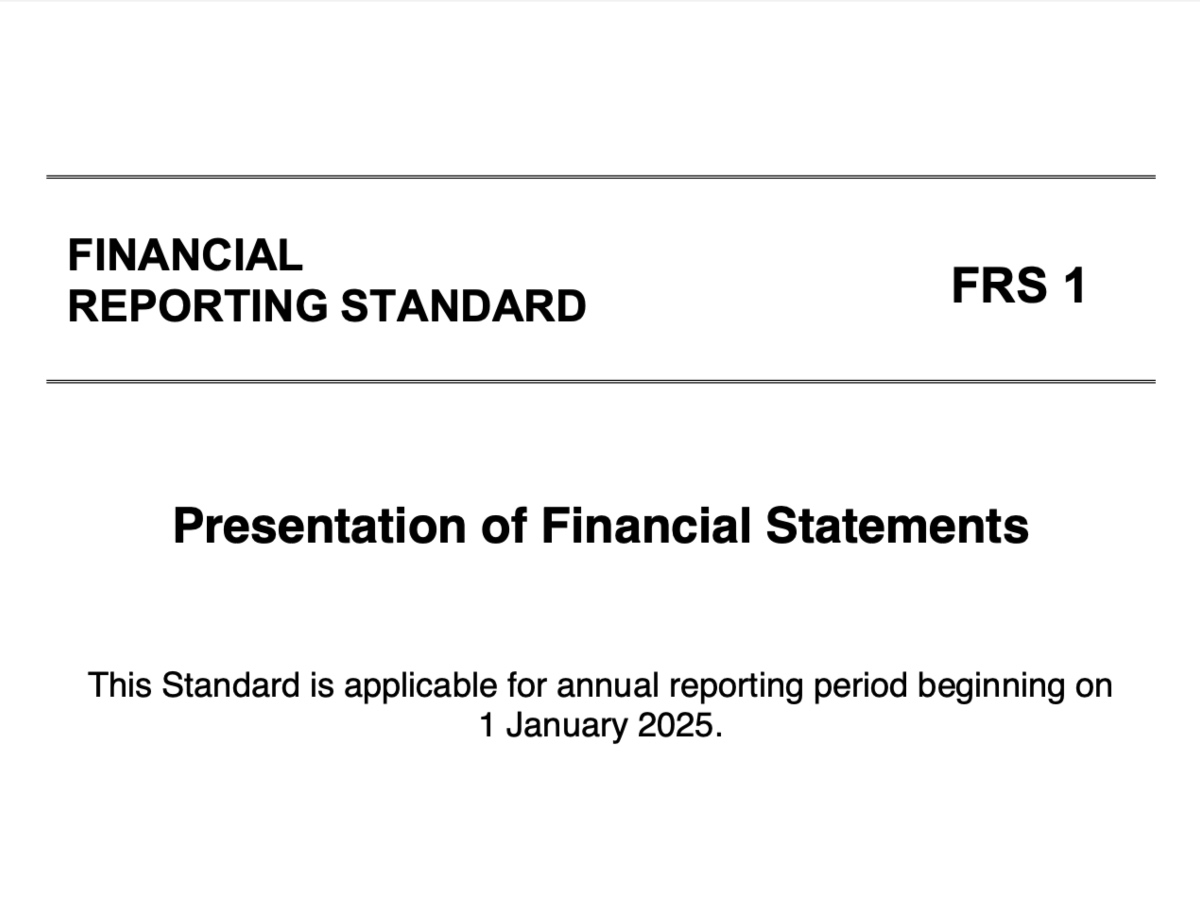
As a business owner, you juggle countless responsibilities, from product development and marketing to customer service and team management. Amidst this whirlwind of activity, the crucial task of financial management can sometimes feel overwhelming. However, understanding and adhering to Singapore’s Financial Reporting Standards (FRS) is not just a regulatory hurdle; it’s a cornerstone of sustainable business success. This guide will demystify FRS, explain its importance, and provide actionable steps to ensure your company’s financial health and compliance.
Why FRS Compliance is Non-Negotiable for Your Business
Think of Financial Reporting Standards as the common language of business. They are a set of accounting principles that govern how companies in Singapore prepare and present their financial statements. The primary goal is to ensure that the information is transparent, comparable, and provides a “true and fair view” of your company’s financial position and performance. For small and medium-sized enterprises (SMEs), Singapore offers a simplified framework known as SFRS for Small Entities, which lessens the reporting burden while maintaining high standards. Adherence to these standards is critical for several compelling reasons.
Firstly, it is a matter of legal and regulatory compliance. The Singapore Companies Act mandates that all financial statements must comply with the FRS. Failure to do so can result in serious consequences, including penalties from the Accounting and Corporate Regulatory Authority (ACRA) and, in severe cases, legal action against the company’s directors. Beyond avoiding penalties, compliant financial statements are essential for building trust and credibility with stakeholders. Whether you are seeking a bank loan, attracting investors, or filing your corporate taxes with the Inland Revenue Authority of Singapore (IRAS), a clean and compliant set of financials is your passport to progress.
The Bedrock of Compliance: Meticulous Record-Keeping
The journey to FRS compliance begins with a fundamental business practice: maintaining comprehensive and accurate accounting records. This is not merely about keeping receipts in a shoebox. It is about systematically documenting every transaction that flows through your company. Under the Companies Act, you are legally required to keep records that sufficiently explain your business’s transactions and financial standing. These records must be retained for at least five years from the end of the financial year in which the transactions occurred.
To ensure your record-keeping is up to par, embrace best practices from the outset. Utilise modern accounting software to streamline the process, automate entries, and reduce the risk of human error. This will also make it easier to generate the necessary reports when the time comes. It is vital to separate your personal and business finances to maintain clarity and accuracy. Regularly reconcile your bank statements with your accounting records to catch any discrepancies early. By cultivating a habit of diligent record-keeping, you not only lay the groundwork for seamless FRS compliance but also gain invaluable real-time insights into your business’s performance.
From Records to Reports: Preparing Your Financial Statements
With your records in order, the next step is the annual preparation and presentation of your financial statements. For most companies in Singapore, this includes a Statement of Financial Position (Balance Sheet), a Statement of Comprehensive Income (Profit and Loss Statement), a Statement of Changes in Equity, and a Cash Flow Statement. These documents must be presented to shareholders at your company’s Annual General Meeting (AGM).
As a director, you are ultimately responsible for ensuring these statements present a true and fair view of the company. This is formally declared in the Directors’ Statement, which must accompany the financial statements. This statement also confirms that there are reasonable grounds to believe the company can pay its debts as they fall due. To navigate this process confidently, it’s wise to engage professional help. An experienced accountant can ensure your statements are prepared accurately and in accordance with the relevant FRS, whether you qualify for the simplified framework for small entities or need to adhere to the full standards.
The Crucial Role of Your Company Secretary and Auditors
You don’t have to navigate the complexities of FRS compliance alone. Your Company Secretary plays a pivotal role in ensuring good corporate governance and regulatory adherence. They are responsible for maintaining statutory registers, lodging necessary documents with ACRA. They also ensure that board meetings and AGMs are conducted in accordance with the law. Their expertise is invaluable in keeping your company on the right side of its compliance obligations, including those related to financial reporting.
Furthermore, unless your company is exempt from audit, you will need to appoint an independent auditor. The auditor’s role is to provide an external and objective opinion on whether your financial statements are free from material misstatement and comply with the FRS. A clean audit report is a powerful endorsement of your company’s financial integrity. By working closely with your Company Secretary and auditors, you can build a robust framework for financial governance. This will support your business’s long-term growth and stability.
Ready to take control of your company’s financial compliance and unlock its full potential? Our team of experts at Raffles Corporate Services is here to help. From professional accounting and bookkeeping to company secretarial services, we provide the support you need to navigate Singapore’s regulatory landscape with confidence.
Contact us today at [email protected] to learn more about how we can assist you.
Yours sincerely,
The editorial team at Raffles Corporate Services