
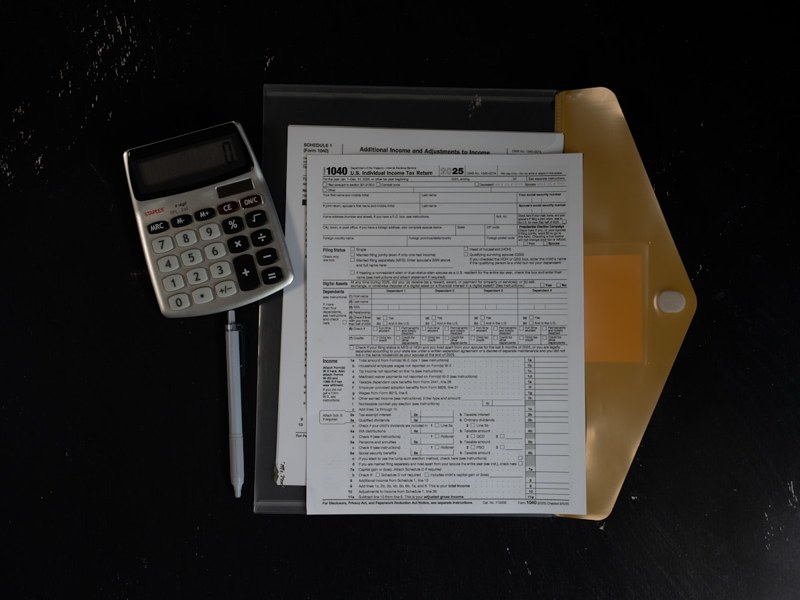
If your company’s first accounts cover 18 months, do not assume those accounts represent only one Year of Assessment. Map the accounting period to the relevant tax basis periods before calculating the start-up tax exemption or preparing the returns.
Raffles Corporate Services works with a panel of experienced Singapore law firms who offer cost-effective and efficient legal service and advice. This article is general information only and is not legal advice.
IRAS’s basic corporate tax guide explains that a basis period generally cannot exceed 12 months. A long first set of accounts therefore needs profits or losses attributed to two YAs.
Start with incorporation and the actual year-end
Collect the incorporation date, financial year-end and first accounts’ opening and closing dates. Confirm whether any year-end change occurred. Use these facts to prepare the YA schedule rather than counting three sets of financial statements.
The statutory accounts and tax computation should reconcile, but they do not always cover identical periods. Make that difference visible to the director approving the returns.
Example: incorporation in July and a December close
A company incorporated on 1 July 2025 closes its first accounts on 31 December 2026. Following the approach in IRAS’s guide, the first period is split into 1 July to 31 December 2025 for YA2026 and the 2026 calendar year for YA2027. Its third consecutive YA is YA2028, rather than the year of its third set of accounts.
Attribute the income and expenses
Use the actual transaction dates to identify the income earned and expenditure incurred in each period. IRAS permits time apportionment where direct identification cannot be made. Keep the basis and calculations rather than dividing every figure in half for convenience.
- Identify income and expenses attributable to each period.
- Document any time-apportioned amounts and method.
- Reconcile the combined figures to the accounts.
- Assess tax adjustments within the appropriate computation.
Transactions occurring late in the long period can materially change the split. A business that only began earning revenue in its second segment should not assume the income was earned evenly throughout.
Check the exemption window and eligibility separately
The start-up tax exemption rules apply to qualifying companies for their first three consecutive YAs. A loss-making or no-income YA still counts in that window. The company cannot save that year for later simply because it obtained no tax benefit.
Confirm the scheme’s qualifying conditions as a separate review. Being recently incorporated and having a long first period do not alone establish eligibility. Ownership, residence and business activity can matter under the actual rules.
Prepare a filing schedule for each relevant YA
Give the tax preparer the basis-period table, attributed accounts figures and exemption assessment. Check the applicable filing requirements and deadlines for the particular facts through the current official guidance. Do not assume receiving one notification means another relevant YA can be ignored.
Preserve the computation and filing acknowledgement for each YA. A combined management spreadsheet should not obscure which return was actually submitted.
Can SUTE last for three accounting periods?
The window is based on the first three consecutive YAs, subject to qualification. Accounting periods and YAs are not interchangeable.
Should every amount be apportioned by days?
Use direct identification where available, following the official approach. Explain any time apportionment where it is necessary.
Further company tax and accounting resources
Explore our corporate tax filing guide, bookkeeping error checks and related-party transaction guidance.
Get help reviewing the tax file
For company accounting or tax advice, email Raffles Corporate Services at [email protected] or WhatsApp +65 8501 7133. Our accounting team and tax advisers can review your circumstances. Where contractual or other legal advice is needed, advisers from our associated law firms can assist.