
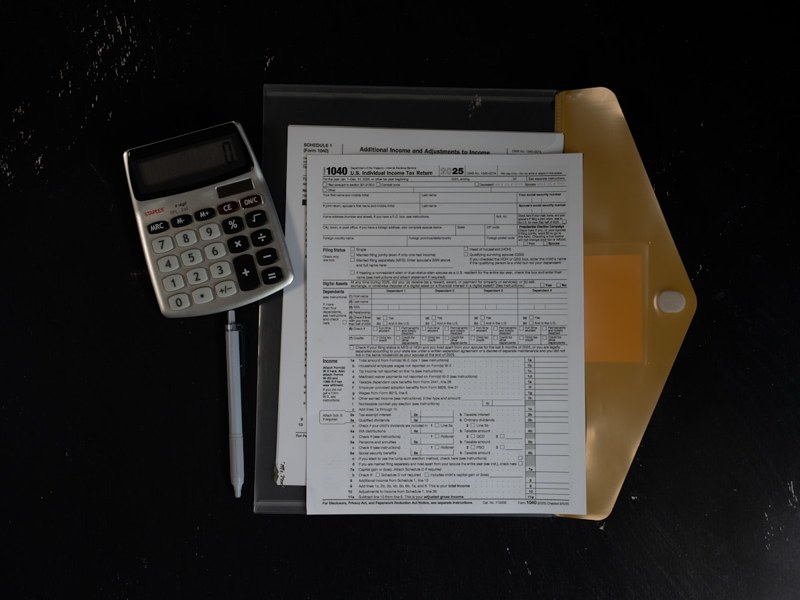
Capital allowances are the depreciation deductions that Singapore tax law allows companies to claim against their assessable income for plant and machinery. Unlike accounting depreciation, capital allowances follow a strict statutory framework under the Income Tax Act 1947. For most Singapore companies, the key provision is Section 19A, which permits accelerated write-off over one year or three years instead of the slower default rates under Section 19.
Getting capital allowances right is one of the easiest ways for a profitable Singapore company to reduce its tax bill. Getting them wrong, by mis-classifying assets, missing the one-year write-off for low-value items, or claiming on private cars, is one of the most common audit issues IRAS flags.
This 2026 guide walks through how Section 19A capital allowances work, what qualifies as plant and machinery, the one-year and three-year write-off elections, and how to handle disposal of assets through balancing allowances and balancing charges.
Section 19 vs Section 19A: the legal framework
The Income Tax Act provides two routes for capital allowances on plant and machinery:
Section 19 — The default route. A company claims an initial allowance of 20% in the year of purchase and an annual allowance spread over the asset’s prescribed working life as set out in the Sixth Schedule to the Income Tax Act. Working lives range from 5 to 16 years depending on the asset class.
Section 19A — The accelerated route. A company may elect to write off qualifying plant and machinery over three years, or in certain cases one year. There is no initial allowance under Section 19A — the entire cost is written off in equal annual instalments (or fully in year one for the one-year category).
The election under Section 19A is made asset by asset. Once made, it is irrevocable for that asset. In practice, the vast majority of Singapore companies elect Section 19A because the cash-flow benefit of faster deductions almost always outweighs the slower Section 19 schedule. For more on Singapore corporate tax filings generally, see our Singapore Corporate Tax 2026 guide.
What qualifies as “plant and machinery”?
The Income Tax Act does not exhaustively define “plant and machinery”, so the meaning has been built up through case law and IRAS practice. The leading test is the “functional test” — whether the asset is used in the trade as an apparatus with which the business is carried on (plant), as opposed to a setting in which the business is conducted (premises).
Examples of qualifying plant and machinery include:
- Office furniture and fittings (desks, chairs, partitions)
- Computers, laptops, servers, printers, network equipment
- Mobile phones, tablets, point-of-sale terminals
- Manufacturing machinery and tools
- Commercial vehicles (vans, lorries, pickups with commercial registration)
- Specialised equipment such as medical or laboratory apparatus
- Software (under Section 19A(2A) — write off over the lesser of useful life and 5 years, or as Section 19A(2) automation equipment)
Common items that do not qualify as plant and machinery for capital allowance purposes:
- Private passenger cars (S-plate cars) — expressly excluded under Section 19A(15), no matter how essential to the business
- Land and buildings (a separate Section 19A(8) deals with industrial buildings)
- Goodwill, trademarks, patents (these fall under Section 19B for intellectual property — see our Section 19B IP writing down allowance guide)
- Renovations to commercial premises (deduction is under Section 14N — see our Section 14Q R&R guide)
The three-year write-off under Section 19A(1)
This is the standard accelerated election. The full cost of the qualifying asset (excluding any GST that is claimable as input tax) is written off in three equal annual instalments. Disposal triggers a balancing adjustment.
For a $9,000 piece of equipment placed in service in YA 2026:
- YA 2026 — $3,000 capital allowance
- YA 2027 — $3,000 capital allowance
- YA 2028 — $3,000 capital allowance
The election is on a per-asset basis. A company may elect Section 19 for some assets and Section 19A for others within the same year of assessment.
The one-year write-off under Section 19A(2): automation equipment
Section 19A(2) allows a one-year (immediate) write-off for prescribed automation equipment. The list of prescribed automation equipment is set out in the Income Tax (Automation Equipment) Rules and includes:
- Computers (desktops, laptops, servers, tablets)
- Computer peripherals and accessories
- Printers and scanners
- Office automation software
- Robotics and automated manufacturing equipment
- Industrial sensors and IoT devices used in production
If the asset is on the prescribed list, the entire cost is deductible in the year of purchase. This is the most cash-flow-favourable election and is used for almost all IT and office automation purchases.
The one-year write-off under Section 19A(10A): low-value assets
Even if an asset is not prescribed automation equipment, it may still qualify for one-year write-off if it falls under Section 19A(10A) — the low-value asset rule. The conditions are:
- The cost of each individual asset does not exceed S$5,000; AND
- The aggregate cost of all such low-value assets claimed under Section 19A(10A) in a single year of assessment does not exceed S$30,000
The $5,000 per-asset cap is strict — a single asset costing $5,001 falls out of the rule entirely (it would default to Section 19A(1) three-year write-off or to automation equipment treatment if applicable). The $30,000 aggregate cap is per year of assessment, not per asset class.
Example: A company in YA 2026 buys a $4,800 office desk, a $4,500 set of meeting room chairs, and a $20,000 customised conference table. The desk and chairs ($9,300 in total) qualify for one-year write-off under Section 19A(10A). The conference table does not qualify (cost > $5,000) and would be written off over three years under Section 19A(1).
Cars and capital allowances: the trap
Singapore tax law treats private passenger cars and commercial vehicles very differently. Under Section 19A(15) and the related rules:
- S-plate (private) cars — no capital allowances. Full stop. Even if the company is the registered owner and the car is used 100% for business, the cost is not deductible. This is policy-driven (to deter use of company cars as employee perks).
- Commercial vehicles (Q-plate goods vehicles, GA-plate, vans, lorries, pickups, buses) — qualify under Section 19 or Section 19A. Most companies elect Section 19A for three-year write-off.
This is one of the most common audit findings. Directors should never assume a car is deductible just because the company owns it. For broader tax planning, see our Singapore Corporate Tax 2026 guide.
Balancing allowances and balancing charges on disposal
When a company disposes of an asset on which capital allowances have been claimed, it must compute a balancing allowance or balancing charge in the year of disposal:
- If sale proceeds < tax written down value (TWDV) → balancing allowance (additional deduction)
- If sale proceeds > TWDV → balancing charge (added back as taxable income, capped at total capital allowances previously claimed)
Example: A company elected Section 19A(1) on a $9,000 machine in YA 2024. By end of YA 2026, it has claimed $9,000 in capital allowances (TWDV = nil). It sells the machine in YA 2027 for $2,000. The $2,000 is a balancing charge — added back to taxable income in YA 2027.
Conversely, if the company had claimed capital allowances totalling $6,000 and the TWDV at sale was $3,000, and it sold the machine for $500, the $2,500 shortfall would be a balancing allowance — an additional deduction in YA 2027.
Capital allowance computation in the tax return
Capital allowances are computed in the Capital Allowance Schedule, which forms part of the Form C / Form C-S tax return submitted to IRAS. The schedule shows, for each asset or asset class:
- Opening TWDV
- Additions during the year
- Disposals during the year
- Initial allowance (Section 19 only)
- Annual allowance (Section 19) or accelerated allowance (Section 19A)
- Closing TWDV
- Balancing allowance or charge on disposed assets
For Form C-S (simplified) and Form C-S Lite, the schedule is collapsed but the underlying computation must still be maintained for IRAS inspection. See our Form C-S vs Form C guide for which return your company files.
Unabsorbed capital allowances and group relief
If a company’s capital allowances exceed its assessable income in a year of assessment, the excess becomes unabsorbed capital allowances. These can be:
- Carried forward indefinitely against future income from the same trade, subject to the shareholding continuity test (substantially the same shareholders on the relevant comparison dates)
- Carried back one year under the loss carry-back relief, up to S$100,000, subject to the same shareholding test
- Transferred under group relief to a Singapore group company that meets the 75% common ownership test — see our Section 37B group relief guide
Common mistakes to avoid
Based on our work with Singapore SMEs, the recurring capital allowance errors are:
- Claiming on S-plate cars. Always disallowed. Move to a commercial vehicle if the business genuinely needs one.
- Missing the $5,000 per-asset cap. A $5,200 office chair cannot be written off in one year under Section 19A(10A) even though it sounds “low value”.
- Forgetting balancing charges. When equipment is sold or scrapped, the disposal must be reflected. Selling fully-written-off equipment for any cash triggers a balancing charge.
- Mixing up Section 19A with Section 19B. Intellectual property (patents, trademarks, copyrights) goes under Section 19B with its own rules. See our Section 19B IP guide.
- Treating renovations as plant. Office renovations are deductible under Section 14N over three years, not under capital allowances.
Resources and further reading
For the statutory text, see Section 19 and Section 19A of the Income Tax Act 1947 on Singapore Statutes Online. IRAS publishes a useful summary in its Capital Allowances guide.
For a wider view of Singapore tax planning, see singaporesecretaryservices.com, our sister site for corporate secretarial and compliance resources.
Raffles Corporate Services helps Singapore SMEs prepare Form C / Form C-S tax returns including the full Capital Allowance Schedule, identify the optimal Section 19 vs Section 19A election for each asset, and structure asset purchases to maximise tax efficiency.
— The Editorial Team, Raffles Corporate Services