
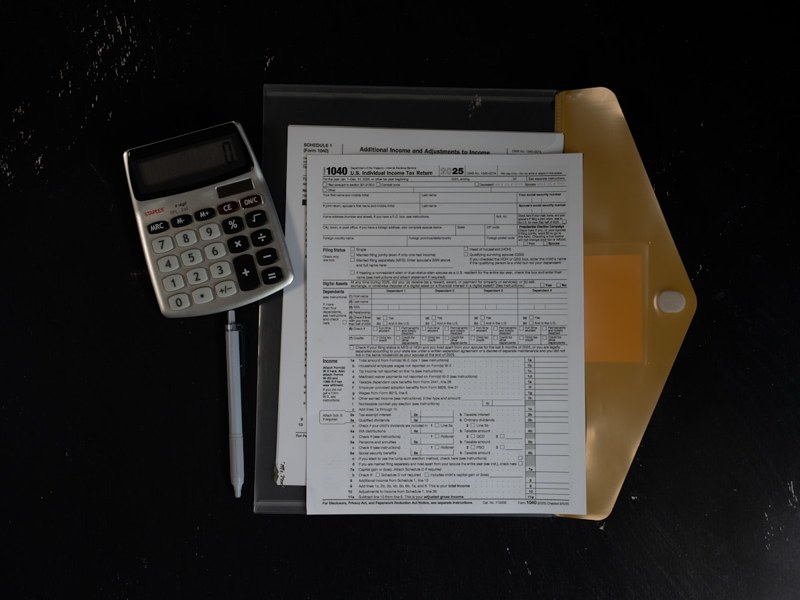
Stamp duty is one of the more silently expensive elements of Singapore business transactions. It is also one of the most poorly understood by company directors. In 2026, the Inland Revenue Authority of Singapore (IRAS) continues to enforce stamp duty on share transfers, property transactions and certain lease documents — and the penalties for late stamping have real bite.
Raffles Corporate Services works with a panel of experienced Singapore law firms who offer cost-effective and efficient legal service and advice. This article is general information only and is not legal advice.
This guide consolidates the 2026 stamp duty framework for Singapore companies, focusing on the three transaction types that companies most commonly encounter: share transfers, lease agreements, and property purchases.
The Legal Framework: Stamp Duties Act
The governing law is the Stamp Duties Act 1929, administered by IRAS through its e-Stamping portal. Stamp duty is charged on documents (not transactions) — but if a transaction is documented and the document is “chargeable”, duty is payable.
Singapore’s stamp duty regime broadly covers:
- Conveyances of immovable property (Buyer’s Stamp Duty, ABSD, Seller’s Stamp Duty).
- Conveyances of stock and shares.
- Lease agreements.
- Mortgages and assignments of mortgages.
- Trust declarations over chargeable property.
Stamp Duty on Share Transfers
Whenever a Singapore company’s shares are transferred — whether to a new investor, a family member, an employee under an ESOP exercise, or back to the company in a buyback — stamp duty is payable on the instrument of transfer.
| Item | 2026 Rate / Rule |
|---|---|
| Rate | 0.2% of the higher of consideration or net asset value of shares |
| Minimum duty | S$10 per instrument |
| Time to stamp | Within 14 days of execution in Singapore; within 30 days if executed overseas |
| Late penalty (under 3 months late) | S$10 OR an amount equal to the duty, whichever is higher |
| Late penalty (over 3 months late) | S$25 OR 4x duty, whichever is higher |
| Filing channel | IRAS e-Stamping portal — instant stamping |
The valuation hook — “higher of consideration or net asset value” — catches many founder share transfers where shares are exchanged for nominal consideration but the company already has substantial net asset value. Get a stamping valuation report if NAV is material.
For more on the mechanics of share transfers, see our share transfer guide.
Stamp Duty on Property (Companies as Buyer)
A Singapore company buying residential or non-residential property pays multiple layers of stamp duty:
1. Buyer’s Stamp Duty (BSD)
| Purchase Price Tier | BSD Rate (Residential) | BSD Rate (Non-Residential) |
|---|---|---|
| First S$180,000 | 1% | 1% |
| Next S$180,000 | 2% | 2% |
| Next S$640,000 | 3% | 3% |
| Next S$500,000 | 4% | 4% |
| Next S$1,500,000 | 5% | 5% |
| Remaining | 6% | 5% |
2. Additional Buyer’s Stamp Duty (ABSD) — Residential Only
From 27 April 2023, ABSD for entities (companies, business trusts) buying residential property in Singapore is 65%. Singapore-incorporated housing developers may apply for ABSD remission subject to project completion and sale-by-date conditions. Trustees of residential property pay ABSD of 65%.
3. Seller’s Stamp Duty (SSD) — Residential Held Under 3 Years
| Holding Period | SSD Rate (Residential) |
|---|---|
| ≤1 year | 16% |
| >1–2 years | 12% |
| >2–3 years | 8% |
| >3 years | Nil |
Industrial properties have their own SSD schedule. Commercial (office, shopping centre) properties have no SSD.
Stamp Duty on Leases
If your company signs a lease as tenant or landlord, the lease document is dutiable. The rate depends on the lease term and rent.
| Lease Term | Duty Rate | Computation Base |
|---|---|---|
| ≤ 4 years | 0.4% | Total rent for entire term |
| > 4 years to ≤ 30 years | 0.4% (4 years rule) but rate scales | Average annual rent × 4 |
| > 30 years | 0.4% | Average annual rent × 12 |
If the lease has variable rent (e.g., gross turnover rent), the higher of the fixed minimum or the IRAS-deemed amount is used. Renewals and extensions are separately stampable.
Common Stamp Duty Traps for Companies
- Forgetting to stamp founder transfers. When a startup transitions from one founder to two, the initial subscription is exempt — but any transfer between founders is not. Stamp duty + late penalty stacks fast.
- Treating NAV valuation as optional. IRAS routinely audits share transfers where consideration is below market. Get a NAV computation before stamping.
- Missing renewals. A lease renewal is a fresh dutiable event, not a continuation.
- Cross-border share transfers. If a Singapore company’s shares are transferred via a deed executed overseas, stamp duty still applies — the 30-day window starts when the document arrives in Singapore.
- Group restructuring. Section 15 reliefs may exempt qualifying group transfers but conditions are technical — apply for relief before transfer, not after.
- Contracts that look non-dutiable but are. A share purchase agreement is not dutiable, but the share transfer form executed under it is.
Group Restructuring Relief — Section 15
Section 15 of the Stamp Duties Act provides relief for transfers of property and shares within a group of companies. The qualifying conditions:
- Transferor and transferee are associated companies (75% common ownership).
- The relationship has existed for at least 2 years and continues for 2 years post-transfer.
- The transfer is for genuine commercial reasons, not for tax avoidance.
- Relief is applied for via the e-Stamping portal at the time of stamping.
This can save 0.2% on intra-group share transfers — material for a multi-billion-dollar group restructuring.
Practical Stamping Workflow
- Identify the dutiable instrument (share transfer form, lease, sale & purchase agreement, deed of assignment).
- Compute consideration and, for shares, the NAV-based comparison.
- Apply group relief if applicable (Section 15).
- File and pay via the IRAS e-Stamping portal — instant stamping certificate issued.
- Lodge the stamped document with ACRA for share transfers (via the lodging agent) within 14 days.
- File copies in your statutory registers.
Penalties for Non-Stamping
An unstamped dutiable document is inadmissible as evidence in Singapore court proceedings unless the duty plus penalty is paid. This means in a shareholder dispute, an unstamped share transfer form cannot be relied on to prove transfer. Many Singapore commercial disputes have been won and lost on stamping technicalities.
For non-compliance:
- Late stamping penalties as listed above.
- IRAS can assess unstamped instruments via Section 36A of the Stamp Duties Act.
- Director liability for omitting stamping in companies under their charge.
How to Get It Right
- Stamp everything as soon as executed. A 14-day window is short.
- Use a corporate secretary or law firm that does e-Stamping daily.
- For share transfers, get a NAV computation done before the transfer is closed.
- For group restructuring, apply for Section 15 relief in writing before the closing.
- Keep digital copies of stamping certificates linked to the underlying transaction file.
Our corporate secretarial team handles stamping daily — every share transfer, lease and intra-group restructuring. If you would like help applying for Section 15 relief or just stamping a routine share transfer, get in touch.
— The Editorial Team, Raffles Corporate Services
Need help with this?
Raffles Corporate Services can handle the ACRA filings, compliance documentation and records for you, and where court proceedings or legal advice are needed, we work with a panel of experienced Singapore law firms who offer cost-effective and efficient legal service and advice.
Email: [email protected]
Call, SMS or WhatsApp: +65 8501 7133