
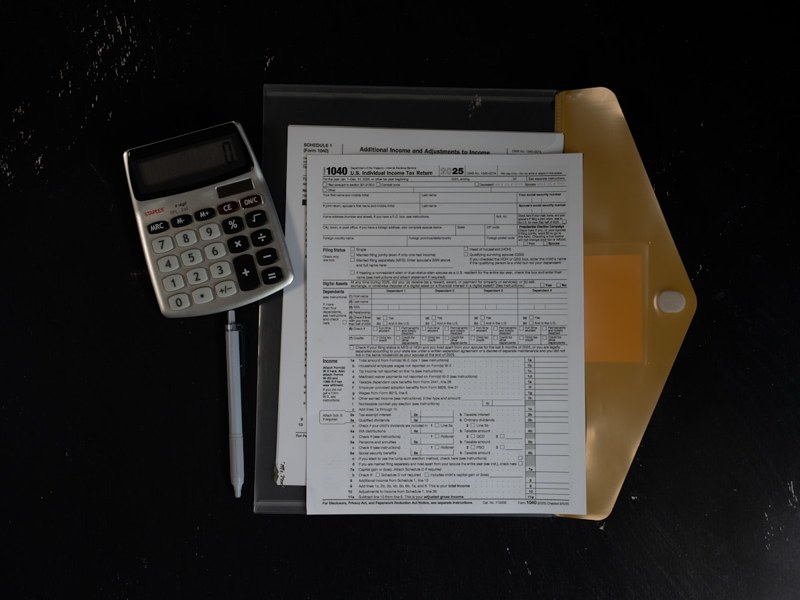
For most acquirers in Singapore, the cost of buying shares in another company is a capital outlay — and capital outlays are not, in general, deductible against taxable income. That makes mergers and acquisitions an expensive way to grow. Recognising this, IRAS introduced the M&A Allowance under Section 37O of the Income Tax Act 1947 to give qualifying acquirers a tax deduction equal to a percentage of the acquisition cost — converting a chunk of an otherwise non-deductible outlay into a real reduction of corporate tax liability.
The scheme has been extended through 2030 and remains one of the most underused tax breaks in the Singapore corporate tax code. This 2026 guide explains who qualifies, what counts as a qualifying acquisition, how the allowance is computed, and the procedural traps that have caused acquirers to lose the deduction at audit.
The Mechanics: What Section 37O Gives You
The M&A Allowance is a tax deduction of 25% of the qualifying acquisition cost, capped at a deduction of S$10 million per year of assessment (YA). The deduction is written down over five YAs in equal instalments — so a S$10 million qualifying acquisition produces a S$2 million tax deduction in each of YA1 through YA5.
At the prevailing corporate tax rate of 17%, that’s a real cash tax saving of up to S$1.7 million on a single S$10 million acquisition. Stamp duty relief and double tax deduction on transaction costs are also available, but those are separate mechanisms layered on top of the headline allowance.
Who Qualifies?
To claim the M&A Allowance, the acquiring company must satisfy all of the following conditions under Section 37O:
1. Singapore tax resident
The acquirer must be a Singapore tax resident for the YA in which the acquisition is completed and for the next four YAs. See our Singapore tax residency guide for the control-and-management test.
2. Carrying on a trade or business in Singapore
The acquirer must be actively trading. A pure investment holding company without an underlying operating business will normally fail this test. If you have a holding company structure for tax efficiency, the operating subsidiary — not the holding company — should be the acquirer.
3. Headcount and expenditure requirement
The acquirer must have at least three local employees (Singapore citizens or PRs whose CPF contributions are made by the acquirer) for at least 12 months before the date of acquisition. The acquirer must also incur at least S$200,000 of total business expenditure in the YA in which the acquisition is made.
4. Not a Section 13D, 13O or 13U fund vehicle
The acquirer cannot be a vehicle relying on Section 13D, 13O, 13U or other approved fund tax incentives. The policy intent of the M&A Allowance is to encourage growth of operating Singapore businesses, not fund vehicle tax planning. See our companion articles on the Section 13O scheme and the Section 13U scheme.
What Counts as a Qualifying Acquisition?
The acquisition must satisfy four tests. Get any one wrong and the allowance is lost.
- Ordinary shares only. The target shares must be ordinary shares — preference shares, convertible notes, SAFEs and warrants do not qualify until converted. See our note on convertible notes and SAFEs.
- Voting power thresholds. Post-acquisition, the acquirer (together with companies in its group) must own at least 20% of the ordinary voting shares (if previously below 20%) or cross a 50% threshold (if previously between 20% and 50%). Pure top-up purchases that don’t cross either threshold do not qualify.
- Target must be a going concern. The target company must be carrying on a trade or business and have at least three employees of its own for at least 12 months before the acquisition. Shell company acquisitions and pure IP holding company acquisitions do not qualify.
- Acquisition completed within the scheme window. The acquisition must be completed between 1 April 2010 and 31 December 2030 (current sunset).
Allowance Cap and Computation
The allowance is calculated as 25% of the acquisition cost, subject to a cap of S$40 million of qualifying acquisitions per YA (giving a maximum allowance of S$10 million per YA, written down at S$2 million per YA over five YAs).
Acquisition cost includes the consideration paid for the shares and certain attached transaction costs (legal fees, valuation fees, due diligence fees, stamp duty), but excludes any deferred or contingent consideration that is not yet payable at completion. Earn-outs only qualify when actually paid — and only if the payment is made within the cap period.
The deduction is given against the acquirer’s total taxable income, not just against income from the acquired target. This is generous: it means a Singapore operating company with strong domestic profits can use the allowance to shelter its own earnings, not just dividends from the acquired subsidiary.
How to Claim
The claim is made by submitting Form M&A (the Application for M&A Allowance) to IRAS within three months of the date of acquisition, together with:
- A copy of the signed Sale & Purchase Agreement.
- The valuation report supporting the acquisition price (especially for related-party acquisitions, where IRAS will look closely at arm’s-length pricing).
- Evidence of CPF contributions for the three local employees.
- The latest audited financial statements of both acquirer and target.
- A confirmation from the acquirer that none of the disqualifying conditions apply (no Section 13D/O/U status, no recent group restructuring that would void the headcount test).
IRAS aims to issue the M&A Allowance approval within four to six months. The allowance is then claimed in the Form C / C-S corporate tax return for the YA in which the acquisition was completed.
Common Audit Issues
The most frequent IRAS audit findings on M&A Allowance claims are:
- Late application. The three-month window is strict. Late applications are routinely refused.
- Headcount test failed for the wrong entity. Acquirers sometimes claim the headcount of group companies that didn’t actually employ the staff. The 12-month CPF contribution record from the acquirer itself is what matters.
- Acquisition cost inflated by non-qualifying items. Post-completion working capital adjustments, retention bonuses for target staff, and integration consultancy fees are commonly disallowed.
- Crossing the threshold but with non-voting instruments. Voting power is what matters; redeemable or non-voting preference shares are excluded from the percentage calculation.
- Targets that fail the “going concern” test. Dormant target companies and special-purpose vehicles do not qualify. The target must be operating.
Interaction with Other Tax Reliefs
The M&A Allowance stacks with the 50% stamp duty relief on the transfer of ordinary shares (capped at S$80,000 of stamp duty waived per financial year per acquirer), and with the 200% double tax deduction on qualifying transaction costs (capped at S$100,000 of expenditure per YA). Together, the three reliefs can reduce the effective post-tax cost of a Singapore M&A by several percentage points.
They do not stack with Section 37C group relief in the sense that the same loss cannot be used twice — but they are independent reliefs and can be claimed in the same YA on different items.
When the M&A Allowance Doesn’t Make Sense
The headline 25% deduction sounds attractive, but it isn’t always worth the structuring cost. The allowance is wasted if:
- Your acquirer has insufficient taxable profit over the next five YAs to absorb the deduction.
- The acquisition is part of an intra-group reorganisation that already benefits from Section 13(8) or Section 13W exemptions.
- The economic benefit of a different structure (e.g. asset acquisition with goodwill amortisation, or a direct merger by way of scheme of arrangement) is greater.
For these reasons, the M&A Allowance is a tool, not a default. Run the after-tax economics of the alternative structures before committing.
Statutory References
The M&A Allowance is in Section 37O of the Income Tax Act 1947. Implementation detail is in the Income Tax (Mergers and Acquisitions) Rules 2012. The latest IRAS e-Tax Guide on Mergers and Acquisitions Scheme is the practical reference for accountants and tax agents.
— The Editorial Team, Raffles Corporate Services