
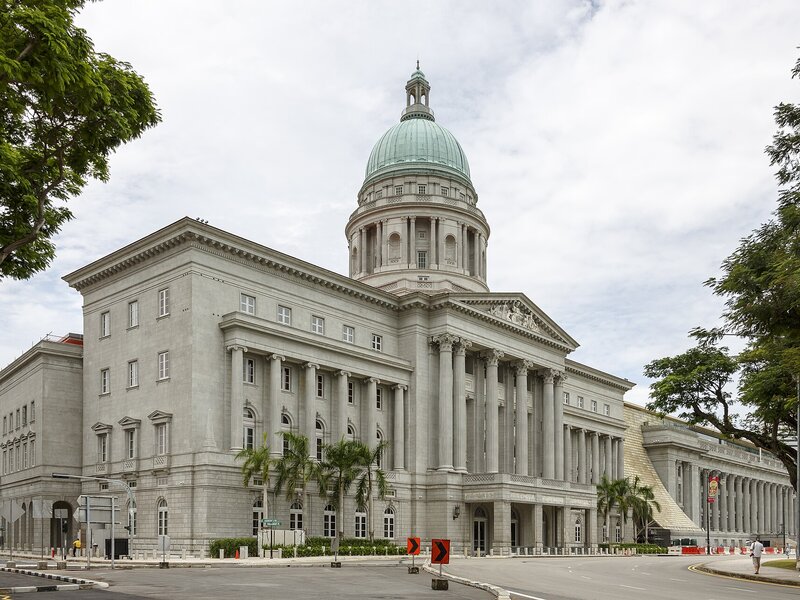
A Singapore winding up does not always run smoothly with the liquidator first appointed. Creditors sometimes lose confidence in how a liquidation is being run. A liquidator may have a conflict of interest that only becomes apparent after appointment, or progress may stall for reasons never adequately explained. In these situations, Singapore law gives the High Court the power to remove a liquidator and appoint a replacement, so the winding up can continue under new stewardship. This article explains that power under the Insolvency, Restructuring and Dissolution Act 2018 (IRDA), separately from the removal of a judicial manager, which Raffles Corporate Services has covered in a separate guide.
What the Application Is
An application to remove or replace a liquidator is a distinct court process from an application to remove a judicial manager. A judicial manager operates under a court-supervised rescue regime aimed at reorganising or selling a company as a going concern. A liquidator, by contrast, is appointed to wind up a company, whether under a court order (compulsory winding up, commonly following a creditors’ winding-up application) or by resolution of members or creditors (voluntary winding up), realise its assets, pay its debts in order of priority, and bring the company to dissolution. Our companion article, Powers and Duties of a Liquidator in a Singapore Winding Up, explains that role in full. This article deals only with what happens when a creditor, contributory, the liquidator or the Official Receiver believes that the person currently holding that office should no longer continue in it.
Removal is not a technicality. Courts are conscious that changing the liquidator part-way through a winding up can disrupt momentum, add cost, and unsettle creditors who have already engaged with the incumbent. The application must therefore show real cause, not mere dissatisfaction with the pace or outcome of the liquidation.
Legal Basis: The IRDA Provisions
The IRDA draws a distinction between a liquidator appointed by the Court in a compulsory winding up and a liquidator appointed by members or creditors in a voluntary winding up. Both routes to removal are grounded in the IRDA, though the applicable provision differs depending on which type of winding up is involved.
For a compulsory (court-ordered) winding up, section 139(1) of the IRDA provides that a liquidator appointed by the Court may resign, or on cause shown be removed by the Court. This provision is the direct successor to section 268(1) of the former Companies Act, and the Singapore courts have confirmed that the principles developed under the old provision continue to apply under the IRDA. This was affirmed by the General Division of the High Court in DB International Trust (Singapore) Ltd v Medora Xerxes Jamshid and another [2023] SGHC 83, where the court removed the liquidator of a company in compulsory liquidation after finding he had failed to display sufficient vigour in his duties and had not properly obtained required approvals for his actions.
For a voluntary winding up, the equivalent power is found in section 174 of the IRDA, which allows the Court, on cause shown, to remove a liquidator and appoint another in that person’s place. Section 174 is derived from section 302 of the former Companies Act, and the High Court confirmed in Liquidators of Ace Class Precision Engineering Pte Ltd (in members’ voluntary liquidation) v Tan Boon Hwa [2022] 3 SLR 539 that the principles set out for the old section 302 (notably in Petroships Investment Pte Ltd v Wealthplus Pte Ltd [2018] 3 SLR 687) apply equally to section 174 of the IRDA.
A related provision, section 150(1) of the IRDA, requires a liquidator to summon a meeting of creditors or contributories, if requested, to determine whether a committee of inspection should be appointed. This mechanism is frequently used alongside, or as a precursor to, a removal application, because a committee of inspection gives creditors a formal channel to supervise a liquidator’s conduct without going to court.
We have verified these section numbers against a reported High Court judgment quoting the statutory text, rather than a secondary summary. Anyone relying on this article for a live matter should check the current text on Singapore Statutes Online, since revised editions occasionally renumber provisions.
The Test the Court Applies
Both section 139(1) and section 174 use the same touchstone: “cause shown”. The Singapore courts apply this as a two-stage inquiry. First, the court identifies the purpose for which the liquidator was appointed, generally the same as the underlying purpose of the liquidation itself, such as a fair and equitable distribution to creditors and, in an insolvent liquidation, an independent investigation into the causes of the company’s failure. Second, the court asks whether removing the liquidator would be in the “real, substantial and honest interest of the liquidation”, assessed against that purpose. If so, the court’s discretion to remove is engaged and will ordinarily be exercised.
Importantly, a liquidator need not have acted dishonestly, or even negligently, to be removed. A liquidator who has simply failed to display sufficient vigour, delegated too much responsibility without oversight, or failed to keep interested parties informed, can be removed even where good faith is not in question.
Grounds the Court Will Consider
Drawing on the case law, the courts have recognised (among others) the following as grounds capable of amounting to cause:
- Conflict of interest. A connection to directors, shareholders or other parties involved in the company’s affairs that creates a real risk the liquidator cannot act impartially, for example investigating conduct in which the liquidator was itself implicated.
- Lack of independence. Where the liquidator’s judgement may be, or appear to be, coloured by a relationship with a person whose conduct is under scrutiny.
- Lack of vigour or unreasonable delay. Failure to progress investigations, realise assets, or otherwise advance the liquidation without adequate explanation, even absent any finding of dishonesty.
- Failure to comply with statutory obligations. For example, proceeding without the required sanction of the Court or a committee of inspection, or misapplying statutory definitions such as who counts as a “creditor” entitled to request a meeting.
- Loss of creditors’ confidence. Particularly where justified by the liquidator’s conduct, since creditors are generally the primary stakeholders in an insolvent liquidation.
- The interests of the liquidation more broadly. The court may remove a liquidator simply because another person would better advance the winding up’s purposes, without any personal fault on the incumbent’s part.
These grounds overlap considerably with the duties described in our guide on the powers and duties of a liquidator: a failure to properly discharge those duties is very often what gives rise to cause for removal.
Who Can Apply
An application to remove or replace a liquidator may typically be brought by:
- Creditors. Any creditor with a genuine interest in the outcome of the liquidation, whether secured, unsecured, or a bondholder trustee acting for bondholders, may apply where the liquidator’s conduct affects the recoverability or fair distribution of the company’s assets.
- Contributories or members. Shareholders and other contributories, particularly in a members’ voluntary winding up following a declaration of solvency, may apply where the liquidator’s conduct affects the winding up of a solvent company.
- The liquidator. A liquidator may itself apply to the Court for directions, including on questions of its own continuation in office, where it faces a genuine conflict or difficulty and wishes the Court’s guidance before acting further.
- The Official Receiver. Where the Official Receiver has a supervisory or statutory interest in the winding up, including in the exercise of the Court’s general powers of control over liquidators.
Standing is not automatic. The courts have taken a broad view of who qualifies as a “creditor” for related purposes, such as requesting a creditors’ meeting under section 150(1), holding that a person with a debt provable in the winding up may qualify even before that debt is formally adjudicated. A similar approach is likely to inform standing to apply for removal, but each case turns on its own facts, and legal advice should be taken before proceeding.
Step-by-Step Process
- Engage a Singapore Advocate and Solicitor. Removal applications turn on detailed case law and require careful evidential preparation; this is not a step-by-step form-filling exercise.
- Gather evidence of the grounds relied on. This typically includes correspondence with the liquidator, minutes of any creditors’ or committee of inspection meetings, records of delays or unexplained inaction, and any evidence of conflicts of interest.
- File the application with the General Division of the High Court. This is generally done by originating application (or originating summons, depending on the applicable procedural rules at the time), supported by an affidavit setting out the facts and the grounds for removal.
- Serve the application. The application and supporting affidavit are served on the liquidator, on the company (acting through the liquidator), and generally on other interested parties who may wish to be heard, such as a committee of inspection or major creditors.
- Liquidator’s response. The liquidator will usually file an affidavit in reply, addressing each ground raised and explaining the actions taken (or not taken) in the liquidation.
- Hearing before the Court. Both sides make submissions, applying the “cause shown” test described above. The Court may also hear from other creditors or the Official Receiver where relevant.
- Order. If satisfied that cause has been shown, the Court will order the removal of the incumbent liquidator and, usually in the same order, appoint a nominated replacement (or replacements, where joint liquidators are proposed).
Documents Required
| Document | Purpose |
|---|---|
| Originating application or originating summons | Formally commences the court proceedings seeking removal and replacement of the liquidator. |
| Supporting affidavit | Sets out the applicant’s standing (as creditor, contributory, liquidator or Official Receiver) and the factual basis for the grounds relied upon. |
| Evidence of grounds | Correspondence, complaints, meeting minutes, reports or other documents demonstrating the conflict of interest, delay, lack of independence or other cause relied on. |
| Proposed replacement liquidator’s consent | Written consent of the nominated replacement liquidator (typically another licensed insolvency practitioner) to act if appointed. |
| Draft order | A draft of the order sought, for the Court’s consideration, addressing removal, appointment of the replacement, and consequential directions (such as handover of records). |
| Consent or objection from other creditors or contributories | Where available, statements of support (or objection) from other stakeholders, which the Court will weigh in assessing whether removal serves the real, substantial and honest interest of the liquidation. |
| Liquidator’s reply affidavit | Filed by the incumbent liquidator in response, addressing each ground raised. |
Timeline and Costs
Every removal application is different, and the figures below are general estimates only, not quotes. Actual timelines and costs depend heavily on whether the application is contested, the complexity of the liquidation, and the volume of evidence involved.
| Stage | General estimate |
|---|---|
| Preparation of application and supporting affidavit | Several weeks, depending on the volume of evidence and correspondence to be reviewed |
| Service and liquidator’s response | Typically several weeks, longer if extensions are sought |
| Hearing (uncontested) | A single hearing, often resolved within a few months of filing |
| Hearing (contested, with cross-affidavits and submissions) | Several months or more, particularly where the facts are disputed or expert evidence is needed |
| Overall cost range | Varies widely with complexity and whether the application is contested; contested applications with detailed factual disputes cost materially more than a straightforward, consensual replacement |
Treat any timeline or cost estimate as a starting point for discussion with your appointed law firm, not a fixed budget.
What Happens After the Order
Once the Court orders removal and appoints a replacement, the winding up itself continues without interruption; only the office holder changes. In practice, this means:
- Handover of records and assets. The outgoing liquidator must hand over the company’s books, records, seal, and any assets or funds under its control to the incoming liquidator.
- Bank mandates. Company or liquidation bank accounts are re-mandated in the name of the new liquidator, and any funds held are transferred across.
- Continuity of prior acts. Acts properly done by the outgoing liquidator before removal generally remain valid and are not automatically undone, unless the Court specifically sets them aside. This reassures third parties who have already dealt with the liquidation, such as purchasers of company assets or parties to settled claims.
- Notification to ACRA. The change is notified to the Accounting and Corporate Regulatory Authority so the public record reflects the new appointment.
- Notification to creditors. Creditors are informed of the change, usually together with an update on the state of the liquidation.
- Outgoing liquidator’s remuneration. Any dispute over fees up to the date of removal is usually addressed separately, by agreement, taxation, or a further application to the Court.
Frequently Asked Questions
Can a liquidator be removed simply because creditors are unhappy with the pace of the liquidation?
Not on dissatisfaction alone. However, unexplained delay, a failure to display sufficient vigour, or an unjustified reliance on third parties without proper oversight, have all been accepted by the Singapore courts as capable of amounting to cause for removal, even without a finding of dishonesty or negligence.
Does the liquidator have to have done something wrong to be removed?
No. The Singapore courts have confirmed that a liquidator can be removed where it is in the real, substantial and honest interest of the liquidation for another person to take over, even where no wrongdoing is established.
Is the process different for a court-ordered winding up compared with a voluntary winding up?
The underlying “cause shown” test is the same, but the statutory basis differs: section 139(1) of the IRDA applies to a liquidator appointed by the Court in a compulsory winding up, while section 174 applies to a liquidator appointed by members or creditors in a voluntary winding up.
Who typically becomes the replacement liquidator?
Usually another licensed insolvency practitioner nominated by the applicant, who must consent to act. The Court will consider the nominee’s independence, relevant experience, and capacity to take on the engagement.
Will removing the liquidator undo what has already been done in the liquidation?
Generally not. Properly authorised acts carried out by the outgoing liquidator before removal typically remain valid, unless the Court specifically sets them aside.
Can the liquidator apply to the Court about its own position?
Yes. A liquidator facing a genuine conflict of interest or difficult question can apply to the Court for directions, which may include guidance on whether it should continue in office.
Need Help With This Matter?
If your company is facing this situation, Raffles Corporate Services can assist with the groundwork, ACRA filings, compliance documentation, and coordinating with experienced Singapore law firms. For matters requiring court proceedings, we work with a panel of experienced Singapore law firms who offer cost-effective and efficient legal service and advice.
Email: [email protected]
Call, SMS or WhatsApp: +65 8501 7133
This article is for general information only and does not constitute legal advice. For advice specific to your situation, please consult a qualified Singapore Advocate and Solicitor.
The Editorial Team, Raffles Corporate Services