
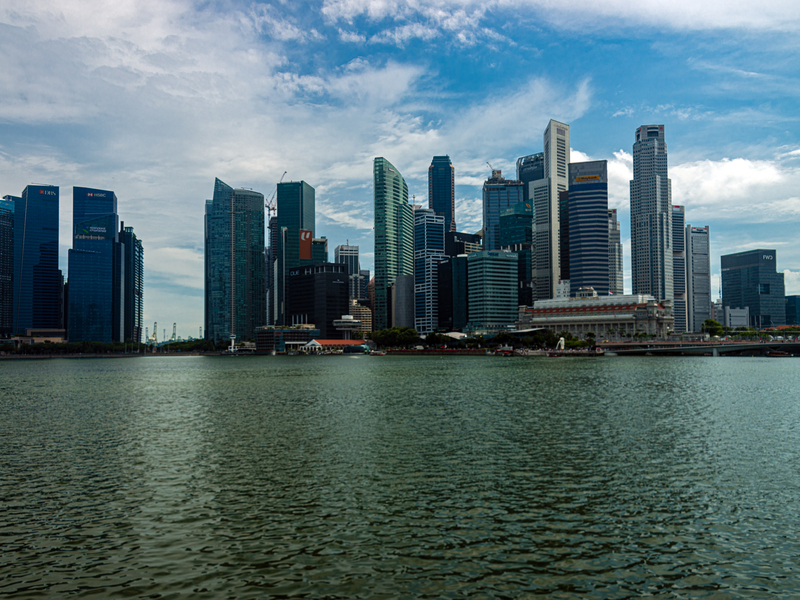
Singapore has long been regarded as a jurisdiction with a light regulatory footprint for crypto and digital-asset businesses that serve only overseas clients, provided they do not touch the local market. That assumption stopped being true on 30 June 2025. From that date, a Singapore-incorporated company, a Singapore-based partnership, or an individual operating from a place of business in Singapore that provides digital token services solely to persons outside Singapore is required to hold a Digital Token Service Provider (DTSP) licence under Part 9 of the Financial Services and Markets Act 2022 (FSM Act). Critically, the Monetary Authority of Singapore (MAS) has also signalled that it expects to grant such licences only sparingly. For many entities, the practical consequence of the new regime is not “get licensed” but “wind down or relocate the offshore-facing activity.”
Raffles Corporate Services works with a panel of experienced Singapore law firms who offer cost-effective and efficient legal service and advice. This article is general information only and is not legal advice.
This article sets out what the DTSP regime under the FSM Act actually covers, why it was introduced, how it differs from the pre-existing Digital Payment Token (DPT) licensing regime under the Payment Services Act, and what a Singapore entity currently serving only foreign digital-asset clients should be doing about it.
The regulatory gap the FSM Act was designed to close
Before 30 June 2025, MAS’s licensing powers over digital-asset businesses were largely anchored in the Payment Services Act 2019 (PS Act), which regulates digital payment token services provided to, or targeting, persons in Singapore. A Singapore-incorporated company that carried on a digital token business but deliberately served only clients located outside Singapore fell outside the PS Act’s licensing net. It had no local customers to trigger the PS Act, yet it was still a Singapore legal person, capable of using the credibility of a Singapore incorporation, a Singapore registered address and Singapore banking relationships while remaining largely unsupervised for money-laundering and terrorism-financing risk.
MAS identified this as a genuine gap. Singapore-incorporated or Singapore-based entities serving only overseas clients were, in substance, exporting Singapore’s reputation without being subject to Singapore’s regulatory oversight, and were correspondingly harder for foreign regulators and financial intelligence units to hold to account. Part 9 of the FSM Act was drafted specifically to close this gap. It does so by capturing any individual, partnership, or corporation that is either formed or incorporated in Singapore, or that operates from a place of business in Singapore, and that carries on a business providing digital token services, regardless of whether any of its clients are in Singapore at all.
What counts as a “digital token service”
The FSM Act’s definition of digital token services is deliberately broad and mirrors the activities already regulated under the PS Act’s digital payment token provisions, extended to cover tokens of capital markets products as well. It captures dealing in digital payment tokens, facilitating the exchange of such tokens, and related custodial and transmission services, whether the underlying token is a payment-type token or a capital-markets-product token. The regime is not limited to exchanges; it can catch OTC desks, custody providers, and certain token-related advisory or arranging activities carried on from a Singapore base.
Why MAS expects to grant very few DTSP licences
Unlike most MAS licensing regimes, where the regulator publishes eligibility criteria and expects a reasonable proportion of well-prepared applicants to succeed, MAS has been explicit that DTSP licences under Part 9 will be granted only in limited circumstances. The stated rationale is supervisory, not commercial. Where an entity’s substantive regulated activity, its clients, its transaction flows and its counterparties, all sit outside Singapore, MAS considers itself poorly placed to supervise that activity effectively, however good the entity’s compliance function looks on paper. Money-laundering and terrorism-financing risks are also assessed as materially higher for business models built around serving only offshore, often anonymous or lightly-verified, counterparties.
The practical effect is that the DTSP licence should not be treated as a routine registration step comparable to, say, applying for a Recognised Market Operator exemption or a fund management licence. It is closer to an exceptional carve-out. Entities that assumed a licence application would simply formalise their existing offshore-only business model have generally been advised, including by MAS itself in its consultation responses, that continuing that exact model is unlikely to be viable. There is no statutory transitional period: MAS confirmed that in-scope entities were required to cease the offshore-only digital token activity by 30 June 2025 unless already licensed, meaning the commencement date operated as a hard deadline rather than a phased-in requirement.
AML/CFT and technology risk obligations attached to the regime
Where a licence is granted, or where an entity is otherwise brought within scope, MAS Notices and Guidelines issued alongside Part 9 impose anti-money laundering and countering-the-financing-of-terrorism (AML/CFT) obligations broadly comparable to those under the Payment Services Act: customer due diligence, transaction monitoring, suspicious transaction reporting, and record-keeping. MAS Guidelines issued at the same time also address technology risk management expectations. These obligations apply on top of the licensing threshold itself, meaning a licensed DTSP carries an ongoing compliance burden similar in kind, though calibrated for its business model, to that of a licensed payment institution.
How the DTSP regime differs from DPT licensing under the Payment Services Act
It is easy to conflate the new DTSP regime with the established Digital Payment Token licensing framework, since both regulate crypto-related activity and both sit under MAS’s supervisory umbrella. They are, however, separate regimes addressing separate gaps. RCS has previously covered MAS Digital Payment Token (DPT) licensing in detail; the table below sets out the key distinctions.
| Feature | DPT licensing (Payment Services Act) | DTSP licensing (Part 9, FSM Act) |
|---|---|---|
| Governing statute | Payment Services Act 2019 | Financial Services and Markets Act 2022 |
| Client base targeted | Services provided to, or targeting, persons in Singapore | Services provided solely to persons outside Singapore |
| Regulatory intent | Protect local consumers and the domestic financial system | Close the oversight gap for Singapore entities with no local clients |
| MAS’s stance on granting licences | Established, workable licensing pathway with published criteria | Licences expected only in limited, exceptional circumstances |
| Commencement | Regime has been operative since 2020 | Came into operation 30 June 2025, no transitional period |
| Practical outlook for most affected entities | Apply, operate under licence conditions | Cease or relocate the offshore-only activity, or restructure to bring clients onshore under the PS Act instead |
An entity that already holds, or is applying for, a DPT licence because it serves Singapore clients is not thereby exempt from Part 9 if it also runs a separate line of business serving only overseas clients through the same Singapore entity. The two regimes can apply concurrently to different parts of the same group’s activities, which is precisely the kind of structuring question that should be mapped out before, not after, a licence application is lodged.
Why this matters for VCC, family office and fund-structuring clients
Clients using Singapore Variable Capital Companies (VCCs) or other fund structures increasingly hold digital assets, or digital-asset-adjacent instruments, as part of a broader portfolio. Family offices and fund managers sometimes also set up a related Singapore entity to handle token custody, OTC facilitation, or exchange access for the fund’s own use or for group clients based abroad. If that related entity is Singapore-incorporated and its digital token activity serves only non-Singapore counterparties, it is now squarely within the FSM Act’s Part 9 scope, even though the fund itself may be licensed or exempt under an entirely different framework, such as a Licensed Fund Management Company (LFMC) licence or a Capital Markets Services (CMS) licence.
This is a governance and group-structuring issue as much as a licensing one. A holding structure that made sense before 30 June 2025, with a Singapore token-services entity feeding an offshore fund or client base, may now require the token-services function to be relocated outside Singapore, restructured so its clients are onshore and therefore covered by the DPT regime instead, or wound down entirely. Firms currently managing the transition of Registered Fund Management Companies under the RFMC sunset framework should note that the same discipline of mapping every regulated activity against the correct MAS regime applies here; RCS has separately addressed the practicalities of that transition in our note on the RFMC sunset and migration.
Practical steps for an affected entity
Before assuming a DTSP licence application is the answer, a Singapore entity currently providing token services only to overseas clients should first establish whether it is in scope at all, by reviewing where its place of business sits and whether its clients are genuinely all outside Singapore. If it is in scope, the entity should assess honestly, using MAS’s own published expectations as the benchmark, whether its supervisory profile is strong enough to be one of the limited cases MAS might licence, rather than assuming an application will be routinely approved. Where a licence is unlikely, the realistic options are ceasing the offshore-only token activity, relocating it to a jurisdiction with an appropriate licensing framework, or restructuring the client base so that the activity falls under the established DPT regime instead. Groups with a fund, VCC, or family office alongside a token-services entity should also map every regulated activity in the structure against the correct MAS regime, since the FSM Act, PS Act, and Securities and Futures Act obligations can apply concurrently to different entities within the same group.
Getting the structuring right from the outset
The DTSP regime is a narrow but consequential piece of Singapore’s financial regulatory architecture. It was built to close a specific gap, Singapore-incorporated entities serving only overseas digital-asset clients, and MAS has been unusually direct in saying that most affected entities should not expect a licence. For groups that also run VCCs, licensed fund managers, or capital markets activities, the more urgent task is often not the DTSP application itself but making sure every entity in the structure sits under the regime that actually fits its client base and activities.
Raffles Corporate Services works with fund managers, family offices, and digital-asset businesses to review Singapore group structures against the current MAS licensing landscape, including the FSM Act’s Part 9 regime, the Payment Services Act, and the fund management licensing frameworks, so that clients are not caught out by a regime that has changed the rules for entities that assumed they were outside MAS’s reach.
The Editorial Team, Raffles Corporate Services
Need help with this?
Raffles Corporate Services can handle the ACRA filings, compliance documentation and records for you, and where court proceedings or legal advice are needed, we work with a panel of experienced Singapore law firms who offer cost-effective and efficient legal service and advice.
Email: [email protected]
Call, SMS or WhatsApp: +65 8501 7133