
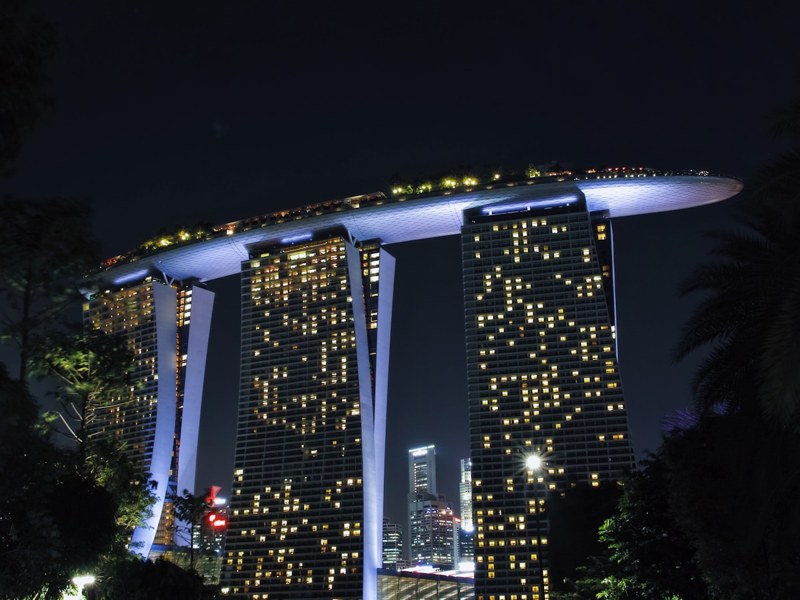
Singapore as regional commodity trading hub is the practical reality that the city-state clears the largest share of physical commodity flows in Asia, combining a deep-water port, a clean tax regime and a concentration of traders, financiers and surveyors. This walkthrough sets out, step by step, how a trading company establishes and runs Singapore operations in 2026.
Raffles Corporate Services works with a panel of corporate and employment law firms; this article is general information, not legal advice.
What “Singapore as regional commodity trading hub” actually means
For more than four decades, traders in oil, refined products, metals, agricultural softs, liquefied natural gas and carbon credits have routed their Asian books through Singapore. The phrase Singapore as regional commodity trading hub describes a cluster of advantages: a strategic position on the Malacca Strait, the world’s busiest transhipment port, time-zone overlap with both London and the United States close, English-language contracts governed by Singapore or English law, and a banking sector geared towards trade finance and commodity hedging.
Crucially, the hub is built on physical and paper trade together. A company may take title to a cargo of fuel oil loaded in the Middle East, hedge it on a Singapore or overseas exchange, finance it with a letter of credit issued by a Singapore branch of an international bank, and sell it onward to a buyer in North Asia, all booked through the Singapore entity. The Singapore entity is the contracting principal, not merely an agent. That distinction matters for tax, for the Global Trader Programme, and for the substance the company has to demonstrate.
The ecosystem reinforces itself. Once a critical mass of traders, banks, brokers, surveyors, insurers and arbitrators settled here, each new entrant found it cheaper and faster to operate from Singapore than from anywhere else in the region. A trader can finance, hedge, inspect, insure and litigate within a few square kilometres of the central business district, in one time zone, under one legal system. That density is the real moat, and it is why the phrase has endured through several commodity cycles rather than describing a passing tax arbitrage.
Who it is for
The Singapore trading structure suits established traders relocating an Asian desk, independent traders spinning out from a larger house, producers seeking a marketing arm closer to Asian demand, and end-users (refiners, smelters, food processors) building a procurement office. It is less suited to a pure back-office or a thinly capitalised intermediary with no genuine trading personnel, because the substance requirements that unlock concessionary tax treatment are real. A useful test is to ask where the trading decisions are genuinely taken: if the people who price the deal, take the position and manage the risk will sit in Singapore, the structure fits. If those people remain abroad and only the invoicing is routed here, the structure invites challenge and is unlikely to qualify for the Global Trader Programme.
Commodity coverage is broad. The same framework supports crude oil and refined products, liquefied natural gas, base and precious metals, agricultural softs such as palm oil, grains, coffee and cocoa, and increasingly carbon credits and other environmental products. What unites them is that the Singapore entity takes principal risk and adds genuine commercial value, whether through sourcing, blending, logistics optimisation or market-making.
If you are pairing the trading desk with a holding structure, it is worth understanding how board control and shareholder approvals interact with the operating company; our guide on ordinary versus special resolutions in Singapore companies explains which corporate decisions need a simple majority and which need 75 per cent, a point that surfaces quickly once outside investors or co-traders come on to the cap table.
Eligibility and core requirements
A trading company in Singapore is almost always a private company limited by shares incorporated with the Accounting and Corporate Regulatory Authority. The baseline requirements apply: at least one director ordinarily resident in Singapore, a company secretary appointed within six months, a registered office address, and a minimum paid-up capital that can be as low as S$1 although traders typically capitalise far higher to support credit lines.
The Companies Act 1967 governs the corporate vehicle itself. Section 145 of the Companies Act 1967 provides that every company shall have at least one director who is ordinarily resident in Singapore, which is the single requirement most foreign founders must plan around, usually by appointing a resident director or by relocating a principal on an Employment Pass.
Beyond the corporate shell, a trading business that imports or exports physical goods must activate a customs account. Goods and services tax registration, currently at a standard rate of 9 per cent, becomes compulsory once taxable turnover exceeds S$1 million in a 12-month period, and many traders register voluntarily from day one to recover input tax and to operate under suspension schemes. To understand the licensing and account activation in detail, the Singapore Customs portal sets out the TradeNet registration and permit framework that every importer and exporter uses.
The Global Trader Programme and the tax case for the hub
The reason serious traders incorporate here, rather than simply trading remotely, is the Global Trader Programme administered by Enterprise Singapore. Qualifying companies enjoy a concessionary corporate tax rate on qualifying trading income, historically 5 per cent or 10 per cent depending on the tier, against the headline corporate rate of 17 per cent. The concession is awarded for a fixed period, commonly five years, and is conditional on the trader meeting committed thresholds for annual turnover, local business spending and the number of trading professionals employed in Singapore.
Even without the Global Trader Programme, the ordinary tax position is attractive. Singapore taxes on a largely territorial basis and offers partial exemptions for smaller companies in their early years. The Income Tax Act 1947 sets out the charge to tax on income accruing in or derived from Singapore and income received in Singapore from outside, and it is the statute under which both the headline rate and the concessionary trading rates operate. Trading houses considering the programme should review the published criteria with the Enterprise Singapore team and model the local spending commitment carefully, because falling short of committed thresholds can claw back the concession.
Numbers to plan around in 2026: the headline corporate tax rate is 17 per cent; the Global Trader Programme concessionary rates are typically 5 per cent or 10 per cent on qualifying income; GST is 9 per cent; and committed annual local business spending under the programme commonly starts in the region of S$3,000,000 for the higher tier, although exact figures are negotiated case by case.
Cost and timeline
Setting up the corporate vehicle is fast and inexpensive relative to the scale of the trading book it will carry. Indicative private-sector costs in 2026 are: incorporation and first-year corporate secretarial from roughly S$1,500 to S$3,500; a resident nominee director arrangement, if needed, from about S$2,000 to S$3,000 per year; a registered office and mail handling from S$500 per year; and GST and customs account activation typically bundled into a setup package of S$800 to S$1,500.
On timeline, name reservation with ACRA is usually approved within an hour to a day, incorporation itself within one to three working days once all directors and shareholders have completed identity verification, customs account activation within one to two working days, and GST registration within roughly two to three weeks. A Global Trader Programme application is a different order of magnitude: expect three to six months of dialogue with Enterprise Singapore, a business plan, financial projections and a substance commitment before in-principle approval.
Step-by-step process
Step one, reserve the company name and incorporate the private limited company with ACRA, appointing at least one ordinarily resident director. Step two, open a corporate bank account; for traders this is the longest pole because banks run enhanced due diligence on commodity flows, sanctions exposure and source of funds, so allow several weeks. Step three, activate a customs account through TradeNet and decide which permit and suspension schemes you need. Step four, register for GST, voluntarily if below the S$1 million threshold, to claim input tax and to use the Major Exporter Scheme where eligible. Step five, put trading personnel on the ground, securing Employment Passes for the principals; if a trader is moving between Singapore employers, the rules in our note on the Singapore Employment Pass change of employer process explain the cancellation and re-application sequence that catches many incoming desks by surprise. Step six, if turnover and substance justify it, apply for the Global Trader Programme. Step seven, set up trade finance lines and exchange or broker accounts for hedging.
Common mistakes and gotchas
The most common error is underestimating bank onboarding. A trading company with no operating history, foreign beneficial owners and large expected ticket sizes is precisely the profile that compliance teams scrutinise most. Prepare a clear business plan, identify your counterparties and explain your hedging policy before you walk in.
The second is treating the Global Trader Programme as a tax trick rather than a substance commitment. The concession is conditional, and traders that book income in Singapore without genuine decision-making, risk-taking and headcount here risk both the loss of the concession and challenge under transfer pricing rules. The third is GST mishandling on physical flows; goods that never enter Singapore, out-and-out sales and triangular trades each have specific GST treatment, and getting the zero-rating evidence wrong is a frequent audit finding. The guidance published by the Inland Revenue Authority of Singapore on GST for international services and exports is the reference point here. A fourth gotcha is sanctions and dual-use goods screening, which is non-negotiable for any trader touching energy, metals or certain agricultural products.
Trade finance, hedging and the supporting infrastructure
A trading desk is only as strong as its access to credit and its ability to manage price risk. On the finance side, Singapore hosts the regional trade-finance teams of most international banks, and instruments such as letters of credit, documentary collections, receivables financing and borrowing-base facilities are routine. Banks lend against the underlying cargo and its insurance, so clean title documentation, recognised inspection certificates and assignable insurance policies materially affect how much credit a young trader can draw and at what margin.
On the risk side, traders hedge price exposure using futures, swaps and options, whether on the Singapore Exchange, the Intercontinental Exchange or through bilateral over-the-counter contracts cleared in Singapore. The accounting treatment of these hedges, and their interaction with the trading profit that the Global Trader Programme concession applies to, needs to be settled early with your tax adviser, because gains and losses on hedges of qualifying trades generally follow the underlying trade for the concession. Surveyors and inspection companies, marine insurers, and a deep pool of arbitrators experienced in commodity disputes complete the picture. Disputes are commonly resolved before the Singapore International Arbitration Centre, which is one reason counterparties accept Singapore-law contracts so readily.
Sanctions and trade-compliance screening sit across all of this. Any trader touching energy, base and precious metals, or certain agricultural and dual-use products must run counterparty, vessel and cargo screening against the relevant lists before each deal, and banks will not finance a transaction that fails their own screening. Building that compliance function from day one is cheaper than retrofitting it after a bank relationship has been damaged.
Related guides
This walkthrough is the practical companion to our fuller pillar resource. For the complete reference, including detailed substance planning and worked tax examples, read our complete 2026 guide to Singapore as a regional commodity trading hub, which expands on the Global Trader Programme tiers, transfer pricing documentation and the interaction between trading income and treaty relief.
FAQs
Do I need physical office space in Singapore to qualify for trading tax incentives? Yes in substance terms. A registered office address satisfies the corporate law requirement, but the Global Trader Programme expects real trading professionals, decision-making and business spending in Singapore. A virtual presence will not support a concession.
How much capital should a trading company hold? Legally as little as S$1, but practically traders capitalise to support credit lines and counterparty confidence. Banks and counterparties often look for meaningful paid-up capital before extending trade finance, so many desks start at six figures or more.
Is GST charged on commodities that never enter Singapore? Generally no. Sales of goods located entirely outside Singapore are typically out of scope, and exports are zero-rated where the export evidence is kept. The treatment depends on the exact flow, so document each leg carefully.
How long does the Global Trader Programme take to secure? Plan for three to six months from first engagement to in-principle approval, longer if your projections or substance plan need revision. Incorporation and customs activation, by contrast, are a matter of days.
Can a foreigner own the trading company outright? Yes. Singapore permits 100 per cent foreign ownership of a private company; the only structural requirement is at least one ordinarily resident director, which can be satisfied by relocating a principal or appointing a resident director.
Need help with this? Call, SMS or WhatsApp +65 8501 7133, or email [email protected]. Raffles Corporate Services works with a panel of corporate and employment law firms; this article is general information, not legal advice.