
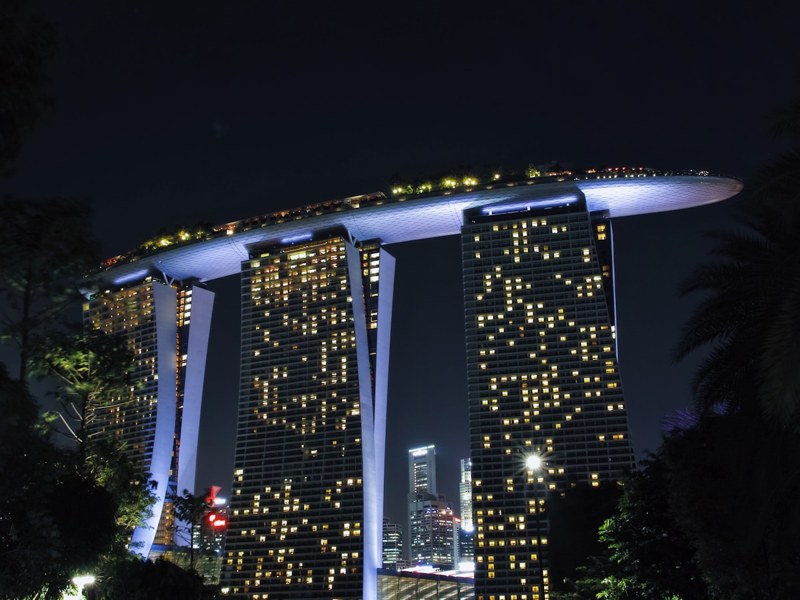
Singapore as regional commodity trading hub is an established reality, not an aspiration: the city-state combines a deep-water port, a network of more than 90 double-taxation agreements, a stable currency and a concessionary tax regime that taxes qualifying physical and derivative trading income at 5% or 10%. For trading companies setting up Singapore operations in 2026, it offers the fastest route to bank, finance and clear cargo across Asia.
Raffles Corporate Services works with a panel of corporate and employment law firms; this article is general information, not legal advice.
Singapore as regional commodity trading hub: the 2026 picture
Roughly a fifth of the world’s seaborne trade passes through the Strait of Malacca, and Singapore sits at its eastern mouth. The Port of Singapore is consistently ranked the world’s busiest transhipment hub, connecting to over 600 ports in more than 120 countries. Around this physical infrastructure has grown a cluster of more than 200 global trading houses covering energy, metals, agricultural commodities and carbon, supported by trade financiers, insurers, surveyors and arbitration centres. The result is an ecosystem where a cargo can be financed, hedged, inspected and re-sold without leaving the jurisdiction.
The commercial draw is reinforced by certainty. Singapore enforces contracts predictably, the Singapore International Arbitration Centre is a default forum for cross-border commodity disputes, and the Monetary Authority of Singapore supervises the banks that issue the letters of credit traders depend on.
Who sets up a trading company here
Three profiles dominate. First, established commodity majors opening a regional marketing or risk-management office to serve Asian buyers. Second, mid-sized regional traders relocating from higher-tax or less stable jurisdictions to consolidate procurement. Third, producers (mining, agriculture, refining) that want an offshore marketing arm closer to demand. All three typically incorporate a private limited company, which remains the standard vehicle for a foreign-owned trading business. If you are weighing the structure, our partners explain the mechanics in their guide to Singapore Pte Ltd company registration for foreigners.
Setting up: requirements and timeline
A private limited trading company must have at least one ordinarily-resident director, a company secretary appointed within six months, a registered office address and a minimum paid-up capital of S$1 (though banks and counterparties expect meaningful capitalisation for a trading book). Section 157A(1) of the Companies Act 1967 vests the management of the company in its directors, so the resident director carries real governance responsibility, not merely a nominal title.
Indicative timeline and cost in 2026:
- Company incorporation with ACRA: 1–3 working days; ACRA name application S$15 and incorporation fee S$300.
- Corporate bank account (trade finance ready): 3–8 weeks, depending on beneficial-owner due diligence.
- TradeNet declaring agent and customs activation: 1–2 weeks once the company is registered with Singapore Customs.
- GST registration (recommended for traders reclaiming import GST): 2–4 weeks.
Customs, permits and the free trade zones
Every import, export and transhipment requires a permit declared through TradeNet, Singapore’s single electronic window. Goods can move through one of the free trade zones for storage and re-export without attracting import GST until they enter the local market. Controlled and strategic goods (for example, certain chemicals, dual-use items and petroleum) need additional licences. The detailed customs treatment is covered in our companion guide to free trade zone usage and customs, and the official permit rules sit with Singapore Customs.
The tax case: GTP and the trading concessions
The headline corporate tax rate is 17%, but the regime that makes Singapore competitive for traders is the Global Trader Programme (GTP), administered by Enterprise Singapore. Approved traders enjoy a concessionary rate of 5% or 10% on qualifying income from physical trading, brokering and derivative trading in approved commodities. The concession draws its authority from the Economic Expansion Incentives (Relief from Income Tax) Act 1967, and applicants commit to business spending and headcount thresholds in Singapore. Full mechanics, qualifying conditions and the application route are set out in our dedicated Global Trader Programme guide.
Beyond GTP, foreign-sourced income that is genuinely earned offshore may qualify for exemption on remittance. Section 13(9) of the Income Tax Act 1947 sets the conditions under which foreign dividends, branch profits and service income received in Singapore can be exempt, subject to the “subject to tax” and headline-rate tests. Traders should also confirm withholding-tax exposure on cross-border interest and service payments before structuring intercompany flows. Authoritative guidance is published by IRAS and incentive criteria by Enterprise Singapore.
Hiring the trading desk
A credible trading operation needs front-office traders, risk and operations staff. Foreign hires generally require an Employment Pass, and the qualifying salary thresholds have been rising. Plan your payroll around the latest bands, which our employment colleagues track in their note on Employment Pass and S Pass salary thresholds. Substance matters for the tax concessions too: GTP and the foreign-source exemption both assume real decision-making in Singapore, so headcount and seniority are scrutinised.
The trade-finance and risk ecosystem
What separates Singapore from a simple low-tax jurisdiction is the depth of the surrounding ecosystem. A trader sitting here can arrange a letter of credit with a MAS-regulated bank in the morning, hedge price exposure on a regional derivatives venue in the afternoon, and book marine cargo insurance and an independent inspection before the cargo sails, all within the same time zone and legal system. Disputes, when they arise, are commonly resolved at the Singapore International Arbitration Centre under contracts governed by Singapore law, which counterparties across Asia accept as neutral and predictable.
This matters for working capital. Commodity trading is capital-intensive: a single cargo can tie up millions of dollars between purchase and resale. Access to competitively priced trade finance, and to bankers who understand commodity flows, often makes more difference to a trader’s returns than the headline tax rate. Newer entrants should budget time to build banking relationships, because trade-finance lines are extended on the strength of track record, capital and documented risk controls, not merely on incorporation.
Common mistakes and gotchas
- Under-capitalising the trading book. A S$1 paid-up capital will not open trade-finance lines; banks expect capital proportionate to your letter-of-credit needs.
- Assuming all income qualifies for GTP. Only income from approved commodities and qualifying activities is concessionary; ancillary income is taxed at 17%.
- Ignoring transfer pricing. Intercompany trades with related producers must be at arm’s length and documented, or IRAS may adjust margins.
- Treating substance as optional. Booking profit in Singapore without people or decisions here invites challenge under both domestic rules and treaty partners’ anti-avoidance provisions.
FAQs
Is Singapore really better than Hong Kong or Dubai for commodity trading? Each has merits. Singapore’s edge is the combination of physical port infrastructure, the GTP concession, an extensive treaty network and MAS-regulated trade-finance banks in a single, English-language, common-law jurisdiction.
How long does the whole set-up take? The company can be live in days, but a trade-finance-ready bank account and customs activation usually push a realistic operational start to 6–10 weeks.
Do I need GTP approval before I start trading? No. You can trade at the standard 17% rate first and apply for GTP once you can demonstrate the required substance and turnover, but plan the application early because the concession is forward-looking.
What is the minimum to qualify for the foreign-sourced income exemption? The income must have been subject to tax in the source jurisdiction with a headline rate of at least 15%, and the conditions in Section 13(9) of the Income Tax Act 1947 must be met on remittance.
Can one resident director satisfy the rules? Yes, one ordinarily-resident director satisfies the Companies Act 1967, but the director must genuinely exercise the management responsibilities the Act assigns.
Need help with this? Call, SMS or WhatsApp +65 8501 7133, or email [email protected]. Raffles Corporate Services works with a panel of corporate and employment law firms; this article is general information, not legal advice.