
Singapore’s grant landscape for small and medium enterprises is, by now, thoroughly picked over. Every business owner who has spoken to a corporate services firm in the last three years has heard of the Enterprise Development Grant (EDG), the Productivity Solutions Grant (PSG) and the Market Readiness Assistance (MRA) grant. Far fewer have heard of a scheme that applies to a much smaller, much more specific universe of applicants: SFA-licensed farms.
Raffles Corporate Services works with a panel of experienced Singapore law firms who offer cost-effective and efficient legal service and advice. This article is general information only and is not legal advice.
The Singapore Food Agency (SFA) has opened a new S$70 million second tranche of funding under the Agri-Food Cluster Transformation Fund, referred to on SFA’s own site as “ACT Fund 2”. It builds on the original S$60 million ACT Fund launched in April 2021, and it will remain open to applications until 31 March 2031, a runway of nearly five years. For the handful of local farming businesses that qualify, this is arguably the most generous and least contested grant channel in Singapore today, precisely because Enterprise Singapore’s mainstream schemes were never built with commercial farms in mind.
This article sets out exactly what the ACT Fund 2 covers, who is eligible, how the application mechanics work through the Business Grants Portal, and why farm operators should treat this as a separate track from the EDG/PSG/MRA universe rather than assume overlap.
What Is the ACT Fund 2?
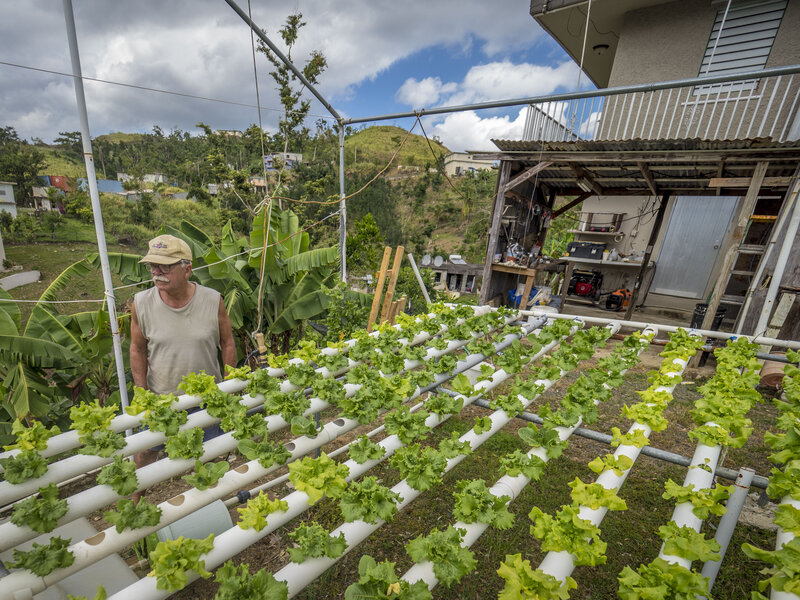
The Agri-Food Cluster Transformation (ACT) Fund is SFA’s dedicated capability-building grant for licensed local farms. Its stated purpose is to help Singapore’s farmers become more productive, climate-resilient and resource-efficient, which in practice means funding the equipment, certification and infrastructure needed to move from small-scale or traditional farming towards higher-yield, technology-enabled production.
The original ACT Fund, worth S$60 million, was introduced in April 2021. According to SFA, outcomes from projects supported under that first tranche have already contributed to a vibrant agri-food ecosystem and to Singapore’s food security. Building on that track record, SFA has now made a new S$70 million tranche of funding available under the ACT Fund 2, running from 2026. Applications must be submitted by 31 March 2031.
The Three Funding Components
The ACT Fund 2 is not a single grant with one application form. It is structured around three distinct components, each with its own guidelines, templates and approval pathway. A farm can apply under more than one component if its plans genuinely span more than one category.
| Component | What It Covers | Typical Use Case |
|---|---|---|
| Capability Upgrading (CU) | PSG for the agri-food sector (pre-scoped equipment and solutions); Standards Adoption and Technical Consultancy support (one-off S$15,000: S$10,000 consultancy plus S$5,000 certification) | Adopting aeration systems or post-harvest equipment; obtaining SG Clean & Green or SG GAP/GAqP certification |
| Technology Upscaling (TU) | Large-scale, commercial, automated and advanced farming technology systems, including related infrastructure and building works | Setting up a new high-tech farm site or retrofitting industrial space for commercial-scale farming |
| Industry Partnership for Capability Transformation (IPCT) | Joint projects between farms and agri-tech stakeholders, technology providers, off-takers, logistics companies or research institutes | Shared platforms, tools or systems intended to lift capabilities across multiple farms, not just one |
Capability Upgrading (CU)
Capability Upgrading is the entry point for most farms and has two strands. The first is the PSG for the agri-food sector, which funds pre-scoped farming solutions and equipment ranging from aeration systems to post-harvest handling equipment. A farm may apply more than once under this strand, provided each application funds a genuinely different solution or piece of equipment; funding cannot be used to repeat-purchase something already funded previously.
The second strand, Standards Adoption and Technical Consultancy, funds a one-off sum of S$15,000 (S$10,000 consultancy fees plus S$5,000 certification fees) to help a farm achieve the Singapore Clean & Green (SG C&G) Urban Farms standard or Singapore Good Agricultural Practice / Good Aquaculture Practice (SG GAP/GAqP) certification, standards that tend to open doors to larger retail and institutional buyers.
Technology Upscaling (TU)
Technology Upscaling is aimed squarely at farms ready to invest in commercial-scale, automated production systems, together with the pre- and post-harvest facilities that support them. SFA’s guidance specifically extends this to related infrastructure and building works, whether that means installing farming systems on a new site or retrofitting an existing ready-built industrial space for farming use. This is the component most likely to involve significant capital expenditure and, correspondingly, the most substantial supporting documentation.
Industry Partnership for Capability Transformation (IPCT)
IPCT is the collaborative component. It funds joint projects between farms and agri-tech stakeholders, or collaborative initiatives with private-sector partners and research institutes, that are intended to raise sector-wide capabilities rather than benefit a single farm alone. A shared cold-chain platform, a common data or monitoring system, or a jointly developed waste-treatment solution serving several farms would sit here.
Who Qualifies
Eligibility under the ACT Fund 2 is narrower than most Enterprise Singapore grants, and deliberately so. To apply, a business must:
- Operate a local farm in Singapore holding a valid farm licence issued by SFA; and
- Be free of unresolved licensing offences for at least one year before the date of application. SFA’s own wording is that the “Offence Date” must be more than one year before the “Application Date”, and that any offence record must have been satisfactorily resolved and closed before an application will be considered.
This means the ACT Fund 2 is not open to general agri-food businesses, food distributors, or F&B operators without a farm licence. It is specifically for the population of SFA-licensed farms, whether in land-based, sea-based or urban farming.
How to Apply: Step by Step
The application mechanics run through the same government infrastructure used for most Singapore grants, with one twist: farms will use two different portals depending on the component.
- Confirm eligibility. Check the farm licence is valid and that the one-year clean-record condition is met.
- Choose the component. Decide whether the application falls under Capability Upgrading, Technology Upscaling or Industry Partnership for Capability Transformation; farms unsure which component fits can contact SFA directly at [email protected].
- Download the guidelines and templates. Each component has its own ACT Fund Guidelines document, and TU and IPCT additionally require a Proposal Template and a Project Outcome Template.
- Set up CorpPass, if not already done. All applications require CorpPass access for the business entity; see our guide on logging in as a business user via CorpPass if this has not been set up before.
- Submit through the correct portal. Applications for the PSG for the agri-food sector strand go through the standard Business Grants Portal (BGP). All other applications, meaning CU’s Standards Adoption and Technical Consultancy strand, TU and IPCT, are submitted through BGP 2.0.
- Wait for SFA’s review. SFA states a processing time of 12 to 20 weeks from a complete application, during which it may contact the applicant for clarification.
- Accept the Letter of Offer. If approved, the farm is notified to retrieve its Letter of Offer (LOF) under the “Updates Required” tab in “My Applications” on BGP, and must accept it within the timeline stated in the LOF, or the application will be treated as invalid.
Why This Is a Separate Track From EDGE, EDG, PSG and MRA
It is worth being precise here, because farm operators sometimes assume their existing familiarity with Enterprise Singapore’s grant suite covers this ground. It does not. Enterprise Singapore‘s mainstream schemes, including the general PSG, the EDG and its Enterprise Development components, and MRA, are built for a broad base of Singapore SMEs and generally do not extend to farm-specific large-scale technology upscaling, nor to SFA’s own certification standards. Businesses exploring that broader suite may find our overview of the Enterprise Sustainability Programme (ESP) useful for comparison, since it funds green capability building for a much wider range of SMEs than the ACT Fund’s farm-only scope. The generic PSG catalogue, for instance, will not fund a farm’s post-harvest facility or its SG GAP/GAqP certification fees; those sit under SFA’s ACT Fund instead.
That distinction matters for planning purposes. A farm that has already exhausted its PSG claims under the general scheme may not realise a materially different funding channel exists, purely because it holds an SFA farm licence. Grant support in Singapore is administered by scheme owner, not a single unified budget, so a business can hold approvals under both an Enterprise Singapore scheme and an SFA scheme concurrently, provided the funded items do not overlap. The same principle applies across other scheme-specific programmes we have covered, such as the SME Cash Grant and the Global Innovation Alliance, which sit alongside rather than in place of a farm’s ACT Fund entitlement.
Practical Advice Before You Apply
A few points are worth flagging to any farm operator preparing an ACT Fund 2 application:
- Match the component to the spend, not the other way round. A mismatched application is more likely to be queried or delayed during the 12 to 20 week review.
- Keep the licence record clean well in advance. Because the one-year clean-record condition is measured from the Offence Date to the Application Date, any unresolved issue should be closed out early rather than left until the application is otherwise ready.
- Budget for the portal split. Applicants preparing a combined submission across PSG for agri-food and, say, Technology Upscaling need to remember these go through different portals (BGP versus BGP 2.0) and should not assume one submission covers both.
- Treat the Letter of Offer deadline seriously. An approved application that is not accepted within the LOF’s stated window is treated as invalid, which effectively means starting over.
- Get your corporate secretarial and CorpPass administration in order first. Grant applications move faster when corporate records, authorised users and CorpPass access are already properly set up, one of the more common practical bottlenecks across grant applications generally.
Frequently Asked Questions
Is the ACT Fund 2 only for new farms?
No. It is open to any SFA-licensed local farm that meets the eligibility conditions, whether newly established or long operating, provided the farm licence is valid and the one-year clean-record condition is satisfied.
Can a farm apply for more than one component?
Yes. The three components (Capability Upgrading, Technology Upscaling and Industry Partnership for Capability Transformation) address different types of spend, and a farm with plans spanning more than one category can apply under more than one, using the correct guidelines and portal for each.
What happens if the licence has an unresolved offence record?
The offence must be satisfactorily resolved and closed, and at least one year must have passed between the Offence Date and the Application Date, before SFA will consider the application.
How long does approval take?
SFA states a processing time of 12 to 20 weeks from a complete application, followed by a separate window to accept the Letter of Offer once approved.
Does this replace Enterprise Singapore’s grants for a farming business?
No. It runs alongside them. Enterprise Singapore’s EDG, general PSG and MRA schemes remain available to a farming business for the aspects of its operations they were designed for; the ACT Fund 2 exists specifically because those schemes do not extend to SFA-specific certification support or farm-scale technology upscaling.
Getting the Application Right the First Time
Because the ACT Fund 2 is narrower and less publicised than Enterprise Singapore’s flagship grants, there is less second-hand experience circulating among applicants, and the margin for a misdirected or incomplete submission is correspondingly higher. Farms applying for the larger Technology Upscaling or IPCT components are well served by getting corporate documentation, CorpPass access and supporting templates in order before the clock starts on SFA’s review period. Operators building up management capacity alongside a technology upscaling project may also look at the Enterprise Leadership for Transformation (ELT) programme, a separate funded leadership track for SME founders and successors.
If your business holds an SFA farm licence and is weighing whether to apply under the ACT Fund 2, or needs help getting the surrounding corporate administration in shape first, Raffles Corporate Services can help you work through the eligibility conditions and the practical steps involved.
The Editorial Team, Raffles Corporate Services
How Raffles Corporate Services can help
If you would like to enquire about our corporate secretarial, accounting or tax services, email [email protected] or WhatsApp +65 8501 7133.
Our team and tax advisers can assist with your business requirements. Where legal advice is needed, advisers from our associated law firms can assist.