
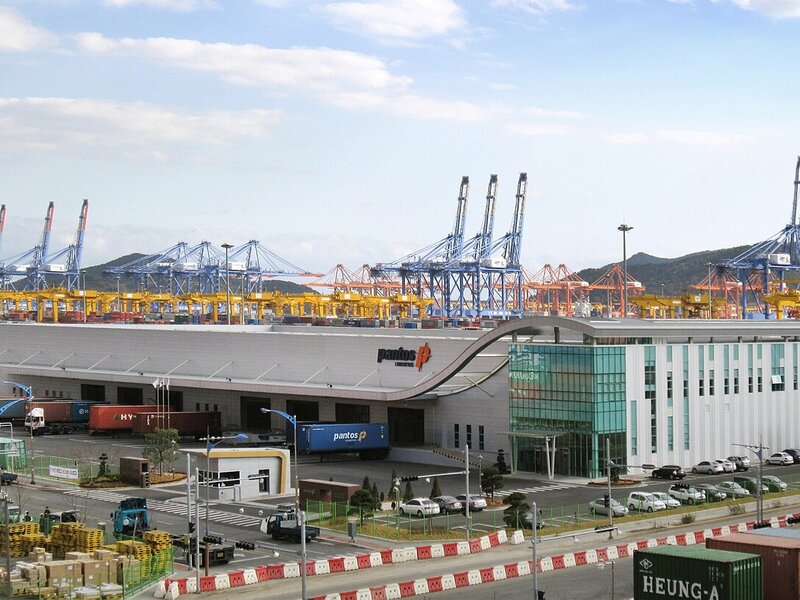
On 30 June 2026, the Singapore High Court handed down a judgment that every company operating in this market should read carefully, even if it has never heard of Keppel Distripark or the “FTZ Surcharge” at the centre of the dispute. In CCS v CNL Logistic Solutions Pte Ltd and another, the High Court allowed an appeal by the Competition and Consumer Commission of Singapore (CCS) and reinstated an infringement finding against two warehouse operators, CNL Logistic Solutions Pte Ltd (CNL) and Gilmon Transportation & Warehousing Pte Ltd (Gilmon), for exchanging pricing intentions with competitors. The case travelled from a CCS infringement decision in 2022, through a Competition Appeal Board (CAB) reversal in 2025, to a High Court reinstatement in 2026, and it confirms a point many small and mid-sized businesses get wrong: having a small market share does not shield you from liability under the Competition Act 2004.
This article sets out what a CCS infringement decision and its appeal chain are, the legal basis for the finding, who it applies to, how the appeal process works, what evidence matters, a worked timeline and cost example from this case, and what a Singapore company should do if it ever receives a CCS infringement notice.
1. What the Legal Mechanism Is: The CCS Infringement Decision and the Appeal Chain
The Competition and Consumer Commission of Singapore is the statutory regulator that enforces the Competition Act 2004. When CCS finds that a business has engaged in anti-competitive conduct, it issues an Infringement Decision, which can include a finding of infringement, directions to stop the conduct, and financial penalties.
CCS’s Infringement Decision dated 17 November 2022 found that in June 2017, representatives of CNL and Gilmon, together with two other warehouse operators at Keppel Distripark, exchanged information about their intentions to impose an “FTZ Surcharge” (a free trade zone related surcharge) at the same price as the largest operator. The four operators then used that shared information in negotiations with customers, and all four later imposed the same surcharge. CCS imposed total financial penalties of S$2.8 million across the four operators.
A business that disagrees with a CCS infringement decision does not go straight to court. Singapore’s competition law regime builds in a dedicated appeal chain: first to the Competition Appeal Board, then, on a point of law or on the penalty amount, to the High Court and finally the Court of Appeal. CNL and Gilmon appealed to the CAB in January 2023, and on 16 July 2025 the CAB allowed their appeal, finding that CCS had not adequately weighed the two companies’ small market share in Keppel Distripark. CCS then appealed to the High Court on 30 July 2025, and on 30 June 2026 the High Court allowed CCS’s appeal, set aside the CAB’s decision, and reinstated the original infringement finding.
For a comparable regulatory appeal chain in the financial sector, see our earlier article on appealing a MAS prohibition order, which follows a similarly structured path from regulator decision to judicial review.
2. Legal Basis: Section 34 of the Competition Act 2004 and the Case Citation
The substantive prohibition in play is section 34 of the Competition Act 2004, which prohibits agreements between undertakings, decisions by associations of undertakings, or concerted practices that have as their object or effect the prevention, restriction, or distortion of competition within Singapore, unless an exemption applies. This is often referred to as the “section 34 prohibition” and is the closest Singapore equivalent to the Chapter I prohibition under UK competition law or Article 101 of the Treaty on the Functioning of the European Union.
The High Court’s judgment of 30 June 2026 held that CNL and Gilmon had infringed section 34 by exchanging information about pricing intentions, namely whether they would impose the FTZ Surcharge, then using that information to persuade customers to accept the increase. The High Court rejected the companies’ argument that a lack of market power meant their conduct could not have harmed competition, holding instead that the exchange helped them overcome their individual commercial weaknesses and secure customer acceptance of a coordinated price rise. As reported by CCS, market share alone does not shield a business from liability under the Act.
The full text of the Competition Act 2004 is available on the Singapore Statutes Online portal maintained by the Attorney-General’s Chambers, and any company wanting to check the precise wording of section 34 or the appeal provisions should refer directly to the Act on sso.agc.gov.sg rather than relying on secondary summaries.
3. Who Can Use This, and Who It Applies To
Two separate audiences need to understand this regime.
First, the appeal mechanism itself is available to any business that has received an adverse decision from CCS: any party to an agreement, any party to a merger, or any person whose conduct CCS has assessed may appeal to the Competition Appeal Board. This covers decisions on the section 34 (anti-competitive agreements), section 47 (abuse of dominance), or section 54 (anti-competitive mergers) prohibitions, plus decisions on penalties and block exemptions.
Second, and more importantly for most readers, the underlying prohibition in section 34 applies to every business in Singapore, regardless of size. CNL and Gilmon argued that their small share of the Keppel Distripark warehousing market meant they lacked the power to affect competition. The High Court disagreed. Any Singapore company, large or small, that discusses future pricing, surcharges, discounts, or other sensitive strategy with a competitor risks a section 34 infringement, irrespective of its market share.
This matters most for companies in concentrated local markets, such as operators within a single industrial park, port, or trade zone, where informal conversations between neighbouring competitors can easily cross the line into an unlawful information exchange. Directors and managers who handle pricing, tendering, or customer negotiations should treat this as a live compliance risk. See also our article on the increased penalties directors now face for governance failures, since a competition law breach can also expose individual directors to personal scrutiny.
4. Step-by-Step: How a CCS Appeal Actually Proceeds
If your company receives a CCS infringement decision and wishes to challenge it, the process runs broadly as follows.
Step 1: CCS issues the Infringement Decision
Following an investigation, CCS issues a written decision setting out its findings, directions, and any financial penalty. The company should read it carefully and, if in doubt about its rights or the deadline, seek advice from a Singapore Advocate and Solicitor immediately, as appeal deadlines are short.
Step 2: Lodge a notice of appeal with the Competition Appeal Board
The notice of appeal must be filed with the Secretary to the Competition Appeal Board within two months of notification (for section 34 or 47 decisions) or four weeks (for section 54 decisions), whichever is earlier than publication. It must state the facts, grounds of appeal, supporting arguments, and relief sought, and be signed by the appellant or its authorised or legal representative.
Step 3: The CAB hears and determines the appeal
The Competition Appeal Board, an independent body appointed by the Minister for Trade and Industry, reviews the decision, hears both sides, and issues its own determination. It can uphold, vary, or set aside the CCS decision, including the finding of infringement and the penalty amount.
Step 4: Further appeal to the High Court
If either party is dissatisfied with the CAB’s decision, it may appeal further, but only to the High Court and only on a point of law or on the amount of the financial penalty. This is not a fresh rehearing of the facts; the High Court’s role is to determine whether the CAB erred in law. In this case, CCS was the party that appealed the CAB’s decision to the High Court, arguing that the CAB had erred in how it approached the question of market power and the effect of the information exchange on competition.
Step 5: Further appeal to the Court of Appeal
A party still dissatisfied may appeal to the Court of Appeal, again restricted to a point of law or the penalty amount. As at the date of this article, it is not publicly known whether CNL and Gilmon will pursue a further appeal.
5. Documents Required and Evidentiary Considerations
Competition law appeals are evidence heavy. The table below summarises the key materials typically involved at each stage, based on the Competition (Appeals) Regulations and CCS’s published guidance.
| Stage | Documents / Evidence | Practical Notes |
|---|---|---|
| CCS investigation | Internal emails, WhatsApp/messaging records, pricing memos, meeting minutes, customer negotiation records | CCS can compel production of documents; internal communications are frequently the decisive evidence in information-exchange cases |
| Notice of appeal to CAB | Copy of the contested CCS decision, statement of facts, grounds of appeal, legal and factual arguments, relief sought | Must be signed by the appellant or an authorised/legal representative and accompanied by the prescribed filing fee |
| CAB hearing | Witness statements, expert economic evidence on market definition and market share, documentary evidence from the CCS investigation | Economic evidence on market power was central to the CAB’s original decision in this case, and to the High Court’s rejection of it |
| Appeal to High Court | Grounds of decision of the CAB, appellant’s case on the point of law, respondent’s case | Confined to points of law or penalty quantum; no fresh factual evidence is generally admitted |
| Appeal to Court of Appeal | Record of proceedings below, written submissions on the point of law | Final tier; again confined to law or penalty amount |
Companies should also review our article on recent market-conduct rulings affecting listed companies for a sense of how Singapore courts and regulators treat documentary and communications evidence in market-conduct cases more broadly.
6. Timeline and Costs: A Worked Example From This Case
The CNL and Gilmon matter illustrates how long a full competition law appeal chain can run. The table below sets out the actual dates.
| Date | Event |
|---|---|
| June 2017 | CNL, Gilmon, and two other warehouse operators exchange information on the FTZ Surcharge |
| 17 November 2022 | CCS issues its Infringement Decision, imposing total penalties of S$2.8 million on the four operators |
| January 2023 | CNL and Gilmon lodge their notice of appeal to the Competition Appeal Board |
| 16 July 2025 | The CAB allows the appeal, citing inadequate weight given to the companies’ small market share |
| 30 July 2025 | CCS appeals the CAB’s decision to the High Court |
| 30 June 2026 | The High Court allows CCS’s appeal, sets aside the CAB decision, and reinstates the infringement finding |
Two points stand out. First, from the conduct in June 2017 to the High Court’s final word in June 2026 is nine years, and the appeal process alone (January 2023 to June 2026) took roughly three and a half years. Second, on costs, a notice of appeal to the CAB carries a filing fee of S$500, and the CAB has discretion to award costs to either side at the end of proceedings. Beyond that fee, the real cost lies in legal fees, expert economic evidence on market power, and management time spent on document production and hearings, which can run into the tens or hundreds of thousands of dollars for a contested multi-year appeal.
7. What Happens After: Practical Consequences and Compliance Advice
With the CAB decision set aside, CCS’s original infringement finding and penalty against CNL and Gilmon are reinstated, unless a further appeal to the Court of Appeal succeeds. CCS’s Chief Executive, Mr Alvin Koh, was direct in his public comments: businesses of any size must determine their pricing independently, and should not exchange confidential or strategic information, including future pricing intentions, with competitors.
Singapore companies should:
- Review recurring forums where staff interact with competitors, such as industry associations or shared-facility meetings, and ensure employees know what they may and may not discuss.
- Put in place, or refresh, a written competition compliance policy that specifically addresses information exchange, not just formal price-fixing agreements.
- Treat any exchange about future prices, surcharges, or tender strategy with a competitor as high risk, regardless of market share.
- If your company receives a CCS notice of investigation, engage a Singapore Advocate and Solicitor immediately, as appeal deadlines are short and strictly enforced.
- Preserve, rather than delete, relevant internal communications once aware of an investigation, as document destruction can itself create serious legal exposure.
Our article on the tort of unlawful means conspiracy is relevant for companies weighing civil liability, since conduct that breaches the Competition Act can invite related civil claims. Companies in regulated or licensed sectors should also revisit our overview of compliance obligations under Singapore’s trade and regulatory regimes, a reminder that regulatory risk here is rarely confined to a single statute.
8. Frequently Asked Questions
Does my company need a large market share for the Competition Act to apply?
No. The High Court’s judgment expressly confirms that a small market share does not shield a business from liability under section 34 of the Competition Act 2004 if it exchanges confidential or strategic pricing information with a competitor.
What is an “FTZ Surcharge” and why did it matter here?
It was a free trade zone related charge the four Keppel Distripark operators intended to impose. The issue was not the surcharge itself, but that the operators discussed their pricing intentions beforehand and used that shared knowledge in customer negotiations.
How long do I have to appeal a CCS infringement decision?
Two months for section 34 or 47 decisions, four weeks for section 54 (merger) decisions, running from notification or publication, whichever is earlier. These deadlines are strict, so early legal advice is essential.
Can I appeal a High Court decision further?
Yes, but only to the Court of Appeal, and only on a point of law or on the amount of the financial penalty, not on the underlying facts. This is a narrower avenue than the original CAB appeal.
Is this article a substitute for legal advice on a live CCS matter?
No. It explains the general framework using a real, publicly reported case. If your company has received a CCS notice or infringement decision, engage a Singapore Advocate and Solicitor without delay.
What should I do if I am unsure whether a conversation with a competitor crossed the line?
CCS’s own guidance encourages businesses with doubts to seek legal advice before, not after, the exchange. Once information has been shared and acted on commercially, as happened here, the conduct cannot be undone.
Need Help With This Matter?
If your company is facing this situation, Raffles Corporate Services can assist with the groundwork: ACRA filings, compliance documentation, and coordinating with experienced Singapore law firms. For matters requiring court proceedings, we work with a panel of experienced Singapore law firms who offer cost-effective and efficient legal service and advice.
Email: [email protected]
Call, SMS or WhatsApp: +65 8501 7133
This article is for general information only and does not constitute legal advice. For advice specific to your situation, please consult a qualified Singapore Advocate and Solicitor.
The Editorial Team, Raffles Corporate Services