
Recently, I was chatting with a small business owner about how to keep her best people.
We talked about bonuses, incentives, and career progression.
Then she asked:
“What if I give them shares?”
That’s a question more SME owners are asking — and it’s a fair one.
When you can’t always compete on salary, giving employees a stake in the business seems like a smart way to keep them loyal.
But here’s the truth: in most SMEs, equity isn’t the magic answer it appears to be.
The Allure — and the Catch
Giving shares feels generous and progressive. It says, “You’re part of this.”
But the real value of those shares depends on what the business can do with them.
If the company isn’t on a path to IPO, sale, or steady dividends, then the shares have no liquidity — no real-world value.
Employees can’t sell them. They don’t earn anything unless the business grows and pays out dividends.
In short:
Shares sound attractive, until you realise they don’t pay the bills.
That’s why equity often fails to motivate employees the way owners expect. The excitement wears off when there’s no immediate reward — and no clear line of sight to what those shares are worth.
The Owner’s Dilemma: How Much Is Enough?
Let’s say you give 10% to a loyal manager.
It sounds small — but it’s enough to complicate your shareholding forever.
-
You can’t easily take it back if things don’t work out.
-
You can’t sell the business without consulting them.
-
And you can’t distribute dividends without sharing the profits.
Giving 10% may not sound like much — until you realise it comes with 100% of the legal complexity.
So you end up in a tricky middle ground: giving enough to seem generous, but not enough to truly motivate.
Why Employees Often Don’t Feel the Impact
Employees value rewards they can feel now.
They’re motivated by immediate, tangible recognition — a performance bonus, a profit-share, or a pay rise tied to results.
In contrast, shares feel abstract.
Without dividend policies or a visible growth plan, it’s just paper.
And when your balance sheet isn’t expanding dramatically, the “ownership” doesn’t translate to meaningful upside.
Something I myself realised after having been in business for some time:
“Equity motivates founders. Cashflow motivates employees.”
A Smarter Alternative: Phantom Shares
Here’s the thing — you don’t always need to give away real shares to make people feel like owners.
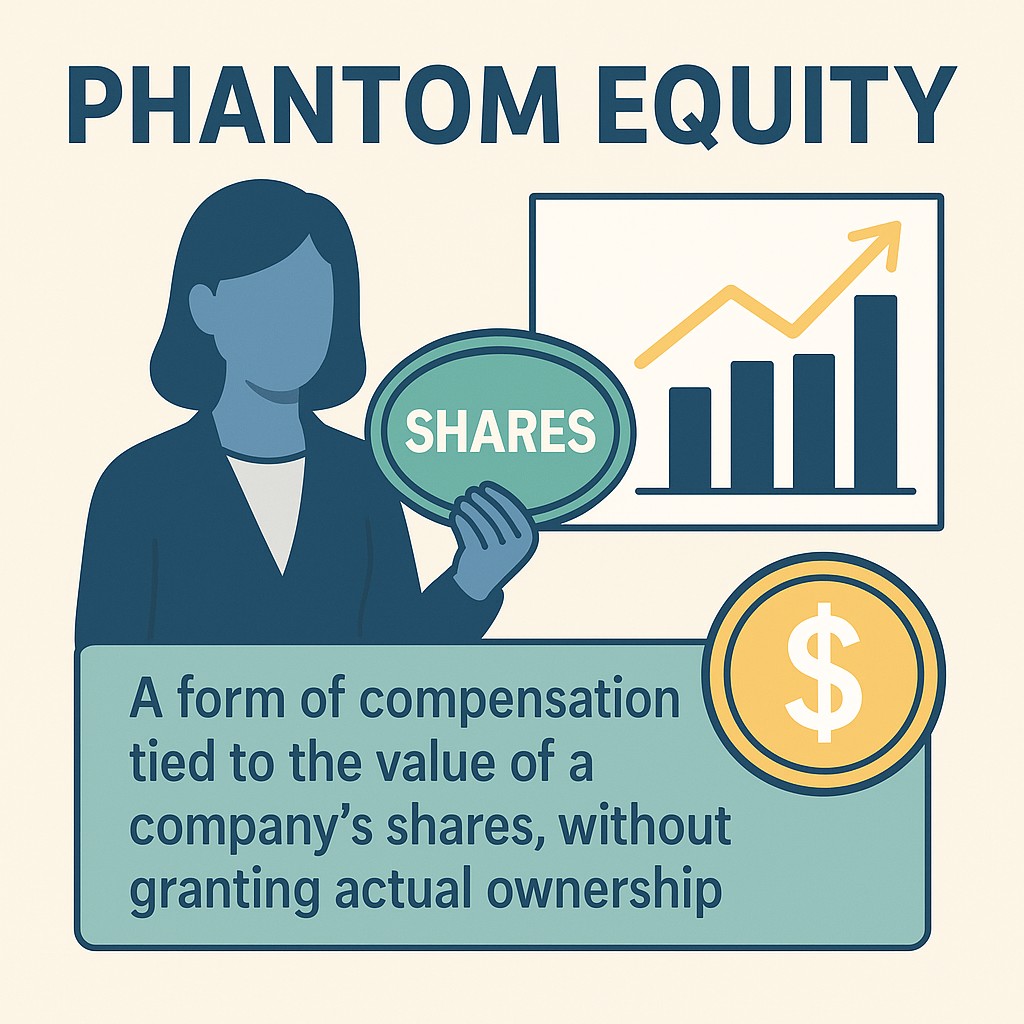
Some SMEs use phantom shares, also known as shadow equity.
They’re not real shares — nobody files them with ACRA, and your cap table stays clean.
But they work like a mirror of ownership: employees get a cash reward that moves with the company’s success.
Think of it as a bonus that’s earned like equity, but paid like cash.
How It Works
You set aside a pool of “phantom units” that mimic shares. These don’t exist legally, but they’re used to calculate a payout.
There are two main ways to do it:
-
Profit-linked — Employees receive a payout based on a percentage of annual profits.
-
Example: Your company makes $300,000 profit. The employee holds 5% phantom shares → they get $15,000.
-
-
Value-linked — Employees benefit when your business grows in value.
-
Example: When your company valuation rises from $1M to $2M, their phantom units gain value, and you pay a cash bonus that reflects this growth.
-
Either way, the person shares in your success — without owning actual equity.
Bonuses vs Phantom Payouts: Do You Still Give Both?
A common question that comes up once a phantom plan is in place:
“If I’m already giving phantom equity, do I still pay bonuses?”
The short answer — yes, but with purpose.
Bonuses and phantom equity serve different roles in keeping your team motivated and loyal.
Let’s dive deeper into this:
1. Different Rewards for Different Goals
Reward TypePurposeTimeframeBonusRewards this year’s performance — sales, cost control, project wins.1 yearPhantom equityRewards long-term contribution — staying, improving, and growing company value.3–5 years
Bonuses are short-term fuel.
Phantom equity is long-term glue.
2. Layering the Rewards
Think of your compensation structure as three layers:
-
Base salary — for doing the job.
-
Bonus — for hitting short-term goals.
-
Phantom equity — for helping the company grow and sustain profits over time.
You can adjust the proportions, but ideally, you keep all three layers.
This way:
-
Bonuses keep staff sharp and competitive.
-
Phantom equity makes them think like partners who care about profitability next year, not just this year.
Bonus = what you earned today.
Phantom equity = what you’re helping build for tomorrow.
3. Rebalancing the Numbers
You can rebalance total compensation without making the package bloated.
Example:
Before phantom plan
-
Salary: $100,000
-
Bonus: up to 2 months (≈ $16,000)
After phantom plan
-
Salary: $100,000
-
Bonus: up to 1.5 months (≈ $12,000)
-
Phantom payout: profit-linked, typically $20,000–$30,000 if company hits targets.
This ensures:
-
Rewards grow only when profits grow.
-
Everyone’s incentives align with business outcomes.
4. Why You Shouldn’t Replace Bonuses Entirely
Some owners think, “I’ll scrap bonuses — phantom equity is enough.”
That’s risky.
Bonuses give immediate gratification and keep energy high.
Phantom equity is a delayed reward — it’s powerful for retention, but doesn’t motivate day-to-day behaviour the same way.
If you remove bonuses entirely, staff might lose short-term drive.
A mix of both keeps everyone balanced:
-
Motivated today.
-
Loyal tomorrow.
Designing Phantom Equity: Vesting, Value, and Fairness
Getting the structure right matters.
If it’s too complicated, staff won’t understand it.
If it’s too loose, it becomes a future headache.
Here’s what to think about when designing your plan.
1. Vesting: Reward Loyalty, Not Just Presence
Vesting means the employee “earns” their phantom shares over time.
It prevents you from handing out a big reward to someone who might leave six months later.
You can structure vesting in several ways:
-
Time-based vesting — e.g. 25% each year over 4 years.
-
Performance-based vesting — tied to specific milestones like profit or growth targets.
-
Hybrid vesting — a mix of both.
Vesting ensures employees only earn full rewards if they stay and help the business grow.
If someone leaves after Year 2 in a 4-year plan, only 50% of their phantom equity is vested — the rest lapses.
They’re rewarded for what they helped build, not for what comes after.
2. Should Employees Pay for Their Phantom Shares?
No.
Phantom equity isn’t ownership — it’s a reward mechanism, not an investment.
Making employees “buy in” changes the spirit of the plan.
They should earn their phantom equity through performance and time, not by paying for it.
If you want them to have “skin in the game,” make payouts depend on company performance, not their wallet.
3. Keep It Simple and Transparent
Avoid complex valuation formulas that no one understands.
Peg payouts to something simple and verifiable:
-
Audited net profit after tax, or
-
A clear EBITDA growth figure.
Put it in writing, and keep everyone clear on how it works.
Structuring the Value
Unlike actual equity, phantom equity doesn’t need to match your real cap table.
It’s purely contractual — an internal incentive plan.
A simple approach:
-
Set a fixed pool, say 10% of profit each year.
-
Divide that pool among participants according to their phantom share allocation.
-
Cap the total to maintain profitability and predictability.
If you add more people later, either reallocate within that 10% or create a second tier (e.g. another 5% pool for middle managers).
Case Study: Healthcare Precision Tools SME
This company in Singapore makes $5 million revenue a year, with a 15% net profit margin (about $750,000 after tax).
Growth averages 10–15% a year.
The owner wants to reward her Head of Sales and Finance Manager — key roles in driving profitability — without giving away equity.
She sets up a 10% phantom pool, distributed:
-
Sales Head: 6%
-
Finance Manager: 4%
Each year, 10% of net profit is allocated to the phantom pool:
-
$750,000 × 10% = $75,000
-
Sales Head earns 6/10 of that → $45,000
-
Finance Head earns 4/10 → $30,000
Each has a 4-year vesting schedule (25% per year).
If the Sales Head leaves after Year 2, she keeps only 50% of her entitlement — the rest lapses.
As profits rise to about $950,000 in Year 4, the pool grows naturally — aligning everyone’s rewards with business success.
For the company, the payout is booked as a bonus expense, deductible for tax.
No dilution. No shareholder drama.
Profit-linked phantom equity helps employees think like owners — without turning them into shareholders.
What Happens in a Down Year?
A fair question — what if profits dip, or the company has a rough year?
With a profit-linked phantom plan, the rule is simple:
No profit, no payout.
Because the reward mirrors ownership economics, when the company doesn’t generate profit, the phantom pool for that year is effectively zero.
But employees don’t lose what they’ve already vested — they just don’t receive a payout for that particular year.
When the company rebounds, their vested “units” continue to participate in future profits.
Some owners choose to soften this with a discretionary minimum or a carry-forward clause:
-
Minimum payout — a token bonus to acknowledge effort during a tough year.
-
Carry-forward — any missed phantom entitlement rolls into the next profitable year.
Either way, clarity is key.
When you introduce the plan, be upfront:
“This plan shares the upside, not the downside.
In good years, everyone wins more. In lean years, we hold the line together.”
That honesty helps the team see the plan as what it truly is — a long-term partnership, not a promise of constant payout.
Adding New People to the Plan
As the business grows, you may want to extend the plan to new managers.
You can do that easily — phantom equity is flexible.
Just keep the rules consistent:
-
Fix your total pool (e.g. 10% of profit).
-
Redistribute if needed, or create a second-tier pool for new participants.
-
Start vesting fresh from the date they join the plan.
And communicate clearly:
“We’re extending this plan as the company grows — to recognise more people who help us grow profitably.”
Takeaway
If your business is still growing steadily, focus on rewards employees can feel and understand.
Bonuses, profit-sharing, and phantom equity can achieve the same loyalty — without the pain of dilution.
Before you give away shares, ask yourself:
“Am I rewarding ownership, or encouraging performance?”
The answer will shape how motivated your people truly feel.