
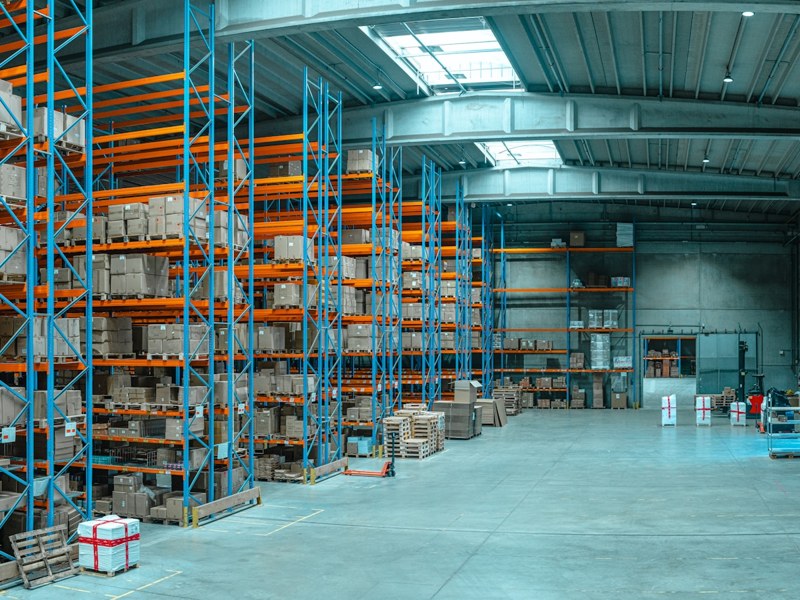
A Free Trade Zone (FTZ) lets a company store, process, and re-export dutiable and taxable goods without paying customs duty or GST until the goods actually enter the Singapore customs territory for local consumption. This decision tree sets out when using an FTZ genuinely helps a trading company setting up Singapore operations, and when it simply adds unnecessary handling cost.
What FTZ usage is
Free trade zones in Singapore are declared under Section 3(1) of the Free Trade Zones Act 1966, which allows the Minister to designate any area in Singapore as a free trade zone by notification in the Gazette. Goods held within an FTZ are treated as not yet imported into the customs territory for duty and GST purposes, so duty and tax are deferred until the goods leave the zone for local consumption; goods that are re-exported directly from the zone never attract Singapore duty or GST at all. FTZ operators must hold a free trade zone operator licence granted under Section 14C of the Act, and operate under the administration of the Director-General of Customs.
Who this is for
FTZ usage suits a trading, warehousing, or logistics company that imports goods for storage, consolidation, light processing, or re-export, particularly where a meaningful share of throughput is re-exported rather than sold domestically. It is commonly used by commodity traders, freight forwarders, and companies running a regional distribution hub through Singapore. It is less useful for a company that imports goods purely for domestic sale, since duty and GST will be payable on entry into the customs territory regardless of whether an FTZ is used, and the added logistics complexity would not be offset by any deferral benefit.
Decision tree: should you choose this
Question 1: Does a meaningful share of your goods get re-exported rather than sold within Singapore? If most goods are sold locally, duty and GST become payable on entry regardless, and FTZ usage adds handling cost without a matching deferral benefit.
Question 2: Do you need to hold significant inventory value for an extended period before sale or re-export? If so, deferring duty and GST until the goods actually move into the customs territory (or avoiding it entirely on re-export) can materially improve cash flow, particularly for high-duty or high-value goods.
Question 3: Will you use a licensed FTZ operator’s facility, or do you need your own dedicated zone area? Most trading companies should use an existing licensed FTZ operator’s warehouse rather than seeking their own FTZ operator licence under Section 14C, which is a substantial undertaking suited to logistics specialists, not individual trading companies.
Question 4: Can your operations tolerate the additional customs documentation and compliance overhead of zone-based storage? FTZ usage requires proper record-keeping of goods movement in and out of the zone, and errors can trigger duty assessments or penalties. If your back-office capacity is thin, factor in either building this capability or paying a licensed operator to handle it.
If you answered yes to Questions 1 and 2, and are comfortable with Questions 3 and 4, using a licensed FTZ operator’s facility is usually worthwhile. If most of your goods are for local sale, skip the FTZ and plan for duty and GST at the point of import instead.
Eligibility and requirements
A trading company does not need its own FTZ operator licence to use a free trade zone; it simply contracts with a licensed FTZ operator (commonly a port, airport cargo, or dedicated logistics facility operator) for storage or handling space. The company using the zone must comply with Singapore Customs’ documentation requirements for goods entering, moving within, and leaving the zone, including permits for dutiable and taxable goods. Companies seeking to become an FTZ operator themselves, rather than a user of an existing zone, must apply for a licence under Section 14C and meet the Director-General of Customs’ operational and security requirements.
Cost and timeline
Using an existing licensed FTZ operator’s facility can typically be arranged within 2 to 4 weeks, covering account set-up, permit registration with Singapore Customs, and warehouse space allocation. Storage costs vary widely by facility and goods type, but budget from roughly S$15 to S$40 per pallet per month for general warehousing, with bespoke rates for bulk commodities or specialised handling. Duty and GST deferral itself has no direct fee, but permit processing and customs brokerage typically costs S$50 to S$150 per shipment. Applying for your own FTZ operator licence is a far larger undertaking, typically taking 6 to 12 months and requiring substantial capital investment in secured facilities, so this route is rarely relevant for a trading company as opposed to a dedicated logistics operator.
Step-by-step process
1. Identify which of your goods qualify as dutiable or taxable and would benefit from zone storage. 2. Select a licensed FTZ operator with facilities suited to your goods (general cargo, cold chain, bulk commodities, and so on). 3. Register with Singapore Customs for the relevant permits to move goods into and out of the zone. 4. Set up inventory and documentation processes to track goods movement within the zone accurately. 5. Arrange customs brokerage for permit filing on each import, transhipment, or local release. 6. Reconcile zone inventory records regularly against Customs’ requirements to avoid discrepancies. 7. For local release of goods from the zone, ensure duty and GST are correctly assessed and paid before the goods enter the customs territory.
Common mistakes and gotchas
The most common mistake is assuming FTZ usage eliminates duty and GST altogether; it only defers or avoids the liability for goods that are genuinely re-exported or remain in the zone, not for goods ultimately sold locally. Poor inventory record-keeping within the zone is another frequent issue, since Singapore Customs can assess duty and GST, plus penalties, on unaccounted-for stock. Some companies also underestimate the logistics overhead of zone-based storage relative to conventional bonded or duty-paid warehousing, particularly for lower-value, lower-duty goods where the deferral benefit is marginal. Finally, companies occasionally confuse using a licensed operator’s FTZ facility with needing their own FTZ operator licence under Section 14C, which is a much larger regulatory undertaking that is rarely necessary for a trading company that is simply a zone user.
FAQs
Does storing goods in an FTZ mean I never pay Singapore duty or GST? Only if the goods are re-exported directly from the zone. Goods released into the Singapore customs territory for local consumption attract duty and GST at that point, per the framework under the Free Trade Zones Act 1966 and the Goods and Services Tax Act 1993.
Do I need my own FTZ operator licence to use a free trade zone? No. Most trading companies use space at an existing licensed FTZ operator’s facility rather than applying for their own licence under Section 14C of the Free Trade Zones Act 1966.
Who administers free trade zones in Singapore? The Director-General of Customs is responsible for administering the Free Trade Zones Act 1966, subject to the Minister’s general or special directions.
Is FTZ usage useful for a company selling mainly to the domestic Singapore market? Generally not, since duty and GST become payable on entry into the customs territory regardless of whether the goods passed through an FTZ first.
Can FTZ usage be combined with the Global Trader Programme? Yes, many trading companies use FTZ facilities for physical goods handling alongside a GTP-incentivised trading entity for income tax purposes, since the two address different parts of the business.
Related guides
For the compliance side of logistics operations that commonly use FTZ facilities, see Compliance Guide for Singapore Logistics and Freight Forwarding Companies (2026) from our colleagues at Singapore Secretary Services, and read our companion piece on Free Trade Zone (FTZ) usage and customs: frequently asked questions for a fuller run-through of the mechanics.
If your trading or logistics operation needs to bring in specialist staff, our colleagues at Singapore Employment Agency have a guide on Training EP and Work Holiday Programme: common mistakes and rejection reasons, relevant if you are training junior staff into specialist warehouse or trade documentation roles.
You may also find our related piece on Global Trader Programme (GTP) concessionary tax: decision tree, should you choose this useful if your FTZ usage sits alongside a Singapore trading entity.
For the authoritative source material referenced above, see Singapore Customs for FTZ and duty administration, Inland Revenue Authority of Singapore for GST treatment of goods movements, and Enterprise Singapore for support schemes relevant to trading and logistics companies.
Need help with this? Call, SMS or WhatsApp +65 8501 7133, or email [email protected]. Raffles Corporate Services works with a panel of corporate and employment law firms; this article is general information, not legal advice.