
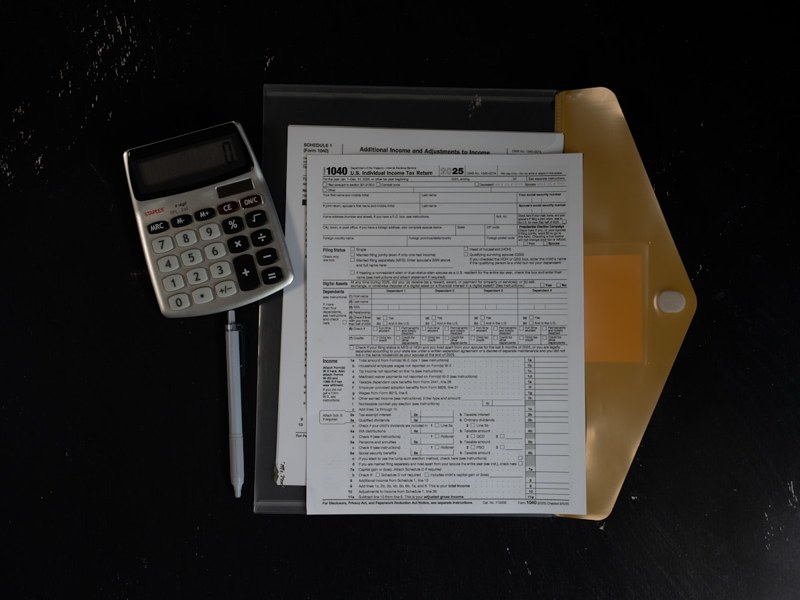
R&D activity is one of the most generously rewarded categories of expenditure in Singapore tax law. Section 14C of the Income Tax Act 1947 gives an automatic 100% deduction for qualifying R&D expenses, and Section 14D layers an enhanced 250% deduction on top for R&D done in Singapore. Used correctly, the combined regime can dramatically reduce effective tax for technology-driven SMEs, biotech firms, fintech start-ups, and any company commercialising new processes or products.
Raffles Corporate Services works with a panel of experienced Singapore law firms who offer cost-effective and efficient legal service and advice. This article is general information only and is not legal advice.
This guide walks through who qualifies, what counts as R&D for tax purposes, how the 100% and enhanced 150% (totalling 250%) deductions interact, the documentation IRAS expects, and the common claims that fall over at audit.
1. The Legislative Architecture: Section 14C, 14D, and the Wider R&D Regime
Three statutory provisions in the Income Tax Act govern R&D claims:
- Section 14C — gives the baseline 100% deduction for R&D expenses that meet the definition in Section 2.
- Section 14D — provides an additional 150% deduction on staff costs and consumables for R&D done in Singapore (so the total deduction is 250%).
- Section 19B — separately addresses writing-down allowance for acquired IP. We covered that in our Section 19B WDA guide.
The enhanced 150% under Section 14D was originally legislated to expire but has been extended through to YA 2028 under successive Budget announcements. For YA 2026 it remains fully available.
2. What Counts as R&D — The Three-Stage Test
Section 2(1) of the Income Tax Act defines R&D as systematic, investigative, and experimental study that either:
- creates new or improved materials, devices, products, produce, or processes; or
- discovers new applications of existing principles, processes, or products.
IRAS applies a three-stage test in its R&D e-Tax Guide to decide whether activities qualify:
Stage 1 — Novelty
The project must seek something new — a new product, process, or knowledge that is not already publicly available. Routine improvements, cosmetic redesigns, and adaptations of existing technology generally fail this test.
Stage 2 — Technical Risk
The project must involve genuine technical uncertainty that competent practitioners in the field cannot resolve without systematic investigation. If the outcome is predictable using existing knowledge, IRAS will treat it as routine and disallow the enhanced deduction.
Stage 3 — Systematic Investigation
R&D must be conducted in a structured way — hypothesis, experimental design, testing, analysis. Trial-and-error tweaking without a documented investigative plan often fails this stage.
3. Qualifying Expenditure Categories
Under Section 14C, the following expenses qualify for 100% deduction if directly attributable to R&D:
- Staff costs (salaries, CPF, bonuses) of personnel directly engaged in R&D
- Consumables (materials, lab supplies) used in R&D
- Outsourced R&D fees paid to an R&D organisation
- Software and equipment licences specifically for R&D
- Utilities apportioned to R&D activity
- Travel costs directly linked to R&D collaboration
For the enhanced Section 14D 150% layer, only staff costs and consumables qualify — and the R&D must be undertaken in Singapore. R&D outsourced to an overseas vendor still gets the 100% base deduction but not the 150% top-up.
4. Worked Example — How the Numbers Stack
Consider a Singapore software company spending S$500,000 on R&D in YA 2026, broken down as:
- Singapore-based engineer salaries: S$300,000
- Singapore-purchased consumables and cloud credits: S$50,000
- Outsourced specialist work in India: S$100,000
- Equipment and software licences: S$50,000
The deduction stack is:
| Category | Spend | Section 14C (100%) | Section 14D (additional 150%) | Total Deduction |
|---|---|---|---|---|
| SG staff costs | $300,000 | $300,000 | $450,000 | $750,000 |
| SG consumables | $50,000 | $50,000 | $75,000 | $125,000 |
| Outsourced (India) | $100,000 | $100,000 | — | $100,000 |
| Equipment / licences | $50,000 | $50,000 | — | $50,000 |
| Total | $500,000 | $500,000 | $525,000 | $1,025,000 |
On a 17% corporate tax rate, the cash saving relative to no claim is approximately S$174,250.
5. Documentation IRAS Expects
R&D claims are a frequent IRAS audit target. The supporting file should include:
- R&D project brief — written before the project starts, stating the technical objective, the hypotheses, and the unknowns.
- Project plan and timeline — phases, milestones, expected outcomes.
- Time-tracking records — engineer time logs apportioned to specific R&D projects vs business-as-usual.
- Expense ledger — direct R&D costs tagged in the accounting system, not bundled into general overheads.
- Outcome reports — what was learned, even if the project failed. Failed projects still qualify if the technical uncertainty was genuine.
For larger claims (typically above S$150,000), IRAS may request the R&D Claim Form and supporting workpapers to be filed alongside the corporate tax return. Maintaining contemporaneous records is non-negotiable.
6. R&D Tax Allowance vs Cash Payout — A Lapsed Option
Some practitioners still ask about the old Productivity and Innovation Credit (PIC) cash payout. PIC lapsed after YA 2018 and there is no successor cash refund scheme for R&D. The enhanced deduction simply reduces taxable income — companies in tax-loss positions carry the loss forward under Section 37 (subject to the shareholding continuity test in Section 37(12)).
For start-ups that expect to remain in losses for several years, the value of the R&D deduction is deferred but not lost — careful Section 37 planning preserves it.
7. Common Mistakes That Disqualify Claims
- Treating product engineering as R&D. Building a new feature for a paying customer is usually product engineering, not R&D. R&D requires technical uncertainty beyond customer specification.
- Claiming sales, marketing, or administrative staff costs. Only direct R&D personnel qualify.
- Failure to apportion mixed-use staff time. Engineers split between R&D and routine maintenance must have documented apportionment.
- Capitalising R&D and claiming the same costs as deductible. If R&D is capitalised into an intangible asset under FRS 38, the deduction is denied — Section 14C is mutually exclusive with capitalisation.
- Late documentation. Workpapers prepared after the YA closes and reverse-engineered to support claims are heavily discounted by IRAS auditors.
8. Interaction with Grants and Other Incentives
R&D grants from Enterprise Singapore’s Enterprise Development Grant (EDG) or A*STAR funding reduce qualifying expenditure dollar-for-dollar. The non-taxable portion of any grant must be deducted from the cost base before applying Section 14C/14D.
For companies pursuing both grants and tax deductions, careful sequencing matters. See our EDG vs PSG vs MRA Grant Guide for the right grant for R&D-intensive activities.
9. Practical Workflow for a YA 2026 R&D Claim
- Identify all R&D projects in the FY before year-end. Get sign-off from the technical lead on novelty and technical risk.
- Set up project codes in the accounting system. Tag staff time and direct costs in real time.
- Engage the company’s tax preparer early — R&D classification is a judgement call best made before the books close.
- Compile contemporaneous documentation — project briefs, timesheets, outcome reports.
- Compute the Section 14C and Section 14D claim. Adjust for any grant offsets.
- File via Form C-S or Form C (see our Form C-S vs Form C guide).
- Retain documentation for at least 5 years per the IRAS record-keeping rule.
10. Conclusion
The combined Section 14C plus Section 14D regime is one of the most generous innovation incentives in Asia. The catch is documentation — IRAS is willing to grant the deduction but only when contemporaneous records show genuine R&D, not product development dressed in technical language. Companies that get the discipline right convert a real cash tax saving every year; companies that wing it end up with assessments and penalties.
If your business is making meaningful R&D spend and you would like a review of whether your activities qualify under Section 14C/14D, write to [email protected]. We work with several Singapore tax specialists who can sign off on the technical position.
— The Editorial Team, Raffles Corporate Services