
Singapore as regional commodity trading hub — Documents required and templates
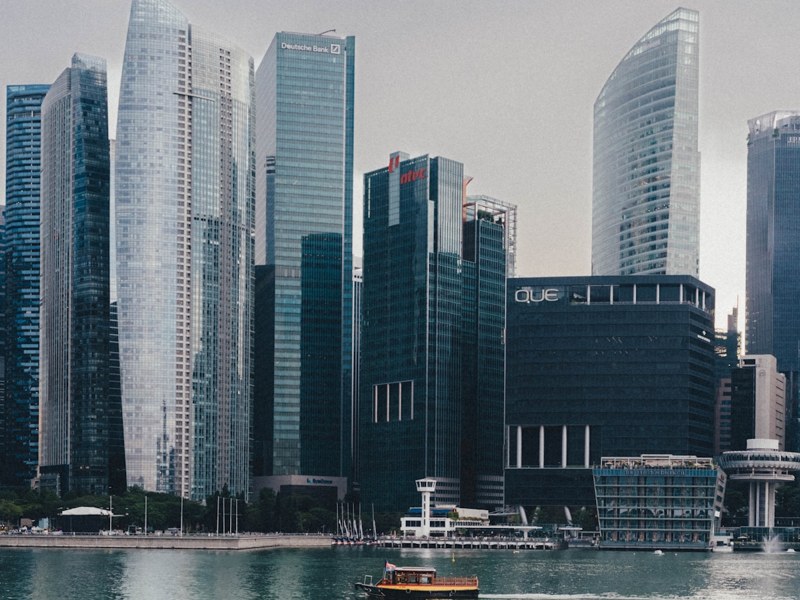
Singapore as regional commodity trading hub means the city-state functions as the pricing, financing, chartering and risk-management centre for physical and paper trades flowing across Asia. A trading company setting up here typically incorporates a private limited company, applies for a concessionary-tax incentive where it qualifies, opens multi-currency banking, and registers for Goods and Services Tax so that exports can be zero-rated. This guide sets out the documents, fees and timelines involved in 2026.
Raffles Corporate Services works with a panel of corporate and employment law firms; this article is general information, not legal advice.
Why Singapore is a regional commodity trading hub
Singapore concentrates the supporting services a commodity desk needs in one time zone: deep US-dollar liquidity, marine insurance, inspection and assay houses, arbitration under the Singapore International Arbitration Centre, and a stable legal system built on the Companies Act 1967. Physical flows in energy, metals, agriculture and petrochemicals are commonly booked through a Singapore entity even where cargo never touches Singapore soil. The Global Trader Programme, administered by Enterprise Singapore, has historically anchored the cluster by offering a concessionary corporate tax rate on qualifying trading income.
For a practitioner-grade view of the tax side of the cluster, see our Global Trader Programme (GTP) concessionary tax guide, which covers qualifying income and the commitments an applicant makes to Enterprise Singapore.
Who this is for
This guide is for founders and finance leads establishing a physical or derivatives trading desk, for foreign trading groups opening a regional booking entity, and for family offices adding a trading sleeve. It assumes an operating company rather than a passive holding vehicle, and it assumes at least some staff will be based in Singapore to satisfy substance expectations.
Eligibility and requirements
Any trading company must first be incorporated as a Singapore private limited company. Section 145 of the Companies Act 1967 requires at least one director ordinarily resident in Singapore, and section 171 requires the appointment of a qualified company secretary within six months of incorporation. A registered office address in Singapore is mandatory, and the company is required to maintain proper accounting records.
To access the Global Trader Programme, applicants generally need a track record in international trading, a plan to grow qualifying turnover, local business spending, and Singapore-based trading professionals. Enterprise Singapore assesses each case on its own commercial merits, so the commitments are negotiated rather than fixed.
Trading companies moving physical cargo through Singapore should also plan for customs registration. Singapore Customs activation of a Unique Entity Number is needed before goods can be declared, and licences may be required for controlled goods.
Documents required and templates
Prepare the following before you begin: a proposed company name and principal activity (SSIC code); passport and proof-of-address for each director, shareholder and beneficial owner; the registered office tenancy or a corporate address service agreement; a shareholders’ agreement where there is more than one shareholder; a board resolution appointing the first directors and secretary; and a business plan and financial projections if you intend to apply for the Global Trader Programme. For customs, you will need the Customs Account application and, for controlled goods, the relevant permits.
Trading companies frequently need corporate multi-currency banking on day one. Our sister guide, Singapore bank account opening — documents required, lists the exact evidence banks ask for, including source-of-funds and expected transaction volumes, which matter more for trading accounts than for ordinary operating accounts.
Cost and timeline
Incorporation itself is inexpensive and fast: the ACRA name application fee is S$15 and company registration is S$300, with approval often the same day where no referral is triggered. A corporate service provider package covering the resident director, company secretary and registered address typically runs from S$2,000 to S$6,000 a year depending on the resident-director arrangement. Corporate bank account opening for a trading company usually takes two to six weeks because of enhanced due diligence. A Global Trader Programme application is a multi-month process, commonly three to six months from first meeting to award, and it is negotiated case by case.
Goods and Services Tax registration through the Inland Revenue Authority of Singapore is free and usually processed within about ten working days once the application is complete. Exports of goods and qualifying international services can be zero-rated, which is central to the cash-flow model of a trading desk.
Step-by-step process
First, reserve the company name with ACRA and confirm the SSIC activity. Second, incorporate the private limited company and appoint the resident director and company secretary. Third, open corporate multi-currency banking and, in parallel, activate the Customs Account if physical cargo will be handled. Fourth, register for Goods and Services Tax so exports can be zero-rated. Fifth, if the desk will scale, prepare and lodge the Global Trader Programme application with Enterprise Singapore, supported by projections and a substance plan. Finally, put trade documentation templates in place: sale contracts, letters of credit checklists, bills of lading handling notes and an inspection protocol.
Staffing a desk usually means hiring traders and operations personnel on Employment Passes. Our guide to the Singapore work pass framework for employers explains the employer obligations that attach to sponsoring foreign staff, which is relevant when relocating an experienced trading team.
Common mistakes and gotchas
The most frequent error is treating Singapore as a nameplate. Enterprise Singapore and the Inland Revenue Authority of Singapore both look for genuine substance — local decision-makers, local spend and local risk-taking — before concessionary treatment applies. A second mistake is underestimating banking timelines; opening accounts late can strand a first shipment. A third is neglecting Goods and Services Tax mechanics: businesses sometimes forget that while exports are zero-rated, input tax recovery still depends on holding correct documentation. A fourth is mishandling controlled goods, where a missing permit can halt a cargo at the border. See our Free Trade Zone usage and customs guide for how bonded movements interact with duty and GST.
Numerical specifics at a glance
For quick reference, the core numbers a trading company plans around in 2026 are: ACRA name reservation S$15; incorporation S$300; annual corporate service provider support from S$2,000 to S$6,000; corporate bank account opening two to six weeks; Global Trader Programme award commonly three to six months; Goods and Services Tax registration free and roughly ten working days; and the headline corporate tax rate of 17% before any concession. Physical traders should also budget for inspection, demurrage and marine-insurance costs, which vary by commodity and route but frequently exceed the entire cost of incorporation in a single shipment.
The Goods and Services Tax standard rate is 9% in 2026, but exports of goods are zero-rated, which means a trading desk exporting cargo generally charges GST at 0% while still recovering input tax on qualifying local costs. This asymmetry is why registration is worthwhile even for a desk whose sales are almost entirely offshore.
Substance, transfer pricing and record-keeping
Concessionary treatment and treaty access both depend on substance. In practice this means Singapore-based traders and risk managers, local decision-making, a genuine office, and spending that is proportionate to the profit booked here. The Inland Revenue Authority of Singapore applies transfer-pricing principles to related-party trades, so a desk that buys from an affiliate and sells to third parties must be able to show that its margins reflect the functions, assets and risks located in Singapore. Contemporaneous transfer-pricing documentation is expected once prescribed thresholds are crossed, and it is prudent to prepare it earlier for a trading model that relies on inter-company flows.
Record-keeping obligations under the Companies Act 1967 and the Income Tax Act 1947 require that accounting and supporting records be kept for at least five years. For a trading desk, that includes contracts, confirmations, invoices, shipping documents, hedging records and bank statements. A disciplined document trail is not merely a compliance chore; it is what allows the desk to defend its zero-rating, its transfer pricing and its incentive claims if questioned.
Hedging, banking and trade finance
A commodity desk rarely runs unhedged. Singapore’s derivatives and clearing infrastructure lets a trader lay off price risk on regional and global exchanges, and the banking cluster provides letters of credit, receivables financing and borrowing-base facilities. When opening accounts, banks assess the coherence of the trade flow, the counterparties, and the source of working capital. Presenting a clear trade-cycle narrative — supplier, offtaker, tenor, currency and hedging — materially shortens onboarding. Multi-currency accounts in US dollars and the trading currencies of the desk are usually essential, because commodity contracts are predominantly dollar-denominated.
FAQs
Does my cargo need to pass through Singapore to book the trade here? No. Many trades are booked through a Singapore entity while cargo moves directly between third countries. What matters for tax is where the trading functions, people and risk sit.
Do I need the Global Trader Programme to trade from Singapore? No. The programme offers concessionary tax on qualifying income, but you can trade profitably on the standard corporate tax rate while you build scale.
How long does incorporation take? Often the same day once the name is approved and all identity documents are in order, though referrals for certain nationalities or activities can add time.
Are commodity exports subject to Goods and Services Tax? Exports of goods are generally zero-rated under the Goods and Services Tax Act 1993, provided the required export evidence is retained.
Can foreign owners hold 100% of the trading company? Yes. Singapore permits full foreign ownership; you still need at least one locally resident director.
Related guides
Read our Global Trader Programme guide for the concessionary-tax route, and consult the official pages of Singapore Customs, the Inland Revenue Authority of Singapore and Enterprise Singapore for current forms and eligibility.
Need help with this? Call, SMS or WhatsApp +65 8501 7133, or email [email protected]. Raffles Corporate Services works with a panel of corporate and employment law firms; this article is general information, not legal advice.