
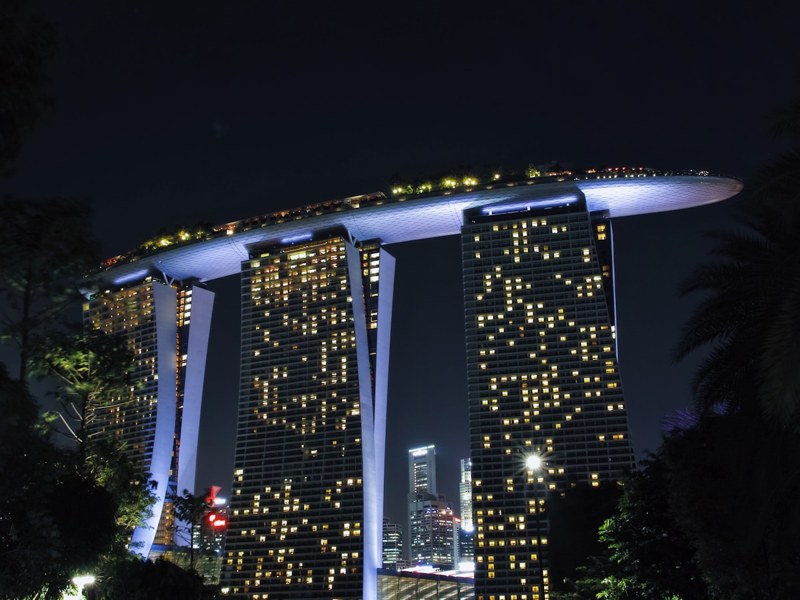
Singapore functions as a regional commodity trading hub by combining a 0% to 17% headline tax band, deep trade-finance banking, world-class port and bunkering infrastructure, and the Global Trader Programme’s concessionary rates. A trading company that meets the qualifying spend and headcount thresholds can anchor physical and paper trade flows across Asia from a single Singapore desk.
Raffles Corporate Services works with a panel of corporate and employment law firms; this article is general information, not legal advice.
Why Singapore is the default Asian commodity trading base
Singapore clears a large share of Asia’s physical trade in energy, metals, agricultural products and refined fuels. The draw is not a single incentive but a stack: a stable common-law system, the deepest concentration of trade-finance banks in the region, PSA’s container throughput, and one of the world’s largest bunkering ports. For a trading desk, that means counterparties, freight, hedging and settlement all sit within one time zone. Firms building physical desks usually pair the Singapore entity with warehousing or storage relationships and a treasury function, then layer commodity hedging through SGX and OTC lines.
Who this is for
This route suits established traders relocating a regional book, commodity majors setting up an Asian marketing office, and growing merchants that have outgrown broker arrangements and want to hold title and manage their own risk. Groups moving senior traders into Singapore often run the corporate setup alongside relocation planning; our team frequently coordinates the entity, the tax incentive application and the work-pass pipeline together. For the immigration side of a relocating desk, see our note on work pass approvals for Singapore employers.
Eligibility and requirements checklist
To operate credibly as a trading hub company and to qualify for concessionary treatment under the Global Trader Programme (GTP) administered by Enterprise Singapore, a firm typically needs to demonstrate substance in Singapore. The core checklist:
- A Singapore-incorporated private limited company with a registered office and at least one locally resident director, as contemplated by Section 145 of the Companies Act 1967.
- Qualifying trading activity in approved commodities or products conducted out of Singapore, with the Singapore office as the decision-making centre.
- A commitment to local business spending (rent, salaries, professional fees) and to hiring qualifying trading and support staff.
- Annual turnover and trade volume commitments negotiated with Enterprise Singapore for the incentive.
- Banking and trade-finance lines, plus a risk-management framework covering price, credit and FX exposure.
- GST registration where taxable turnover exceeds S$1 million, and MPA or Customs registrations where physical movement or bunkering is involved.
Cost and timeline benchmarks
Incorporation of the trading entity is fast and inexpensive: ACRA’s name application is S$15 and company registration is S$300, and a straightforward company can be registered within one to three working days once due diligence is complete. The heavier lifting is the incentive and the substance build-out. A realistic budget for the first year, excluding trading capital, runs from S$30,000 to well over S$150,000 depending on office footprint, headcount and audit scope. GTP applications are negotiated and typically take several months from first engagement with Enterprise Singapore to award, so most groups incorporate first, begin trading on the headline regime, and transition to the concessionary rate once the incentive is granted. Our Singapore commodity trading hub timeline benchmarks set out the sequencing in more detail.
The tax picture
Singapore’s headline corporate rate is 17%, applied to chargeable income. New companies may access the start-up tax exemption and the partial exemption in the early years. Under the GTP, income from qualifying transactions is taxed at a concessionary 5% or 10% for the award period, which is the principal reason large physical desks domicile here. Singapore does not tax most foreign-sourced income until it is received in Singapore, and there is no capital gains tax, which matters for structuring inventory and investment holdings. IRAS guidance on trading income and the incentive framework should be read carefully, and firms often obtain an advance ruling on the boundary between trading and capital transactions. See IRAS for the current corporate tax framework and Enterprise Singapore for the GTP.
Step-by-step setup process
A typical build runs in this order. First, incorporate the private limited company and appoint the resident director and company secretary. Second, open corporate and trade-finance banking, which for a commodity desk is often the longest-lead item. Third, register for GST and, where relevant, with Singapore Customs for import, export and transhipment permits and any bunkering or dangerous-goods licences. Fourth, put the substance in place, the office, the traders, the risk framework, and begin trading. Fifth, engage Enterprise Singapore on the GTP once the volume story is credible. Foreign founders establishing the holding layer above the desk often look at how a high-net-worth relocation to Singapore is sequenced alongside the corporate structure.
Common mistakes and gotchas
The most frequent error is treating the incentive as automatic; the GTP is negotiated and requires real substance, not a brass plate. A second is underestimating bank onboarding for physical trade, where KYC on counterparties and commodity flows is intensive. A third is neglecting transfer pricing between the Singapore desk and related offshore entities, which IRAS scrutinises. Finally, firms sometimes register for the wrong permits, physical movement, bunkering and transhipment each carry distinct Customs and MPA requirements that should be mapped before the first cargo.
Related guides
- How to Move to Singapore as a High Net Worth Individual: All Pathways 2026
- Practical S Pass Approval Tips for Singapore Employers (2026)
- Singapore as regional commodity trading hub — Timeline and processing benchmarks
Frequently asked questions: singapore as regional commodity trading hub
Do I need the Global Trader Programme to trade commodities from Singapore?
No. Any company can trade on the 17% headline regime. The GTP simply reduces the rate on qualifying income to 5% or 10% for larger desks that commit to volume, spend and headcount, and it is awarded by Enterprise Singapore after negotiation.
How long does it take to set up a Singapore trading company?
The company itself can be registered in one to three working days. Building the substance, banking and trade-finance lines that a real commodity desk needs usually takes several weeks to a few months, and a GTP award longer still.
Is foreign-sourced trading income taxed in Singapore?
Foreign-sourced income is generally taxed only when received in Singapore, subject to conditions, and specific exemptions may apply. Trading income booked through the Singapore desk is Singapore-sourced and taxed here, at the headline or concessionary rate.
What licences does a physical trader need?
Beyond incorporation and GST, physical movement typically requires Singapore Customs registration and permits, with additional MPA licences for bunkering and specific approvals for controlled or dangerous goods.
Need help with this? Call, SMS or WhatsApp +65 8501 7133, or email [email protected]. Raffles Corporate Services works with a panel of corporate and employment law firms; this article is general information, not legal advice.