
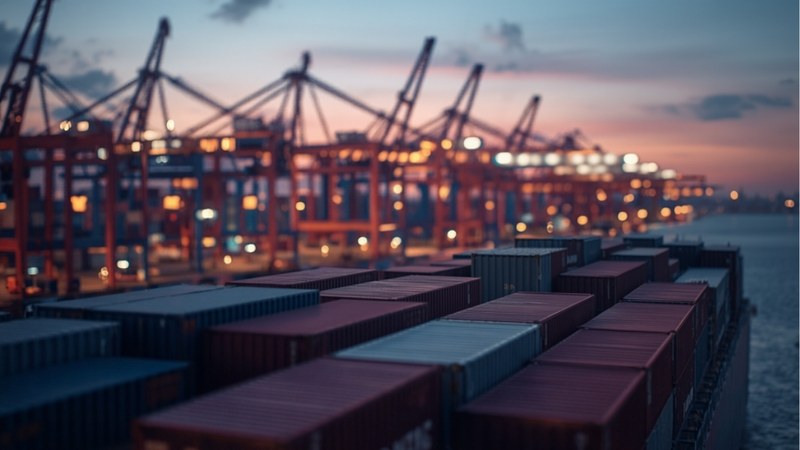
Many Singapore companies sell to customers overseas, whether they ship machinery to Malaysia or provide consultancy to a client in London. A common question follows: does GST apply? Understanding the GST treatment of exported goods and services from Singapore matters because the rules allow many exports to be zero-rated, but only if the right conditions are met and the right documents are kept.
Raffles Corporate Services works with a panel of experienced Singapore law firms who offer cost-effective and efficient legal service and advice. This article is general information only and is not legal advice.
This article explains the general GST treatment of exported goods and services from Singapore, who it affects, the key rules set by IRAS, and the practical steps a GST-registered business should follow.
Who this applies to
The zero-rating rules are relevant to any business registered for GST in Singapore that makes supplies to customers outside Singapore. This typically includes:
- Trading companies that ship goods to overseas buyers by sea, air or land
- Manufacturers that export finished products
- Consultancies, software firms, marketing agencies and other service providers with overseas clients
- Regional headquarters that provide management or support services to related companies abroad
- Businesses that are not yet GST-registered but are approaching the SGD 1 million taxable turnover threshold, since zero-rated supplies count towards taxable turnover
If your company is not GST-registered, you do not charge GST at all, but you should still monitor your turnover. Export sales can push a company over the registration threshold without its directors realising.
Key rules and requirements in Singapore
GST is governed by the Goods and Services Tax Act 1993 and administered by IRAS. The standard rate is currently 9%. Exports, however, are generally treated differently.
Export of goods
Under Section 21(1) of the GST Act, goods that are exported from Singapore can be zero-rated, meaning GST is charged at 0%. The main conditions are:
- The goods must physically leave Singapore
- Export must generally take place within 60 days from the time of supply
- You must hold the required export documents, such as the export permit obtained through TradeNet, together with commercial documents like the invoice and bill of lading or air waybill
IRAS distinguishes between direct exports, where the supplier arranges shipment, and indirect exports, where the overseas customer engages its own freight forwarder to collect goods in Singapore. The documentation needed differs, and indirect exports generally require additional evidence that the goods actually left the country. Where the conditions cannot be met, the sale must be standard-rated.
International services
Services are harder than goods because nothing crosses a border physically. Section 21(3) of the GST Act lists the specific categories of international services that can be zero-rated. A common one covers services supplied under a contract with an overseas person who belongs outside Singapore, where the services directly benefit a person outside Singapore.
Some services cannot be zero-rated even where the customer is overseas. Examples include services directly connected with land or buildings in Singapore, and services directly connected with goods located in Singapore at the time the service is performed (subject to specific exceptions). Each supply must fit within one of the Section 21(3) provisions, and the burden of proof is on the supplier.
Out-of-scope supplies
Where goods are bought and sold overseas without ever entering Singapore, the sale is generally an out-of-scope supply rather than an export. No GST is charged, but the reporting treatment differs from zero-rated supplies, so it is important to classify these sales correctly.
Reporting and input tax
Zero-rated supplies are reported in Box 2 of the GST F5 return filed through the IRAS myTax Portal. A major benefit of zero-rating is that you can still claim input tax on business purchases used to make those supplies, subject to the usual conditions. This is why exporters are often in a net refund position.
Step-by-step process
A sensible workflow for handling exports looks like this:
- Identify the supply. Decide whether each sale is goods or services, and where the goods are located or the services performed.
- Check the zero-rating provision. For goods, confirm the goods will leave Singapore within 60 days. For services, identify which paragraph of Section 21(3) applies and whether any exclusion catches it.
- Confirm who the customer is. For services, verify that the contracting customer belongs outside Singapore and is not, for example, a Singapore branch of a foreign company.
- Issue the correct tax invoice. Show GST at 0% and keep your invoice consistent with the contract and shipping documents.
- Collect export evidence. File the export permit, shipping documents, contract, and proof of payment together for each transaction.
- Report correctly. Record the sale in Box 2 of your GST F5 return and claim input tax on related costs.
IRAS generally expects records to be kept for at least five years, which lines up with the wider obligation to maintain proper accounting records under the Companies Act.
Common mistakes to avoid
- Zero-rating without export documents. A sales invoice alone is not enough. If you cannot produce the export permit and shipping evidence, IRAS may treat the supply as standard-rated.
- Assuming every overseas customer qualifies. A foreign company with a branch or fixed establishment in Singapore may belong in Singapore for GST purposes, which can make zero-rating unavailable.
- Overlooking who benefits from the service. If an overseas parent pays for services that are really used by its Singapore staff or customers, the benefit test may fail.
- Missing the 60-day window. Delays in shipment can disqualify goods from zero-rating unless IRAS has approved an extension.
- Ignoring the registration threshold. Zero-rated sales count towards the SGD 1 million threshold, so a growing exporter may need to register even if it collects no GST from customers.
Practical examples
Example 1: Direct export of goods
A Singapore electronics distributor sells components worth SGD 80,000 to a buyer in Vietnam. The distributor books the shipment, obtains the export permit through TradeNet and holds the bill of lading. The goods leave within two weeks. The sale can be zero-rated and reported in Box 2.
Example 2: Consultancy for an overseas client
A Singapore management consultancy advises an Australian company, with no Singapore presence, on its expansion into Indonesia. The contract is with the Australian entity and the advice benefits that entity. The service is likely to qualify for zero-rating under Section 21(3), provided the consultancy keeps the contract and evidence that the client belongs outside Singapore.
Example 3: Service connected with goods in Singapore
A Singapore workshop repairs equipment for a US client while the equipment sits in a Singapore warehouse, and the equipment then stays in Singapore. Because the service is directly connected with goods located in Singapore, and the goods are not exported afterwards, the repair is likely to be standard-rated at 9% despite the overseas customer.
How a corporate secretary can help
A corporate secretary in Singapore works closely with the company’s accountants to keep statutory and tax records in good order. For exporters, that support can include:
- Reviewing contracts and invoices so the GST treatment matches the commercial reality
- Setting up document checklists so export evidence is filed with each transaction
- Preparing and filing GST F5 returns through the IRAS myTax Portal
- Monitoring taxable turnover and advising when GST registration becomes necessary
Raffles Corporate Services supports businesses with company incorporation in Singapore, corporate secretarial services, accounting, GST filing, tax and payroll, so export compliance can be handled alongside your other ACRA and IRAS obligations.
Requirements may change, so always check the latest guidance from ACRA, IRAS or MOM, or consult a professional adviser.
Frequently Asked Questions
Is GST charged on goods exported from Singapore?
Generally, no. Exported goods can be zero-rated at 0% if they leave Singapore within 60 days of the time of supply and the supplier holds the required export documents.
Are all services to overseas customers zero-rated?
No. A service must fall within one of the categories listed in Section 21(3) of the GST Act. Services connected with land in Singapore, or with goods located in Singapore, are often excluded.
Can I still claim input tax if most of my sales are zero-rated?
Yes. Zero-rated supplies are taxable supplies, so input tax on related business purchases can generally be claimed, subject to the usual conditions.
Do I need to register for GST if I only export?
Zero-rated supplies count towards the SGD 1 million taxable turnover threshold. A business that mainly makes zero-rated supplies may apply to IRAS for exemption from registration in certain circumstances, but it should seek advice before doing so.
Key takeaways
- Exported goods and qualifying international services can be zero-rated at 0% GST.
- Goods must leave Singapore within 60 days, and export documents such as the TradeNet permit must be kept.
- Services must fit a specific Section 21(3) category, and some services to overseas customers remain standard-rated at 9%.
- Zero-rated sales are reported in Box 2 of the GST F5 return, and related input tax can usually be claimed.
- Export sales count towards the SGD 1 million GST registration threshold.
If you would like to find out more about how Raffles Corporate Services can assist with your company’s compliance and corporate secretarial requirements, please get in touch with the team at [email protected].
Yours sincerely,
The editorial team at Raffles Corporate Services
Disclaimer: This does not constitute legal advice. If you require legal advice, please contact a lawyer.