
Short answer: Singapore courts hold selected hearings by video conference, and the court tells you if yours is one. A director overseas who must give evidence needs the court’s permission under section 62A of the Evidence Act 1893, applied for 8 weeks before the hearing in the Supreme Court or 4 weeks in the State Courts.
Many Singapore companies have directors who live abroad, and in a civil dispute those directors are often the company’s key witnesses. This guide explains how a remote court hearing in Singapore works for a company: which hearings the courts hold by video conference or by email, when an overseas director can give evidence by live video link, how and when your solicitor applies, the foreign country’s position, how to set up on the day, and what the company secretary prepares while the solicitor runs the application.
Key facts at a glance
- Selected hearings in the State Courts, Family Justice Courts and Supreme Court are held by video conference; the court informs parties if their session will be virtual.
- A witness outside Singapore may give evidence by live video or television link in non-criminal proceedings only with the court’s permission (Evidence Act 1893, s 62A).
- The court considers why the witness is unable to give evidence in Singapore, the technical arrangements at the witness’s location and whether any party would be unfairly prejudiced (s 62A(2)).
- Supreme Court: apply no later than 8 weeks before the hearing, unless the court directs otherwise (Supreme Court Practice Directions 2021, para 77(1)).
- State Courts: apply by summons with notice and supporting affidavit no later than 4 weeks before the hearing (State Courts Practice Directions 2021, para 59(1)).
- The applicant must check that the foreign country where the witness sits raises no objection (Supreme Court PD para 77(2); State Courts PD para 59(2)).
Raffles Corporate Services works with a panel of experienced Singapore law firms who offer cost-effective and efficient legal service and advice. This article is general information only and is not legal advice.
What is a remote court hearing in Singapore, and which hearings are held remotely?
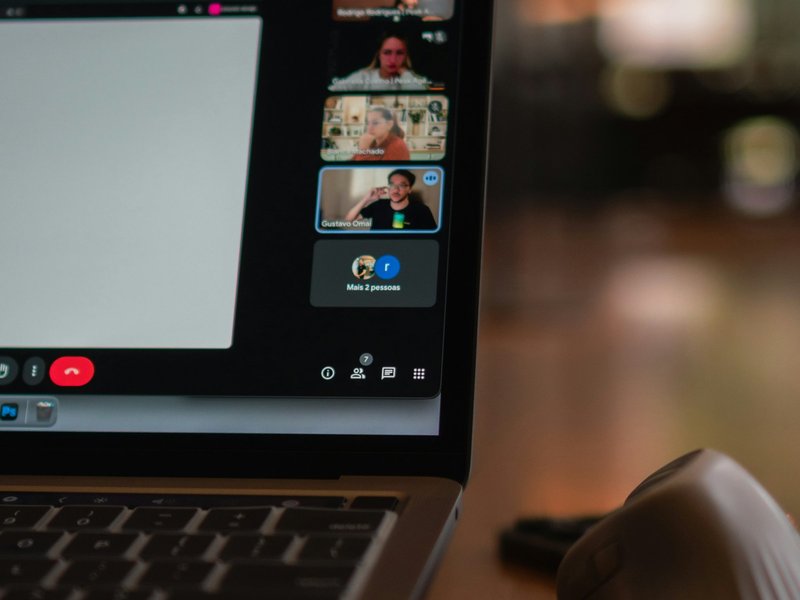
A remote court hearing in Singapore is one the court conducts by video conference (usually Zoom), by telephone, or in writing by email, instead of in the courtroom. The court decides the format for each hearing and tells the parties in its notice.
- Video or telephone hearings: under the Supreme Court Practice Directions 2021 (para 13) and the State Courts Practice Directions 2021 (para 57), selected hearings are held remotely, and the court has full discretion to decide whether a hearing is remote or hybrid, with some parties on video and others in court. In the Supreme Court, solicitors may raise concerns within 2 days after being notified of the direction.
- Asynchronous hearings: in the State Courts, negligence claims at the Court Dispute Resolution stage go through the asynchronous Court Dispute Resolution (aCDR) process, in which parties email updates and requests for directions and the court replies by email. The court may still direct physical attendance.
- Evidence from overseas: a witness who wants to testify by live video link from another country needs a specific court order under section 62A of the Evidence Act 1893.
The distinction matters. Joining a case conference on Zoom because the court chose to hear it remotely is not permission to testify at trial from your home country, and the court starts from the position that a witness should be physically in court. The Singapore Courts’ guide to virtual court sessions also says that virtual sessions take place as if the parties are in court, and you must tell the court if anyone else is in the room with you, even off camera.
What is the legal basis for giving evidence by video link from overseas?
Section 62A of the Evidence Act 1893 lets a person give evidence through a live video or live television link in proceedings other than criminal proceedings, with the court’s permission. Each court’s practice directions then set the timing and procedure.
As quoted by the High Court in Wang Xiaopu v Koh Mui Lee and others [2022] SGHC 54 at [7], the court may allow this where the witness is under 18, the parties expressly agree, the witness is outside Singapore, or it is expedient in the interests of justice. For a witness outside Singapore, the court must consider all the circumstances, including:
- the reasons the witness is unable to give evidence in Singapore;
- the administrative and technical facilities and arrangements where the witness will give evidence; and
- whether any party would be unfairly prejudiced.
The court must not make an order inconsistent with its duty to conduct the proceedings fairly (s 62A(5)). The current practice directions speak of “permission”; older judgments say “leave”. The cases show how the factors work:
| Principle | Authority |
|---|---|
| A witness must generally be physically in court; s 62A is the exception | Anil Singh Gurm v J S Yeh & Co [2020] 1 SLR 555 (Court of Appeal), cited in Wang Xiaopu at [7] |
| “Unable” means circumstances outside the witness’s control; able but unwilling is not enough | Anil Singh Gurm at [30], cited in Wang Xiaopu at [10] |
| Inconvenient travel is not inability | Bachmeer Capital Ltd v Ong Chih Ching [2018] 4 SLR 29 at [19], cited in Wang Xiaopu at [11] |
| Unfair prejudice is the overriding concern; refusing an overseas non-party witness may stop a party putting its best case | Anil Singh Gurm at [64] to [65], cited in Wang Xiaopu at [22] to [23] |
| A claimant who chose to sue in Singapore and knew the trial dates was refused; the defendants should be able to cross-examine her in person | Wang Xiaopu at [18], [25] and [31] |
For a company, the lesson is that the court looks closely at why the director cannot come. A documented medical reason or a legal or travel restriction outside the director’s control carries far more weight than business commitments.
Who can apply, and when must the application be made?
The party calling the overseas witness applies through its solicitor, expeditiously and, unless the court directs otherwise, no later than 8 weeks before the hearing in the Supreme Court or 4 weeks before in the State Courts.
| Court | Deadline for the s 62A application | Other points |
|---|---|---|
| Supreme Court | No later than 8 weeks before the start of the hearing at which the person gives evidence (PD para 77(1)) | May include a prayer for a letter of request to the foreign authorities, if that country’s law requires one (para 77(1) and (3)) |
| State Courts | No later than 4 weeks before the hearing, by summons with notice and supporting affidavit (PD para 59(1)) | Also covers live audio links. A letter of request is applied for in the General Division of the High Court no later than 8 weeks before the hearing (para 59(4)) |
Both directions cover all civil proceedings involving the examination of any person. The Supreme Court rule is in Part 10 of the Supreme Court Practice Directions 2021.
A video link order does not compel an unwilling third party abroad to appear. That normally needs a letter of request to the foreign court; see our guide to letters of request for overseas evidence. For witnesses in Singapore, see the order to attend court (witness summons).
How does the application work, step by step?
The solicitor builds the application around the section 62A factors and the foreign-law check. The company supplies the facts, documents and a tested set-up.
- When hearing dates are fixed, the board confirms which directors and staff will give evidence and where each will be.
- For each overseas witness, the solicitor assesses whether the witness is unable, not merely unwilling, to travel, and collects evidence of the reason.
- The foreign-law position is checked, by advice from a lawyer qualified in that country, enquiries with the authorities, or obtaining the foreign country’s permission where required (Supreme Court PD para 77(2); State Courts PD para 59(2)). In the State Courts this must be done before applying and evidenced in the affidavit (para 59(3)).
- If the foreign country requires a letter of request, the solicitor seeks one within the 8-week timeline.
- The witness confirms the venue, equipment and connection. In Wang Xiaopu at [37], the court said a statement that the venue has a webcam, microphone, speakers and a stable connection may suffice, but more evidence may be needed if the point is disputed.
- The solicitor asks the other side whether it consents, since express agreement is one of the gateways in section 62A(1).
- The application is filed and heard; any order may set conditions on the venue and technology.
- The link is tested before the hearing. In Bachmeer Capital, pre-trial testing helped satisfy the court of the link’s quality (described in Wang Xiaopu at [34]).
How should an overseas director set up and behave at a remote hearing?
Treat the video session exactly like a courtroom. The court will not admit you unless you use its naming convention, and it can exclude you if you are dressed inappropriately.
The Singapore Courts’ virtual sessions guide and its Zoom etiquette guide for court users (1 June 2022) say:
- Use an indoor, private, quiet room with a plain backdrop; the etiquette guide says not to use virtual backgrounds.
- Use the display name format in the court’s notice, and dress as for court: smart casual, office wear or traditional dress.
- Log in at least 10 minutes early, or earlier if the notice says so; the etiquette guide suggests 15 to 30 minutes.
- Keep the camera on at eye level and the microphone muted unless speaking. A laptop or desktop on mains power is preferred to a handheld phone.
- You need not stand or bow, but all other court etiquette applies; ask permission to step away.
- Never record. Recording or photographing the session is strictly prohibited and may amount to contempt of court.
If you lack suitable equipment in a State Courts case, you may inform the court at least 7 days before the session. In the Supreme Court, a party who would rather attend in person may write in within the time stated in the notice. In the State Courts, a court interpreter should be requested at least 2 weeks before the day needed (State Courts PD para 66(1)).
What documents are needed?
Most of the paperwork supports the solicitor’s affidavit, plus the company’s own authorisations.
| Document | Purpose | Usually prepared by |
|---|---|---|
| Summons and supporting affidavit under s 62A | The application, covering reasons, arrangements and prejudice | Solicitor |
| Evidence of why the witness cannot travel | Shows inability rather than unwillingness | Witness, collated by the company |
| Foreign legal advice or correspondence with foreign authorities | Shows the foreign country raises no objection | Foreign lawyer or solicitor |
| Venue and equipment details, and test results | Addresses the technical facilities factor | Witness and company IT |
| Directors’ resolution appointing the law firm | Confirms the solicitor’s authority to act | Company secretary |
| Board authority for a named officer to give instructions | Allows quick sign-off while the director is abroad | Company secretary |
The Supreme Court Practice Directions allow affidavits to be affirmed before a commissioner for oaths over a live video link, but that procedure (para 81) is for affidavits made in Singapore, so a director abroad should ask the solicitor how their affidavit will be sworn. See our guide to affidavits for a Singapore company.
How long does it take, and what drives the cost?
The practice directions fix the outer deadlines; the real timeline depends on the foreign-law check. We do not quote solicitors’ fees, which vary by case; ask your solicitor for a written estimate.
| Stage | Timing | Main cost drivers |
|---|---|---|
| Foreign-law check | Before filing (required first in the State Courts, PD para 59(3)) | Foreign lawyer’s advice; enquiries with authorities |
| Letter of request for foreign permission, if needed | No later than 8 weeks before the hearing | Foreign procedure; translation |
| Section 62A application | 8 weeks (Supreme Court) or 4 weeks (State Courts) before the hearing | Whether the other side contests |
| Interpreter request, State Courts | At least 2 weeks before the day needed | Language and length of evidence |
| Link testing and the hearing | Before and on the hearing dates | Overseas venue, time zones, technical support |
Assumptions: a civil claim under the Rules of Court 2021; the court may give different directions.
What does the company secretary prepare, and what does the solicitor file?
The company secretary or corporate service provider (CSP) keeps authorisations and records in order and helps coordinate the overseas director. Court proceedings are conducted by a Singapore Advocate and Solicitor, never by a CSP.
| Company secretary or CSP | Singapore Advocate and Solicitor |
|---|---|
| Directors’ resolution appointing the law firm | Advice on whether the director’s reasons meet the s 62A test |
| Board authority for a local officer to act while the director is abroad | Summons and affidavit for permission to give evidence by video link |
| Up-to-date register of directors and contact details | Instructions to foreign counsel and any letter of request |
| Company records needed as exhibits | Correspondence with the other side on consent |
| Deadline diary with ACRA and IRAS dates and time-zone planning | Link testing, examination of witnesses and submissions |
Raffles Corporate Services does not give legal advice or act in court; a law firm from our panel handles any proceedings. See the CSP and counsel handoff. A video link order is not filed with ACRA. If the director faces an ACRA prosecution rather than a civil claim, see foreign director overseas with an ACRA court summons.
What are the common mistakes?
Most failed applications come from leaving it late or treating permission as a formality.
- Applying after the 8-week or 4-week deadline without good reason.
- Relying on business commitments or travel inconvenience, which courts treat as unwillingness.
- Assuming the foreign country does not mind; some restrict or require permission for evidence to foreign courts.
- Giving no detail of the venue and technology.
- Confusing a remote case conference with permission to testify remotely at trial.
- Allowing unannounced people in the room, or recording the session.
To track court deadlines alongside ACRA and tax dates, use our free compliance tools, and if the hearing is close, speak to a lawyer now.
Frequently asked questions
Can our overseas director join a case conference by Zoom without a court order?
Only if the court has directed that the hearing be held by video conference; its notice will explain how to join. Giving evidence from overseas needs the court’s permission under section 62A of the Evidence Act 1893.
Will the court always allow a director abroad to testify by video link?
No. The court weighs the reasons the director cannot come, the technical arrangements and prejudice to the other side. A party merely unwilling to travel may be refused, as in Wang Xiaopu [2022] SGHC 54.
Does the foreign country need to agree?
It may. The applicant must make enquiries and take steps to ensure the foreign country raises no objection, including obtaining permission or a letter of request where its law requires one.
Can the company secretary make the application?
No. A Singapore Advocate and Solicitor prepares, files and argues it. The company secretary prepares the resolutions, authorities and records the solicitor needs.
Can I record the hearing for my own notes?
No. Unauthorised recording is strictly prohibited, and the practice directions refer to section 5 of the Administration of Justice (Protection) Act 2016 on contempt by unauthorised recording.
Need help with this?
Raffles Corporate Services can handle the ACRA filings, compliance documentation and records for you, and where court proceedings or legal advice are needed, we work with a panel of experienced Singapore law firms who offer cost-effective and efficient legal service and advice.
Email: [email protected]
Call, SMS or WhatsApp: +65 8501 7133
Last reviewed: 8 November 2026. The Editorial Team, Raffles Corporate Services.