
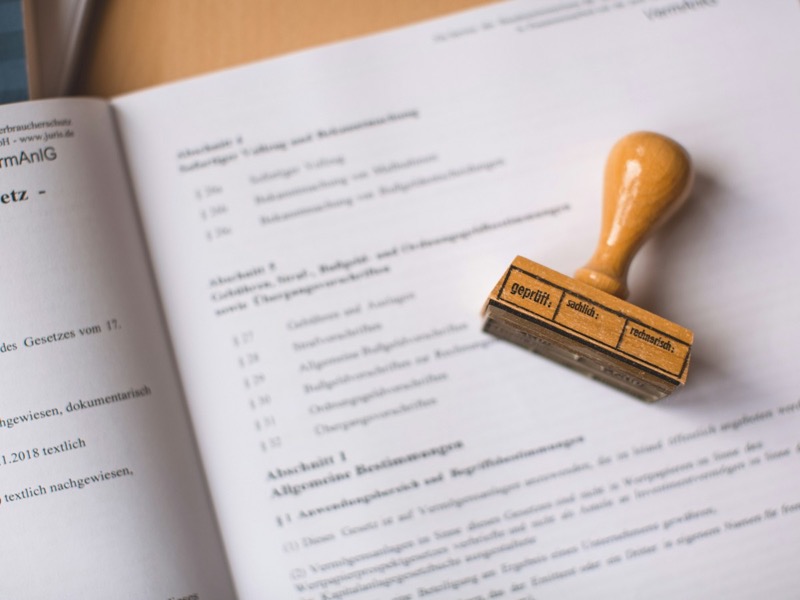
A certified true copy is a copy of a document that someone with the right standing has compared against the original and signed to confirm it is complete and accurate. For a Singapore company’s own records, such as its constitution, board resolutions, minutes and registers, that person is usually a director or the company secretary. Personal documents such as passports are more often certified by a lawyer, a notary public or the receiving institution’s own staff. There is no single Singapore rule on who may certify for every purpose, so the deciding factor is what the bank, authority or counterparty receiving the copy will accept.
Raffles Corporate Services works with a panel of experienced Singapore law firms who offer cost-effective and efficient legal service and advice. This article is general information only and is not legal advice.
What does “certified true copy” actually mean?
A certified true copy, often shortened to CTC, has three parts: the copy itself, a certification statement written or stamped on it, and the signature, name, capacity and date of the person certifying. By signing, the certifier is saying that they have seen the original, or the company’s official record, and that the copy matches it in full.
It is a statement of fact, not a guarantee of what the document says. A director who certifies a copy of a board resolution confirms that the copy is accurate, not that the decision in it was wise or valid. That distinction matters because recipients sometimes ask for more than a copy, for example confirmation that a resolution “remains in full force and effect” or that the listed signatories are current. Those are additional statements and the certifier should make them only if they are true.
When will a company be asked for one?
Requests for certified copies usually come from parties who cannot see the company’s internal records for themselves:
- Banks opening a corporate account, adding or removing signatories, or approving a loan. Banks carry out customer due diligence under MAS’s anti-money laundering notices and set their own document lists.
- Counterparties and investors in a share sale, financing or large contract who want evidence that the board approved the transaction and that the signatory is authorised.
- Landlords, insurers and suppliers extending credit or signing a lease with the company.
- Auditors and professional advisers checking the company’s registers, constitution and approvals.
- ACRA, in specific filings such as registering a foreign company branch, where the foreign company’s constitution must be certified in a prescribed way.
Where the document is going overseas, a simple CTC is often not enough. The recipient may want notarisation and an Apostille, which we cover in our guide to notarising and apostilling Singapore company documents for use abroad.
Who can certify which document?
The table shows the usual practice in Singapore. Always check the recipient’s own instructions first, because they override general practice.
| Document | Usual certifier | Points to watch |
|---|---|---|
| Constitution | Director or company secretary | Certify the current version including all amendments; ACRA’s version can be downloaded from Bizfile |
| Board or shareholder resolution, minutes | Director or company secretary | Recipients often want an extract plus confirmation that it has not been revoked |
| Register of members, directors or controllers | Company secretary or director | Certify as at a stated date; registers change |
| ACRA Business Profile or certificate | Not usually self-certified; buy an ACRA product | Recipients can verify ACRA products directly |
| Director’s or shareholder’s passport, proof of address | Lawyer, notary public, or the recipient’s own staff sighting the original | Many recipients will not accept a person certifying their own identity document |
| Foreign company’s constitution for ACRA branch registration | Home registry official, notary public, a director, manager or secretary by affidavit or statutory declaration, or the registered qualified individual lodging it | ACRA also requires a certified English translation if not in English |
For the ACRA branch case, ACRA’s guidance lists those certifiers and says certification must fall within four months before the application unless ACRA approves otherwise. For documents ACRA itself issues, it is better to obtain the official product than to certify a printout. Our article on verifying and certifying ACRA documents explains how recipients check them.
How is a CTC different from a statutory declaration, notarisation or an Apostille?
These terms are often mixed up in bank and counterparty checklists:
- Certified true copy: a signed statement on a copy that it matches the original. No oath is taken.
- Statutory declaration or affidavit: a written statement that the maker swears or affirms is true. Under the Oaths and Declarations Act 2000, a statutory declaration made in Singapore must follow the prescribed form, and the Judiciary’s guidance says it is declared before a Commissioner for Oaths. False statements carry criminal consequences.
- Notarisation: a notary public certifies the document, a copy or a signature, usually for use outside Singapore. Notaries generally do not administer oaths for affidavits or declarations to be used in Singapore.
- Apostille: the Singapore Academy of Law’s authentication of a notarial certificate or certain public documents, so a country that is party to the Apostille Convention will accept them.
If a local recipient asks for a “notarised copy” of a document that will only be used in Singapore, it is worth asking whether a CTC by a director, secretary or lawyer would do. It is usually quicker and cheaper.
What wording and format should you use?
Unless the recipient provides its own wording, a clear certification on each page, or on the first page with every page initialled, should include:
- the words “Certified true copy of the original” or, for a resolution, “Certified true extract of the resolution passed on [date]”;
- any additional confirmation the recipient needs, for example “which remains in full force and effect and has not been amended or revoked as at the date below”;
- the certifier’s signature;
- the certifier’s full name and capacity, for example “Director” or “Company Secretary” of the named company with its UEN;
- the date of certification;
- a company stamp if the company uses one and the recipient asks for it. The Companies (Amendment) Act 2017 removed the requirement for companies to have a common seal, but some banks still like a stamp.
For multi-page documents, state the number of pages, for example “This is a true copy of the 14-page constitution”, so pages cannot be added or removed later.
If the recipient accepts electronic documents, ask whether an electronically signed certification on a PDF is acceptable before printing anything. Practices differ.
How do you prepare a certified copy correctly?
- Read the recipient’s request. Note who must certify, the wording, whether every page needs certifying and how recent the certification must be.
- Find the original or official record. For a resolution, use the signed version filed in the minute book, not a draft from email.
- Check it is current. Confirm the constitution includes every amendment and that the register shows the latest changes. Compare against the company’s ACRA records where relevant.
- Make a clean, complete copy. Copy every page, including schedules and signature pages.
- Certify and sign. Add the wording, name, capacity and date. Do not certify a copy of a copy unless you have also seen the original.
- Keep a record. File a scan of what was certified, for whom and when.
Documents checklist for a typical bank request
- Certified copy of the current constitution
- Certified extract of the board resolution opening the account or changing the mandate
- Certified copies of the registers of members and directors, or the register of registrable controllers, as at a recent date
- Current ACRA Business Profile
- Identity documents and proof of address for directors, authorised signatories and beneficial owners, certified as the bank requires
- For corporate shareholders, their constitutional and ownership documents, which may need certification in their home country
Example: changing the bank mandate after a director resigns
Example: A trading company’s director resigns and the board appoints a replacement signatory. The bank asks for a certified true copy of the board resolution and a certified copy of the new director’s passport. The company secretary takes the signed resolution from the minute book and certifies an extract with the date of the meeting and a statement that it has not been revoked. Because the secretary cannot sight the new director’s original passport, the director takes it to a branch where bank staff verify it in person, which the bank confirms it accepts. The bank also checks the resignation and appointment against ACRA’s records. The whole request is completed without a notary. This is a hypothetical illustration.
Frequently asked questions
Can a sole director certify company documents?
Yes, a sole director can certify the company’s own records, unless the recipient wants an independent certifier. Some recipients ask for the company secretary as well, so that two officers have looked at the document.
Can our corporate secretarial provider certify documents?
Yes, where it acts as company secretary and holds the company’s records, it can certify copies of the constitution, resolutions and registers it maintains. It cannot certify documents it has never seen in original form.
How long is a certified true copy valid?
There is no general expiry, but many recipients only accept certifications made within a recent period, often a few months. ACRA’s branch registration rule of four months is one example; banks set their own limits.
Do I need a Commissioner for Oaths to certify a copy?
Not usually. A Commissioner for Oaths takes affidavits and statutory declarations. A plain certified copy does not involve an oath, unless the recipient specifically asks for the certification to be made by statutory declaration.
What if I certify a copy that turns out to be wrong?
Correct it immediately and tell the recipient. Knowingly certifying an inaccurate copy can expose the certifier to liability, and where it is used to deceive a bank or authority it may be an offence.
Need certified copies of your company documents?
Raffles Corporate Services maintains statutory registers, minute books and constitutions for the companies we act for as company secretary, and we prepare and certify copies of those records for banks, auditors and counterparties. We can also prepare the resolutions a bank needs and coordinate notarisation where a document is going overseas. Contact us at [email protected] or on WhatsApp at +65 8501 7133.
Willie Tan, Raffles Corporate Services