
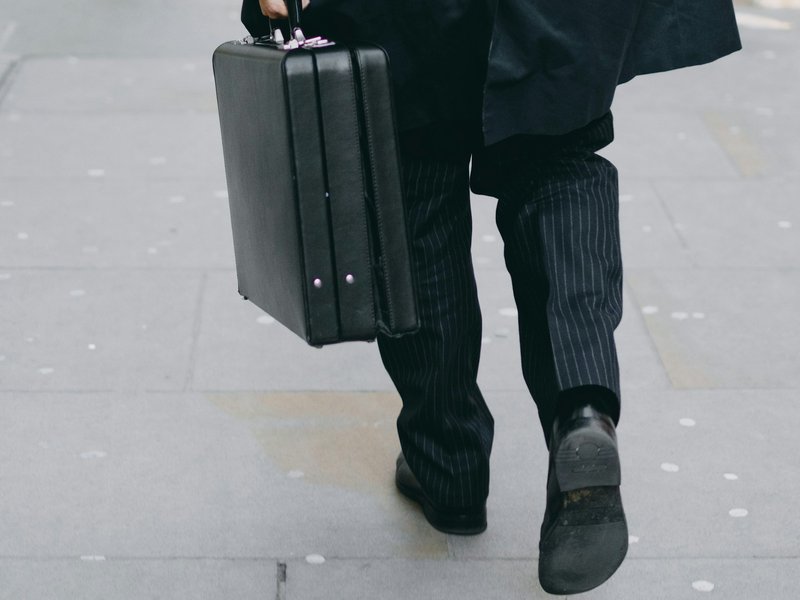
Short answer: A foreign employee seconded into Singapore needs a work pass, usually an Employment Pass applied for by the Singapore host or a local sponsor. CPF applies only to Singapore Citizens and Permanent Residents working in Singapore. Income tax follows where the work is done, and recharging staff costs between companies attracts GST unless IRAS’s group concession applies.
A secondment in Singapore usually starts as a simple request from head office: send a manager to set up the new Singapore subsidiary for a year, or lend a Singapore engineer to a sister company in Jakarta. The paperwork touches the Ministry of Manpower (MOM), the CPF Board and IRAS at once, and each looks at different facts. This guide sets out what each expects when staff are seconded into or out of a Singapore company, and what the secondment agreement should say.
Key facts at a glance
- An overseas company with no Singapore-registered entity must use a local sponsor to apply for an Employment Pass; MOM processes most such cases within 6 weeks.
- An overseas intra-corporate transferee who has worked for the group outside Singapore for at least 1 year, as a manager, executive or specialist, is exempt from job advertising and from COMPASS.
- The Employment Pass qualifying salary is S$5,600 (higher with age) and rises to S$6,000 for new applications from 1 January 2027.
- CPF is not payable for an employee seconded or posted to work overseas, but remains payable for temporary overseas work on a Singapore-based contract.
- Foreign employees working in Singapore for 60 days or less in a calendar year are exempt from tax on that employment; 183 days or more makes them tax resident.
- Employers must file Form IR21 at least one month before a non-citizen employee goes on an overseas posting, subject to IRAS’s exceptions; late or non-filing can attract a fine of up to S$5,000.
- Recharging a secondee’s salary to a related company can be outside GST only if IRAS’s five concession conditions are all met.
Raffles Corporate Services works with a panel of experienced Singapore law firms who offer cost-effective and efficient legal service and advice. This article is general information only and is not legal advice.
What is a secondment, and who is the employer?
A secondment is a temporary assignment in which an employee stays employed by the home company but works for, and takes instructions from, another company, usually in the same group. The employee is expected to return to the home company when it ends.
It usually takes one of three shapes: inbound on the overseas parent’s payroll, inbound on a local Singapore contract for the period, or outbound, where a Singapore company sends its own employee to an overseas affiliate.
The label “secondment” does not decide the treatment. MOM, CPF Board and IRAS each look at who holds the work pass, where the work is performed, who pays and whether overseas work is a temporary trip or a posting. A permanent move is a transfer, not a secondment; our guide to hiring remote and overseas employees covers longer-term overseas roles.
Which work pass does a secondee into Singapore need?
A foreigner who will work in Singapore generally needs a work pass, and for a professional or manager on secondment that is usually an Employment Pass (EP). The pass is applied for by a Singapore-registered employer or, if the overseas company has no Singapore entity, through a local sponsor.
Points to plan for:
- Local sponsor route. A company not registered in Singapore needs a local sponsor to submit the EP application; most cases take up to 6 weeks, against 10 business days for a Singapore-registered applicant.
- Fees. MOM charges S$105 per application and S$225 when the pass is issued.
- Qualifying salary. The EP qualifying salary for most sectors is S$5,600, rising with age to S$10,700 at age 45 and above. For new applications from 1 January 2027 it becomes S$6,000, rising to S$11,500. Financial services has higher figures.
- Intra-corporate transferees. Under the WTO General Agreement on Trade in Services, a candidate who has worked for the company outside Singapore for at least 1 year and is a manager, executive or specialist can be exempted from advertising on MyCareersFuture and from COMPASS. The trade-off: family members are generally not eligible for Dependant’s Passes, and the transferee is generally not eligible for later employment in Singapore or permanent residency. Our guide to the intra-corporate transferee EP exemption explains the evidence MOM may ask for.
- Moving between group companies. MOM’s answer to whether an EP holder can be transferred to a subsidiary without a new application is no: the subsidiary must apply for a new EP.
- Short visits. Only activities on MOM’s list of work pass exempt activities can be done without a pass, some after notifying MOM.
Does CPF apply when staff are seconded?
CPF follows the person’s citizenship status and where they work. Employers pay CPF for Singapore Citizens and Permanent Residents earning more than S$50 a month; foreigners are exempt.
| Situation | CPF payable? | CPF Board’s position |
|---|---|---|
| Foreign secondee working in Singapore on an EP | No | Persons who are not Citizens or Permanent Residents are exempt |
| Citizen or PR working in Singapore for an overseas employer | Yes | Required on wages for Citizen or PR employees working in Singapore, even if the contract is signed overseas |
| Citizen or PR on an overseas-based contract, in Singapore temporarily (meetings, training) | No | Not payable for temporary work arrangements; still payable for non-temporary stints |
| Singapore employee seconded or posted to work overseas | No | Wages for overseas employment do not attract CPF |
| Singapore employee on a Singapore-based contract working overseas temporarily | Yes | Remains payable for meetings, conferences, training or short remote work abroad |
The difficult line is between a posting and a temporary trip, so record the dates, place of work and reason in the secondment letter. The CPF Board’s guidance on seconded employees is short, and it invites employers who are unsure to write in with the facts.
How is a secondee taxed in Singapore?
Employment income is taxed in Singapore when the work is done here, wherever the salary is paid. Days worked here decide the rate.
For a secondee working in Singapore, IRAS applies three bands for each calendar year:
- 60 days or less: a non-resident’s employment income is exempt, but not if the stay covers three continuous years or more.
- 61 to 182 days: taxed as a non-resident at 15% or progressive resident rates, whichever gives the higher tax, with no personal reliefs.
- 183 days or more: taxed as a resident at progressive rates after reliefs.
A secondee on an overseas payroll is still taxed here. IRAS expects the foreign employer to prepare Form IR8A by 1 March and the employee to file by 18 April, and a non-citizen working for a foreign employer may need a Letter of Guarantee from a Singapore limited company to cover the estimated tax. Our guide to the 183-day tax residency test explains how days are counted.
For a Singapore employee seconded overseas, IRAS’s position is that income from employment exercised wholly outside Singapore is foreign-sourced and not taxable here. If the overseas work is incidental to a Singapore job, such as a regional manager who travels, the income remains taxable in Singapore.
When must the employer file Form IR21 for a secondment?
Form IR21 is IRAS’s tax clearance form. A Singapore employer must notify IRAS at least one month in advance, and withhold all money due, when a non-Singapore Citizen employee stops working for it, goes on an overseas posting or plans to leave Singapore for more than three months.
Under IRAS’s tax clearance rules, an overseas posting does not need clearance if all of these hold:
- the period away does not exceed six months;
- the employee returns to work for the same employer and keeps a valid work pass under that employer; and
- the Singapore employer continues to pay the employee during the posting.
The income during such a posting must still be reported on Form IR8A or through the Auto-Inclusion Scheme, and it is taxed in Singapore. The Permanent Resident concession that waives clearance for a PR who is not leaving permanently does not apply to an overseas posting. Unless there is a valid reason, an employer that fails to file, or files late, may be fined up to S$5,000.
Secondment in Singapore: is GST charged on staff recharges?
Yes, as a starting point. IRAS treats a secondment as a supply of human resource services, so a GST-registered company that recovers salary and staff costs from the company receiving the secondee generally has to charge GST.
IRAS’s secondment concession lets the seconding company not charge GST only if all of these conditions are met:
- no extra fees are charged to the company receiving the staff;
- the two companies are related under section 6 of the Companies Act, for example parent and subsidiary;
- the seconded employee works for only one company at any time;
- the receiving company has total control over the employee; and
- no input tax relating to the secondment is claimed.
Adding a mark-up removes the concession, and GST is then due on the full staff cost, including salary and CPF, plus the mark-up. Staff costs billed as a lump sum with a service follow the GST treatment of that service. A group recharge is also a related party transaction; see our guide on related party transactions and transfer pricing. A secondee who concludes contracts here can also raise permanent establishment questions for the overseas company.
What should a secondment agreement cover?
An agreement between the two companies, plus a secondment letter to the employee, should record the facts the authorities will look at. Use this checklist with your adviser.
| Clause | What to record | Why it matters |
|---|---|---|
| Parties and relationship | Seconding company, host company, group link | Section 6 relationship for the GST concession; group link for the intra-corporate transferee route |
| Duration and place of work | Start date, end date, country, extension process | Posting versus temporary trip for CPF; day counts for tax; six-month IR21 test |
| Control and duties | Who directs the work and approves leave | Exclusive control condition for the GST concession |
| Payroll | Which company pays salary and benefits, and in what currency | Who reports on Form IR8A and who files Form IR21 |
| Recharges | Cost only or cost plus mark-up, invoicing frequency | GST treatment and related party pricing |
| Work pass | Who applies, who pays the fees, what happens if refused | The secondee cannot start work in Singapore without a valid pass |
| Tax and CPF | Who bears any Singapore tax, CPF and tax clearance steps | Avoids disputes when tax is assessed after the secondee leaves |
| Return and termination | Return date, early recall, what happens on resignation | Triggers for pass cancellation and IR21 |
What are the steps to set up a secondment?
Settle these points before the employee travels.
- Decide the structure: overseas payroll, local Singapore contract, or outbound posting.
- Confirm the work pass route, including intra-corporate transferee status or a local sponsor.
- Sign the inter-company agreement and issue the secondment letter before the start date.
- Set up payroll: CPF where it applies, and a log of days worked in Singapore each calendar year.
- Agree the recharge basis and check the GST concession conditions before the first invoice.
- For an outbound posting of a non-citizen, decide whether Form IR21 is needed and file it at least one month before departure.
- At the end, deal with the work pass, file Form IR21 if required, and report the year’s income on Form IR8A.
Our free tools include a compliance deadline calculator for the host company’s own filing dates.
Frequently asked questions
Can a foreign parent second staff to Singapore without a Singapore company?
Yes, for the work pass. MOM lets a company not registered in Singapore apply for an Employment Pass through a local sponsor, with most cases processed within 6 weeks. Whether the parent then needs a Singapore branch or subsidiary for its activities here is a separate question to settle early.
Does a seconded employee’s CPF stop when they leave Singapore?
For a Citizen or PR seconded or posted to work overseas, wages for the overseas employment do not attract CPF. If the trip is only temporary on a Singapore-based contract, CPF continues.
Can we charge our subsidiary cost plus 5% for a secondee?
You can, but the mark-up takes the recharge outside IRAS’s secondment concession, so a GST-registered seconding company must charge GST on the full staff cost and the mark-up.
Is a three-month regional assignment a posting for IR21?
Not necessarily. If the employee is away no more than six months, returns to the same employer with a valid work pass, and the Singapore employer keeps paying them, IRAS does not require tax clearance, though the income is still reported and taxed.
Need help with this?
Raffles Corporate Services can handle the ACRA filings, compliance documentation and records for you, and where court proceedings or legal advice are needed, we work with a panel of experienced Singapore law firms who offer cost-effective and efficient legal service and advice.
Email: [email protected]
Call, SMS or WhatsApp: +65 8501 7133
Last reviewed: 9 November 2026. The Editorial Team, Raffles Corporate Services.