
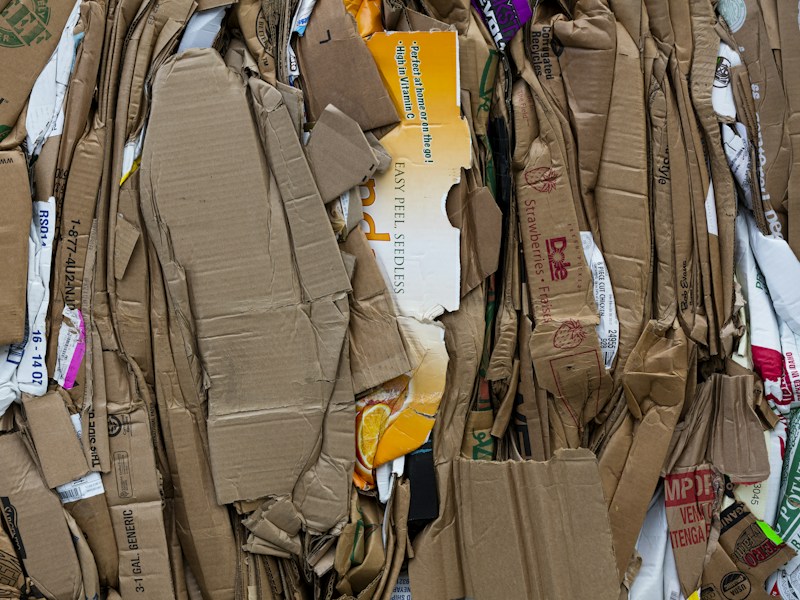
The 3R Fund is a National Environment Agency (NEA) co-funding scheme for projects that reduce, reuse or recycle waste that would otherwise go to Singapore’s incineration plants and disposal facilities. Any organisation in Singapore can apply, including companies, non-profits, town councils, schools and MCSTs. A project must reduce or recycle at least 100 tonnes of waste over its life. NEA co-funds up to 80% of qualifying costs, capped at S$1 million per project or per applicant, and accepts applications all year on a first-come, first-served basis while funds last.
Raffles Corporate Services works with a panel of experienced Singapore law firms who offer cost-effective and efficient legal service and advice. This article is general information only and is not legal advice.
For manufacturers, logistics operators, malls, hotels and building owners, waste is a recurring cost. The 3R Fund can pay for much of the equipment, manpower and professional work needed to change that, but only if the project has not started, the tonnage is measurable and the company can carry the costs until each instalment is paid. This guide covers eligibility, how much NEA pays, the three-stage payment and the paperwork involved.
Who is eligible for the 3R Fund?
NEA’s 3R Fund page states that any organisation in Singapore may apply. The project, not the applicant, carries most of the conditions:
- It must increase recycling or reduce the amount of solid waste generated. Toxic and chemical wastes are excluded.
- It must reduce, reuse or recycle at least 100 tonnes of waste over the whole project.
- It must not have started when you apply. NEA treats the start as the earlier of issuing purchase orders for equipment or beginning collection or recycling.
NEA gives priority to new and innovative processes and to waste streams with low recycling rates, such as food, plastic and glass. NEA has also stopped supporting on-site food waste treatment systems at premises covered by the Resource Sustainability Act.
What kinds of projects qualify?
- Redesigning processes to reduce waste at production, including product or packaging redesign.
- Installing recycling infrastructure, such as separate chutes, containers or receptacles, or refurbishing storage space for recyclables.
- Installing innovative waste sorting or recycling systems or equipment.
- Upgrading or implementing new operations or systems that reduce waste or increase recycling.
How much funding can you get?
NEA co-funds up to 80% of qualifying costs, capped at S$1 million per project or per applicant. The actual rate depends on the quantity and type of waste reduced or recycled. Several special rates apply:
| Situation | Maximum support |
|---|---|
| Standard project | Up to 80% of qualifying costs |
| Off-the-shelf technology similar to existing projects (for example on-site food waste conversion into non-potable water) | Up to 40% of qualifying costs |
| Second on-site waste treatment system | 70% of qualifying costs |
| Third on-site waste treatment system | 60% of qualifying costs |
| Fourth or later on-site waste treatment system | 50% of qualifying costs |
NEA also states that members of the Packaging Partnership Programme can receive up to double the funding of non-members. Ask the 3R Fund Secretariat how this applies to your project before you budget on it.
Qualifying costs are manpower; equipment, materials and consumables; professional services such as consulting and sub-contracting; and other relevant project costs. Singapore GST is excluded.
How long can a project run?
The maximum project period is 3.5 years from the date of the Letter of Acceptance:
- a preparatory phase of up to six months; and
- an operations phase of at least one year and up to three years.
How is the grant paid?
NEA reimburses in three instalments, based on actual waste reduced or recycled and actual qualifying costs:
- Up to 50% of the approved grant after installation, commissioning and two months of successful operation.
- Up to 80% of the approved grant (cumulative) after six months of successful operation.
- The final payment after the project is completed and the final report is submitted.
Every disbursement request must be certified by an external Certified Public Accountant appointed and paid by the company. The final request must be submitted within six months of project completion. If actual tonnage falls short of the figure in the application, NEA may reduce the grant.
Example: A logistics company plans a cardboard and plastic film recovery line with balers, segregated collection points and two months of staff training. Qualifying costs are S$200,000, and it projects 180 tonnes recycled over two years of operation. If NEA approved the maximum 80%, the grant would be S$160,000: up to S$80,000 after two months of operation, a further S$48,000 (to reach S$128,000) after six months, and the final S$32,000 after the final report. If only 140 tonnes were achieved, NEA could reduce the grant. These figures are illustrative; NEA sets the rate for each project.
How do you apply?
- Write a short project summary. Describe the waste stream, current disposal, proposed solution, projected tonnage and estimated cost.
- Email the 3R Fund Secretariat at [email protected].
- Receive the forms. Once the Secretariat confirms the project is eligible, it sends the Pre-Assessment Form and Declaration Form.
- Submit the full application. Return the completed Pre-Assessment Form, a pre-signed Declaration Form and all supporting documents.
- Acknowledgement and evaluation. The Secretariat acknowledges the application once the documents are complete. NEA approves every application.
- Do not issue purchase orders or start collection until NEA has approved the project.
Documents checklist
- ACRA business profile or other registration details for the organisation.
- Current waste data: types, monthly tonnage and disposal records or collector invoices.
- Project write-up with method of measuring tonnage reduced or recycled.
- Supplier quotations for equipment, materials and professional services.
- Manpower cost breakdown for project staff.
- Project timeline covering the preparatory and operations phases.
- Name of the external CPA who will certify claims (needed by the first claim).
Good tonnage records are the core of every claim. Our guides on record-keeping for grants and claims and audits after approval explain how to keep an audit-ready file.
Common reasons 3R Fund projects run into trouble
- Starting too early. A purchase order issued before approval can make the whole project ineligible; see our article on grants rejected after a project starts.
- Optimistic tonnage. Shortfalls can reduce the grant, so base projections on weighed data, not estimates.
- Using off-the-shelf technology and budgeting at 80% when NEA caps it at 40%.
- Weak measurement. Without weighbridge records or collector receipts, tonnage cannot be certified.
- Late final claim, beyond six months after completion.
If your project also cuts water or energy use, other agencies may fund different parts of it: see the PUB Water Efficiency Fund, the Energy Efficiency Grant and our directory of Singapore government grants for companies. The same cost should not be claimed under two grants.
Frequently asked questions
Can a small company apply for the 3R Fund?
Yes. There is no size limit, but the project must reduce or recycle at least 100 tonnes over its duration, which usually suits sites with significant waste volumes.
Is there an application deadline?
No fixed deadline. NEA accepts applications at any time, on a first-come, first-served basis subject to available funds.
Does the 3R Fund cover GST?
No. Singapore GST is excluded from qualifying costs.
Who pays the CPA?
The company. Every disbursement request must be certified by an external CPA appointed by the company, at its own cost.
Can we get funding for an on-site food waste digester?
Not if the premises fall under the Resource Sustainability Act, as NEA has ceased support for on-site food waste treatment systems there. Similar off-the-shelf systems elsewhere are capped at 40%.
Our premises already file waste reports with NEA. Does that matter?
It can help. Under NEA’s mandatory waste reporting, notified hotels, large malls, factories, warehouses and convention centres already collect waste data and prepare waste reduction plans. That data gives a reliable baseline for a 3R Fund proposal.
Official source: NEA 3R Fund page. NEA’s 3R Fund page was last updated in January 2022, so confirm current terms with the Secretariat before committing.
Information checked against official sources on 6 November 2026.
Free grant consultation: is the 3R Fund right for your company?
Raffles Corporate Services has in-house certified grant consultants who are experienced with Singapore grant applications and the full grant process, from checking eligibility and preparing the proposal and supporting documents to submitting claims and meeting the conditions after approval. We can arrange a free consultation to review your company and identify which grants, including the 3R Fund, may be applicable.
Email [email protected] or WhatsApp +65 8501 7133 to book a time. NEA decides every application, and no consultant can guarantee approval.
The Editorial Team, Raffles Corporate Services