
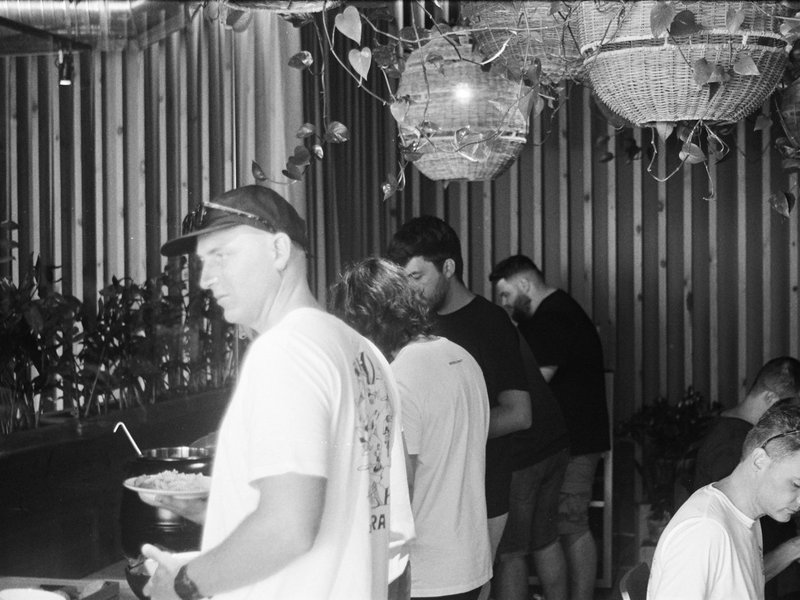
Short answer: Yes. A company can generally deduct the cost of a year-end party, dinner and dance or team-building event held for its staff, because IRAS lists staff welfare and entertainment as deductible business expenses. Employees are not taxed on it if all staff are invited. A GST-registered company can claim the GST, except on costs for staff family members.
Year-end is when most Singapore companies book a dinner and dance, a team lunch or a short retreat. Before the invoices arrive, finance teams usually ask the same three questions: is staff entertainment tax deductible in Singapore, will the staff be taxed on what they receive, and can the company claim back the 9% GST? The answers depend on who attends, what is given away and what records you keep. Below are the rules, with a worked example.
Key facts at a glance
- Section 14(1) of the Income Tax Act 1947 allows expenses “wholly and exclusively” incurred in producing income; section 15(1)(a) disallows private or domestic expenses.
- IRAS lists staff welfare and benefits, and entertainment, as deductible; entrance fees for country clubs and other clubs are not deductible.
- A corporate dinner and dance, including door gifts and lucky draw prizes, is not taxable on employees if it is available to all staff.
- Regulation 26 of the GST (General) Regulations 1993 blocks input tax on club subscription fees, medical and accident insurance premiums, medical expenses, family benefits and games of chance.
- Food and drink for a staff member’s spouse, child or relative at a company function is a family benefit: the GST on it cannot be claimed.
- Gifts and prizes costing more than S$200 (excluding GST) trigger output tax if you claimed the input tax on them.
- The current GST rate is 9%. A simplified tax invoice is enough for purchases of S$1,000 or less (including GST).
Raffles Corporate Services works with a panel of experienced Singapore law firms who offer cost-effective and efficient legal service and advice. This article is general information only and is not legal advice.
Is staff entertainment tax deductible in Singapore?
Generally yes. Spending on staff parties, festive meals and team-building activities is a staff welfare cost that IRAS accepts as deductible, provided it meets the normal test for business expenses.
The test comes from section 14(1) of the Income Tax Act 1947: a deduction is allowed for outgoings and expenses “wholly and exclusively” incurred in the production of income. Section 15(1) then blocks domestic or private expenses and anything not laid out wholly and exclusively for acquiring the income.
On its list of examples, IRAS places “Staff welfare/ benefits” and “Entertainment” in the deductible column. A dinner and dance, a Christmas lunch or a team-building day supports morale and retention, so it normally passes. For a fuller list of what can and cannot be deducted, see our guide to deductible and non-deductible business expenses under sections 14 and 15.
Two limits are worth noting. First, IRAS states that staff welfare costs which are taxable in the employees’ hands do not automatically qualify for a deduction, and the reverse is also true: each expense must meet the deductibility conditions on its own. Second, entertainment “not fully related to the running of the business” is non-deductible.
How is client entertainment treated differently from staff entertainment?
For income tax, both are deductible if they are incurred for the business. For GST, both are claimable, but IRAS asks you to classify them differently and keep different supporting details.
Client entertainment, such as a year-end dinner for key customers, is deductible where the purpose is to win or keep business. The GST on it is claimable if the usual input tax conditions are met. IRAS adds a practical concession for food and drink: where the bill exceeds S$1,000 (including GST), a receipt containing the information required in a simplified tax invoice can be used, as long as you also keep payment evidence and the entertainment details, such as the names of the people entertained, the purpose and who incurred the expense. The concession does not cover non-food items, such as chartering a yacht, which still need a full tax invoice.
Staff meals are a separate category. IRAS says that meals you provide to your own team members should be classified as fringe benefits, not as entertainment expenses. Keep separate ledger accounts for staff welfare and client entertainment.
Are employees taxed on the year-end party, door gifts and prizes?
No, provided the event is open to all staff. IRAS grants an administrative concession for benefits that foster goodwill or promote camaraderie among staff, because it is difficult to put a value on each employee’s share.
The concession covers, among others, sponsored group outings (but not subsidised holiday trips overseas), Family Day events, a corporate dinner and dance including door gifts and lucky draw prizes, and free or subsidised food and drinks.
Separately, IRAS’s guidance on meals says free or subsidised food at festive occasions, such as lo-hei during Chinese New Year, Christmas parties and company celebrations, is not taxable if most staff in the company enjoy the benefit. A dinner and dance held overseas is generally not taxable either, but if the trip includes a holiday, the holiday portion is taxable. Festive gifts given outside the event follow a separate S$200 guide, which we cover in a separate article on corporate gifts.
The practical point is the “all staff” condition. A lavish dinner for directors only does not fall within the camaraderie concession, so the company should check whether it must be reported for those individuals. See our guide to tax on employee benefits and Appendix 8A.
Can you claim the GST on a staff year-end party?
Yes, if your company is GST-registered and the usual input tax conditions are met. IRAS treats corporate events that promote staff interaction as having a close nexus to your business.
In its e-Tax Guide on GST: Fringe Benefits (published 30 January 2026), IRAS says fringe benefits at corporate events or activities that primarily promote staff interaction are considered to have a close nexus to your business. The examples it gives are a corporate dinner and dance, company outings, team-bonding activities and lunch-time talks for employees. Hotel or chalet accommodation for a company retreat is treated the same way.
To claim, you still need the standard conditions: the supply was made to your company, the expense is for your business, and you hold a valid tax invoice addressed to the company (or a simplified tax invoice for purchases of S$1,000 or less including GST). Our article on what you can and cannot claim as input tax walks through each condition.
Food and drink catered for employees does not create output tax, even though it is free.
Which year-end party costs are blocked under Regulation 26?
The main one is anything provided to staff families. Regulation 26 of the GST (General) Regulations 1993 excludes from credit the input tax on five categories, and “family benefits” is one of them.
The five categories are:
- club subscription fees;
- medical and accident insurance premiums;
- medical expenses;
- family benefits;
- any transaction involving betting, sweepstakes, lotteries, fruit machines or games of chance.
Regulation 25 defines “family benefits” as any benefits, including hospitality of any kind, provided for a person who is the wife, husband, child or relative of an employee. “Relative” means a brother, sister, ancestor or linear descendant. IRAS confirms that food and drink provided to an employee’s spouse, child or relative at a company function falls within this block.
In practice, if partners and children are invited to the dinner and dance or Family Day, the GST on their share is not claimable. Ask the venue to show the headcount so you can apportion the GST. Club subscription fees are also blocked, but IRAS allows input tax on the use of club facilities, such as dining at a club restaurant, if the conditions are met. Regulation 27 separately blocks GST on motor car expenses, which matters if you hire cars for the event; our company car tax guide explains that rule.
Do lucky draw prizes and door gifts create output tax?
Only where an item costs more than S$200 and you claimed the GST on buying it. Below that amount there is no output tax to account for.
IRAS uses a dinner and dance example: door gifts costing S$50 each need no output tax, but each lucky draw prize costing more than S$200 does. The S$200 is measured excluding GST. Where output tax is due, it is calculated on the open market value of the prize. Note that this is a GST rule only; for income tax, lucky draw prizes at a dinner and dance remain covered by the staff concession. Gift vouchers given free do not attract GST.
Worked example: what a year-end dinner and dance costs after tax
Assume a GST-registered company with 40 staff holds its year-end dinner and dance at a hotel. Ten staff bring their spouses. Figures are illustrative and GST is at 9%.
| Item | Cost before GST | GST | Deductible for income tax? | Input tax claimable? | Taxable on employees? |
|---|---|---|---|---|---|
| Banquet for 40 staff | S$8,000 | S$720 | Yes, staff welfare | Yes | No (open to all staff) |
| Banquet for 10 spouses | S$2,000 | S$180 | Usually yes, as part of a staff event held for business reasons | No, family benefit under Regulation 26 | No |
| Door gifts, 40 at S$50 | S$2,000 | S$180 | Yes | Yes, no output tax (each gift S$200 or less) | No |
| Top lucky draw prize | S$1,500 | S$135 | Yes | Yes, but output tax due on open market value (over S$200) | No (dinner and dance concession) |
| Year-end dinner with key clients | S$1,200 | S$108 | Yes, if for business | Yes, with tax invoice and entertainment details | Not applicable |
| Country club entrance fee for future events | S$5,000 | S$450 | No, IRAS lists club entrance fees as non-deductible | No, club fees blocked under Regulation 26 | Not applicable |
In this example the company can claim S$1,143 of input tax (S$720 + S$180 + S$135 + S$108) but must account for output tax on the top prize (S$135 if its open market value equals its cost). The S$630 of GST on the spouses’ meals and the club entrance fee is a real cost to the business. To see how deductible costs flow into your company’s tax bill, try the corporate tax calculator on our free tools page.
What records should you keep for staff and client entertainment?
Keep enough to prove three things: the event was for the business, who attended, and that the tax invoice is addressed to the company. For income tax, IRAS requires a company to keep its records and source documents for at least 5 years from the relevant Year of Assessment.
- Tax invoices addressed to the company (not to an employee), or simplified tax invoices for bills of S$1,000 or less including GST.
- An attendee list separating staff from family guests and clients, so you can apportion blocked GST.
- A short note of the event’s purpose, and for client entertainment the names of the guests and who hosted.
- A prize and gift schedule showing the cost of each item excluding GST, flagging anything above S$200.
- The staff circular or invitation showing the event was open to all staff.
For how long and in what form to keep these, see our guide to GST record-keeping and IRAS audit readiness. If the board approves the events budget by written resolution, our sister site Singapore Secretary Services explains how such resolutions are documented.
Frequently asked questions
Is a team-building day treated the same as a dinner and dance?
Yes. IRAS’s GST guidance names team-bonding activities and company outings alongside the dinner and dance as events with a close nexus to the business, and sponsored group outings are within the income tax concession for staff, provided they are not subsidised overseas holidays.
Is there a cap on how much a company can deduct for staff entertainment?
IRAS does not publish a fixed cap. The test is whether the cost is wholly and exclusively incurred for the business. Lavish events limited to directors and their families invite questions about private use.
Can a company that is not GST-registered claim the GST on its party?
No. Only GST-registered businesses can claim input tax. For other companies, the GST is part of the deductible cost.
Can we claim GST on a dinner and dance held overseas?
Foreign taxes, such as VAT charged by an overseas hotel, are not Singapore GST, so they cannot be claimed as input tax in your GST return. For income tax, IRAS says an overseas dinner and dance is generally not taxable on employees, but any holiday portion of the trip is.
Need help with this?
Raffles Corporate Services can handle the ACRA filings, compliance documentation and records for you, and where court proceedings or legal advice are needed, we work with a panel of experienced Singapore law firms who offer cost-effective and efficient legal service and advice.
Email: [email protected]
Call, SMS or WhatsApp: +65 8501 7133
Last reviewed: 20 October 2026. The Editorial Team, Raffles Corporate Services.