
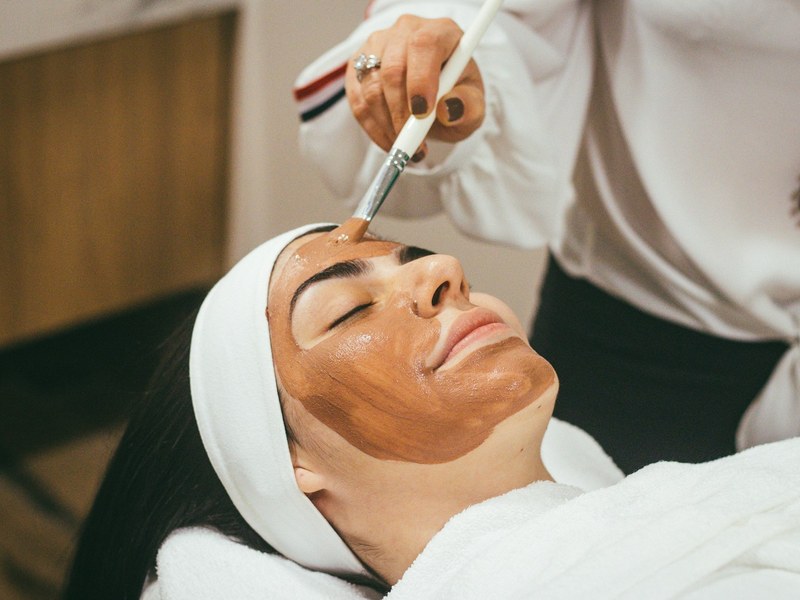
Short answer: To start a beauty salon in Singapore, incorporate a company and then check whether any treatment involves massage. Manicures, pedicures and light, electric or vapour treatments need no Police licence. Body massage usually needs a Massage Establishments Act 2017 licence, URA or HDB approval for the premises, and staff who meet the licence’s nationality rules.
If you plan to start a beauty salon in Singapore, registering the company is the easy part. Your treatment menu decides whether the Singapore Police Force must license the premises, which unit you can lease and which therapists you can hire, and package sales bring GST and consumer protection rules into play. This guide uses the rules in force on 25 October 2026.
Key facts at a glance
- Premises used for massage need a licence under the Massage Establishments Act 2017. Operating without one is an offence under section 5(1): a fine of up to S$10,000, up to 2 years’ jail, or both.
- No licence is needed for manicure, pedicure, light treatment, electric treatment, vapour treatment or baths provided without any massage.
- Licence fees (non-refundable): S$290 for 1 year, S$440 for 2 years, S$590 for 3 years.
- A beauty salon is a URA “Shop” use; a massage spa also needs URA or HDB planning approval.
- Services sector quota: Work Permit and S Pass holders capped at 35% of the workforce, S Pass holders at 10%.
- GST registration is compulsory once taxable turnover exceeds, or is expected to exceed, S$1 million. The rate is 9%.
- On 21 April 2026 the Police announced a new Category 3 licence for open-concept massage outlets, due in the second half of 2026.
Raffles Corporate Services works with a panel of experienced Singapore law firms who offer cost-effective and efficient legal service and advice. This article is general information only and is not legal advice.
Do you need a massage establishment licence to start a beauty salon in Singapore?
You need one only if customers receive massage at your premises and no exemption applies. A nail bar, or a salon offering machine-based facials without any massage, does not need a Police licence.
Section 2(1) of the Massage Establishments Act 2017 defines massage as rubbing, kneading or manipulating the human body or any part of it, with or without hand-held equipment, to relax muscle tension, stimulate circulation, increase suppleness “or otherwise”. A body scrub with kneading, or a facial ending with a shoulder rub, can bring a salon within the Act.
The Massage Establishments (Exemption) Order 2018, made under section 32 of the Act, exempts some premises:
| Service or set-up | Police licence needed? | Basis |
|---|---|---|
| Manicure, pedicure, nail art | No, if no massage is given | Police licensing guidance |
| Light, electric or vapour treatments, baths | No, if no massage is given | Police licensing guidance |
| Hair salon with head or scalp massage only | No | Exemption Order, paragraph 4 |
| Massage only for customers below 12 years of age | No | Exemption Order, paragraph 5 |
| Massage only by registered TCM practitioners, allied health professionals or doctors holding practising certificates | No | Exemption Order, paragraph 3 |
| Premises licensed under the Healthcare Services Act 2020, such as an outpatient medical clinic | No | Exemption Order, paragraph 2 |
| Open-concept outlet in full public view, no rooms or cubicles, 7am to 10.30pm, Police notified in advance | Exempt today; a Category 3 licence is planned | Exemption Order, paragraph 6; Police announcement of 21 April 2026 |
| Body massage, spa rituals or facials with massage in private rooms | Yes | Massage Establishments Act 2017, section 5(1) |
If your menu sits in a grey area, ask the Police Regulatory Department before signing a lease; the Police massage establishment licence page sets out the current rules. Aesthetic treatments that are medical procedures belong in a clinic regime instead; our guide to setting up a medical clinic company covers the Healthcare Services Act route.
Which massage licence category applies, and what does it cost?
Every new spa first applies for a Category I or Category II provisional licence and can upgrade only after that. The category depends on location, floor area and the staff you plan to employ.
| Point | Category I | Category II |
|---|---|---|
| Where it can operate | HDB shophouses, shopping centres and hotels | Areas away from residential areas, schools and places of worship |
| Minimum floor area | 100 square metres | 50 square metres |
| Employees during the provisional stage | Singapore citizens, permanent residents and Malaysians with valid work passes only | Singapore citizens, permanent residents and Malaysians with valid work passes only |
| Employees with the full licence | Any nationality with a valid work pass | Check the Category II licensing conditions |
| CaseTrust accreditation | Required for the full licence | Not required at the provisional stage |
Fees have applied since 1 April 2020: S$290 for a 1-year licence, S$440 for 2 years and S$590 for 3 years, none refundable. Amending the approved layout costs S$40 per application. When a company applies, a “responsible officer”, meaning a director or an officer in a similar managerial or executive position, must be named as co-licensee. That person must be fit and proper, at least 21 years old and, if a foreigner, hold a valid and relevant work pass.
The Police have also announced 5-year tenures for compliant licensees and a mandatory shopfront poster, while new licensees will still start with a one-year provisional licence. As at 25 October 2026 the open-concept exemption remains in the Exemption Order, so check the start date before relying on either regime.
What premises and URA approvals does a salon or spa need?
A beauty salon without massage is a “Shop” use, so it can usually go into a unit already approved for shop use. A spa that offers massage needs URA planning permission, or HDB approval for HDB shops, and the Police ask for that approval as a supporting document with the licence application.
URA lists beauty salons, hairdressing salons and foot reflexology under Shop use. For massage establishments, URA will not support new conversions in historic conservation areas or in named locations including Balestier, Chinatown, Geylang, Joo Chiat, Little India, Tiong Bahru, Orchard Towers and Golden Mile Complex; see the full URA exclusion list. The Police keep a separate, non-exhaustive list of locations where new licences are unlikely, and state that URA or HDB approval does not guarantee a licence. Sunk renovation or rent costs are not a ground for granting one.
The safe order of work for a spa is:
- Shortlist units outside the URA and Police location lists and confirm that the floor area meets your intended licence category.
- Make the lease conditional on URA or HDB approval and on the Police licence, or negotiate a rent-free period that covers the approval time.
- Apply to URA or HDB for the change of use.
- Prepare a layout plan drawn to scale with the total floor area in square metres, and the company’s ACRA business profile.
- Apply for the massage establishment licence through the GoBusiness portal.
- Start renovation only once the licence is approved.
Our sibling guide on how to start a cleaning business in Singapore applies the same licence-before-lease logic to another services trade.
How many foreign therapists can a beauty or spa company hire?
A salon company falls in the services sector, where Work Permit and S Pass holders together cannot exceed 35% of the total workforce, and S Pass holders alone cannot exceed 10%. Your quota grows only as you employ local staff who are paid through CPF.
Under MOM’s services sector rules, Work Permit holders can come only from Malaysia, the People’s Republic of China (PRC) and the North Asian sources of Hong Kong, Macau, South Korea and Taiwan. Workers from other countries are limited to occupations on MOM’s Non-Traditional Sources list.
| Work pass point | Services sector position on 25 October 2026 |
|---|---|
| Combined quota (dependency ratio ceiling) | 35% of total workforce |
| S Pass sub-quota | 10% of total workforce |
| PRC Work Permit sub-quota | 8% of total workforce |
| Work Permit levy | S$300 to S$800 a month, by skill level and tier |
| S Pass levy | S$650 a month (harmonised since 1 September 2025) |
| S Pass minimum salary | S$3,300, rising with age; S$3,600 for new applications from 1 January 2027 |
The massage licence adds a second filter. During the provisional stage, a licensed establishment can employ only Singapore citizens, permanent residents and Malaysians with valid work passes, so a PRC therapist who meets MOM’s rules may still be unable to work at a provisional-licence spa. Because the quota is calculated from your local employees’ CPF records, pay CPF on time; our guide to CPF contributions for employers covers rates and deadlines. Work pass applications are handled by our associated MOM-licensed agency, Little Big Employment Agency.
When must a beauty salon register for GST, and how are prepaid packages taxed?
Registration is compulsory when taxable turnover exceeds S$1 million in a calendar year, or when you can reasonably expect it to exceed S$1 million in the next 12 months. Once registered, you charge 9% GST on your services.
Under the retrospective test, you apply between 1 and 30 January of the following year and are registered from 1 March. Under the prospective test, you apply within 30 days of the forecast date and, where the liability arises on or after 1 July 2025, are registered 2 months from the forecast date.
Package-heavy salons should note the time of supply rule: for most transactions GST is accounted for at the earlier of issuing an invoice or receiving payment. If a GST-registered salon collects S$3,000 upfront for 10 sessions, GST is generally due in the return for the period in which the money is received, not as each session is used. Keep package sales and redemptions in separate ledgers so you can see both the cash collected and the services still owed. See our guide to compulsory and voluntary GST registration and use our free tools to plan ahead.
What consumer protection rules apply to prepaid beauty packages?
Under the Consumer Protection (Fair Trading) Act 2003 (CPFTA), it is an unfair practice to exert undue pressure or influence on a consumer to enter a transaction. Pressure selling of prepaid packages is the area the regulator is watching most closely in this industry.
In a written parliamentary reply dated 5 August 2026, the Ministry said the Competition and Consumer Commission of Singapore (CCS) had acted against 15 beauty and wellness businesses since 2022 for pressure selling or other unfair practices involving prepaid packages. Thirteen gave undertakings to CCS and CCS obtained injunctions against the other two; businesses that breach court orders can face contempt proceedings. The enforcement framework is under review.
The Consumers Association of Singapore (CASE) recorded 1,124 beauty complaints in the first half of 2026, up from 558 a year earlier, and over S$1.9 million in beauty prepayment losses, largely from sudden closures. CASE says CaseTrust-accredited spas and salons offer a five-day cooling-off period and refunds for unused packages. CaseTrust is voluntary for most salons, but it is required for a full Category I massage licence.
Practical safeguards for a new salon:
- Written package terms stating sessions, expiry, refund formula and what happens if the outlet closes.
- No package pitches during a treatment.
- Unused packages recorded as income received in advance.
If a customer dispute escalates, speak to a lawyer early.
What is the right order for opening a salon or spa company?
Settle the treatment menu first, because it drives the licence, the unit and the hiring plan.
- Fix the menu and decide whether massage is included.
- Incorporate the company. RCS incorporates within 1 business day of receiving complete documents, subject to compliance checks.
- Secure premises, planning approval and, for a spa, the Police licence.
- Hire local staff, then apply for work passes within quota.
Frequently asked questions
Does a facial salon need a massage establishment licence?
Not if the facial involves only products, light, electric or vapour treatments and no rubbing or kneading. If the facial includes massage of the neck, shoulders or body, plan for a licence unless an exemption applies.
Can a hair salon offer head massage without a licence?
Yes. Paragraph 4 of the Massage Establishments (Exemption) Order 2018 exempts premises where massage is given only to the head or scalp.
Can a foreign director hold the massage licence?
A foreign director can be the co-licensee if they are a responsible officer of the company, at least 21, fit and proper, and hold a valid and relevant work pass.
Is CaseTrust accreditation compulsory for a beauty salon?
No, for most salons it is voluntary. The exception is a spa moving from a provisional to a full Category I massage establishment licence, where the Police require CaseTrust accreditation.
Need help with this?
Raffles Corporate Services can handle the ACRA filings, compliance documentation and records for you, and where court proceedings or legal advice are needed, we work with a panel of experienced Singapore law firms who offer cost-effective and efficient legal service and advice.
Email: [email protected]
Call, SMS or WhatsApp: +65 8501 7133
Last reviewed: 25 October 2026. The Editorial Team, Raffles Corporate Services.