
Short answer: A company that owns a strata unit can apply to the Strata Titles Boards (STB) when the management corporation (MCST) blocks works, passes a resolution it disputes, levies contributions it thinks are wrong or withholds records. The STB mediates before any hearing. The application fee is S$500, and appeals go to the High Court on points of law only.
Owning a shop, office or clinic unit in a strata development makes your company a member of the MCST. You pay its contributions, follow its by-laws and are bound by its general meetings. When that relationship breaks down, the forum is usually the strata titles board Singapore law sets up for these disputes, not the civil courts. This guide explains which disputes the Board can decide, how a company files and is represented, the fees and timeline, and what the company secretary prepares while a solicitor handles the case if one is needed.
Key facts at a glance
- The Board’s power to make orders on strata management disputes is in Part VI, Division 2 (sections 101 to 115) of the Building (Strata Management) Act 2004 (BSMA).
- Application fee: S$500, covering the first 2 mediation sessions. Further attendances cost S$150 a day and hearings S$300 a day (Strata Titles Boards Regulations 2005, Schedule). Fees are not refundable.
- Once the STB accepts the application, the applicant must serve it on the respondent within 5 working days.
- Any party may object to a Board member on reasonable grounds within 7 days of being notified of the Board’s make-up (regulation 6(3)).
- A company attends through a key appointment holder with a sealed letter of authorisation on its letterhead and a certified true copy of the board resolution.
- Orders are final and binding and can be enforced in the State Courts. An appeal lies to the General Division of the High Court on a point of law only.
Raffles Corporate Services works with a panel of experienced Singapore law firms who offer cost-effective and efficient legal service and advice. This article is general information only and is not legal advice.
Strata Titles Board Singapore: what is it, and when does a company use it?
The Strata Titles Boards are a tribunal that resolves disputes in strata-titled developments, mainly between unit owners and the management corporation. A company uses it when it owns a strata unit and its dispute falls within the specific orders the BSMA lets the Board make.
In strata law, a unit owner is a “subsidiary proprietor” (SP), and the body that manages the common property is the management corporation strata title (MCST), run by an elected council. A company that owns a unit is an SP like any individual owner. The Building and Construction Authority (BCA) describes the STB as a quasi-judicial tribunal whose panel includes lawyers, architects and engineers; each case goes to a Board of three or five members.
For a commercial owner, the disputes that typically reach the Board include:
- the MCST refusing consent for fit-out works or alterations that touch the common property;
- a general meeting resolution or by-law that affects the company’s unit or frontage;
- contributions to the maintenance and sinking funds, or late-payment interest, the company says are wrong;
- the MCST failing to maintain common property, or a water leak between floors; and
- the MCST refusing to supply minutes, accounts or other records.
What is the legal basis for an application?
The Board’s powers come from Part VI, Division 2 of the BSMA, and its procedure from the Building Maintenance and Strata Management (Strata Titles Boards) Regulations 2005. BCA guides also call the Act the Building Maintenance and Strata Management Act.
Each type of order has its own section and its own list of who may apply. The table follows the STB’s published list and BCA’s Strata Management Guide 9.
| BSMA section | Order the Board can make | Who may apply |
|---|---|---|
| 101 | Settle a dispute or rectify a complaint, including about a duty under the BSMA or the by-laws, and inter-floor leaks (s 101(1)(a), (c) and (8)) | MCST, SP, mortgagee in possession, lessee or occupier |
| 102 | Convene a general meeting | SP or other person entitled to vote |
| 103 and 104 | Invalidate a resolution or election, or nullify one where voting rights were denied or due notice was not given | SP or first mortgagee (s 103); the person denied the vote or notice (s 104) |
| 105 and 106 | Revoke an amendment or addition to a by-law, or invalidate a purported by-law | A person entitled to vote at the meeting |
| 107 and 108 | Vary the interest rate on late contributions, or vary the contributions levied or how they are paid | SP or mortgagee in possession (s 107); MCST, SP or mortgagee in possession (s 108) |
| 111 | Order that the MCST consents to an SP’s proposal for alterations to the common property | SP |
| 113 | Order the MCST to supply information or documents | A person wrongfully refused information or inspection |
The Board decides only the matters these sections cover. The STB warns that an application outside its jurisdiction may be discontinued without a refund of the fee. Other disputes go to the courts.
Who can apply, and what can the Board not do for a commercial owner?
A company that owns a unit applies in its own name as an SP, and a tenant can apply under section 101 as a lessee or occupier. Before filing, check that the Board can actually grant the remedy the company wants.
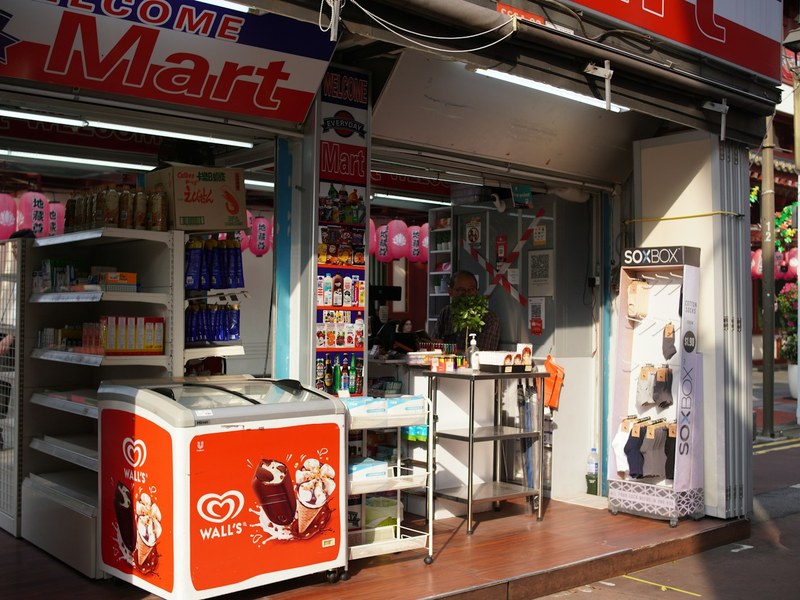
A recent decision shows the limits. In Boon Trading Pte Ltd v The MCST Plan No. 4502 (STB No. 36 of 2026, grounds of decision dated 16 October 2026), a company owned the only three commercial units in Robinson Suites, ground-floor shops let to tenants. The MCST placed vending machines and dustbins on the covered walkway in front of the shops, relying on a 2023 special resolution letting the council grant exclusive use of common property for a fee.
- The company had attended the 2023 AGM by proxy, and the resolution passed with no votes against. The Board said an unmarked proxy form meant, at most, an abstention, and refused to invalidate the resolution.
- On the argument that leasing the walkway needed approval from the Urban Redevelopment Authority (URA), the Board held that section 34 does not make such approval a condition of a valid resolution, and that planning complaints belong with URA.
- The Board held that it has no power to grant injunctions, so it could not order the machines removed.
- The application was dismissed, and the company was ordered to pay the MCST S$8,000 in costs and S$2,000 in disbursements.
The lessons: how your company votes at MCST meetings matters, and if you need an injunction, ask a solicitor early whether the courts are the better forum.
How does a company apply, step by step?
The process runs from a written attempt to settle, through filing and service, to mediation and, if needed, a hearing.
- Raise it with the MCST. Write to the council or managing agent, ask for the relevant minutes and by-laws, and consider a motion at the next general meeting. The STB expects parties to try to settle first.
- Board decision. The directors decide whether to apply and authorise a named officer to represent the company.
- Prepare the application. Set out the events in date order and attach the evidence as a paginated annex, in at least Times New Roman 12 or its equivalent.
- Email for checking. Send the soft copy to the STB’s application inbox. Once it is accepted, the STB explains how to pay the S$500 fee by PayNow or internet bank transfer and lodge hard copies.
- Serve the respondent within 5 working days of the acceptance letter, then return the Memorandum of Service. An MCST can be served by leaving the papers with the chairperson, secretary or a council member, in the MCST’s post box, or by prepaid registered post.
- Constitution of the Board. All parties are told who sits on the Board and have 7 days to object on reasonable grounds, such as a conflict of interest.
- Mediation. Notice is given at least 7 days before the first session. Sessions are private, confidential and without prejudice, and a settlement signed before the Board is final, binding and enforceable (regulation 10).
- Directions hearing. If mediation fails, the Board sets dates for affidavits of evidence-in-chief, sworn before a Commissioner for Oaths, and fixes the hearing.
- Hearing and order. Each side presents witnesses and submissions, and the Board makes an order with reasons. It is not bound by the rules of evidence and may inspect the premises (regulation 18).
If a duly notified applicant misses mediation, the Board may dismiss the application (regulation 11). An applicant may withdraw before a mediated agreement or an order, but may be ordered to pay the other parties’ and the Board’s costs to that point (regulation 21).
What documents does the company need?
A company needs its application and evidence, plus proof that the person attending has authority to speak and settle for it.
| Document | Prepared by | Notes |
|---|---|---|
| Application form, 4 sets | Company, or its solicitor | The STB publishes Form 8 for applicants filing in their own capacity and Form 9 for applications on behalf of a management corporation; confirm the right form with the registry |
| Evidence annex | Company, with the managing agent’s records | By-laws, AGM notices and minutes, proxy forms, correspondence, statements of account, colour photographs and floor plans, every page numbered |
| Board resolution | Company secretary, signed by the directors | Must allow the company seal to be affixed to the letter of authorisation and authorise named persons to represent the company; a certified true copy is produced |
| Letter of authorisation | Company secretary | On company letterhead, signed and sealed, naming at least one key appointment holder such as a director |
| Affidavits of evidence-in-chief | Witnesses, usually with a solicitor | Only if the case goes to a hearing |
If the company no longer has a common seal, raise this with the STB registry early. Our guide to the common seal and section 41A execution explains the current rules.
How long does it take, and what does it cost?
The STB’s fees are fixed by regulation and modest; the larger costs are management time, professional fees and the risk of a costs order. There is no published average duration, but a case expires 6 months after the Board is constituted.
| Stage | Timing | Fee or cost driver |
|---|---|---|
| Application | When the company files | S$500, covering processing and the first 2 mediation sessions; not refundable |
| Service on the respondent | Within 5 working days of acceptance | Postage or delivery only |
| Third and later mediation or directions attendances | As fixed by the Board | S$150 for each day or part of a day |
| Hearing | As fixed at the directions hearing | S$300 for each day or part of a day, paid by the applicant |
| Costs order | End of the case | At the Board’s discretion; in Boon Trading the losing company paid S$8,000 plus S$2,000 disbursements |
Assumptions: an application under Part VI, Division 2 of the BSMA; parties pay for their own interpreters; we do not quote solicitors’ or experts’ fees.
What does the company secretary prepare, and what does the solicitor do?
Lawyers are allowed at the STB but not required. Where the company instructs solicitors, the proceedings, and any appeal or enforcement in court, are conducted by a Singapore Advocate and Solicitor. The company secretary keeps the corporate side in order.
| Company secretary or corporate service provider | Singapore Advocate and Solicitor |
|---|---|
| Board resolution approving the application and naming the representatives | Advice on jurisdiction and whether a court action would serve the company better |
| Sealed letter of authorisation and certified copy of the resolution | Drafting or reviewing the application and the orders sought |
| Proxy forms and representative letters for MCST meetings | Representation at mediation, directions hearings and the hearing |
| Records of contributions paid and correspondence, drawn from the books | Affidavits, submissions, and any appeal or enforcement |
Raffles Corporate Services does not give legal advice or appear before tribunals or courts; a law firm from our panel handles representation where needed. Our guide to corporate self-representation explains the different rules if the dispute reaches court.
The corporate paperwork matters before any dispute starts. Under the First Schedule to the BSMA, as BCA’s Strata Management Guide 4 explains:
- a company that is an SP may appoint an individual to represent it at MCST meetings, by a letter under its seal or signed by a director or its authorised lawyer (paragraph 16);
- a company’s proxy form must be under its seal or signed by an authorised officer or attorney, and deposited at least 48 hours before the meeting (paragraphs 17 and 18); and
- an SP in arrears of contributions 3 days before a general meeting cannot vote, except on motions needing a unanimous resolution or resolution by consensus (paragraph 12).
These rules differ from those for a corporate shareholder at a company’s own meetings, covered in our guide to corporate representatives under section 179.
What happens after the Board makes its order?
The order binds the parties at once. If the other side does not comply, it can be enforced in the State Courts, and an appeal is possible only on a point of law.
- An MCST served with an order must display a copy on its notice board within 72 hours (regulation 23(2)).
- The STB states that contravening a Board order is an offence punishable by a fine of up to S$10,000, imprisonment of up to 5 years, or both.
- A party may appeal to the General Division of the High Court by filing a notice of appeal with the Registrar of the Supreme Court. The court may confirm, vary or set aside the order, or send it back to the Board. An appeal does not suspend the order unless the Board or the court directs otherwise; your solicitor will confirm the deadline.
- Nothing is lodged with ACRA for an STB case. Keep the order, any settlement and the board resolutions with the company’s minutes, and update budgets if contributions change.
For the tax side of owning the unit, see our guide to property tax for companies.
What are the common mistakes companies make?
Most come from treating MCST governance as a facilities matter rather than a legal one.
- Signing blank proxy forms or skipping AGMs, then trying to challenge a resolution the company did not oppose.
- Falling into arrears before a general meeting and losing the vote on the motion that matters.
- Starting fit-out works that affect the building’s appearance without the MCST’s authorisation under section 37(4), or works that add gross floor area without a 90% resolution.
- Asking the Board for remedies it cannot grant, such as an injunction, and paying costs as a result.
- Sending a representative to mediation without a sealed letter of authorisation and a certified board resolution.
- Amending the application at the last minute; in Boon Trading, an amendment sought on the day of the hearing was refused.
Our guide to mediation before litigation covers the court-side settlement rules, and our free compliance tools keep company deadlines in one place. If the dispute is heading for a hearing or a court, speak to a lawyer early. The STB publishes its fee schedule and filing steps, and BCA’s Strata Management Guide 9 summarises the dispute routes.
Frequently asked questions
Can a company that owns a commercial strata unit apply to the STB?
Yes. A company that owns a unit is a subsidiary proprietor and can apply in its own name for the orders in sections 101 to 115 of the BSMA, attending through a key appointment holder with proper written authority.
Does the company need a lawyer at the Strata Titles Boards?
No. The STB says lawyers are generally not required, but a party acting for itself is held to a lawyer’s responsibilities at the hearing, so complex disputes often justify representation.
Can the Board order the MCST to remove something blocking our shopfront?
Not by injunction. In Boon Trading Pte Ltd v The MCST Plan No. 4502 (STB No. 36 of 2026), the Board held it has no power to grant injunctions. A solicitor can advise whether a specific BSMA order or a court action fits the facts.
Can we get the S$500 application fee back?
Not from the STB, which makes no refunds. You can ask the Board to order the respondent to reimburse it.
Need help with this?
Raffles Corporate Services can handle the ACRA filings, compliance documentation and records for you, and where court proceedings or legal advice are needed, we work with a panel of experienced Singapore law firms who offer cost-effective and efficient legal service and advice.
Email: [email protected]
Call, SMS or WhatsApp: +65 8501 7133
Last reviewed: 10 November 2026. The Editorial Team, Raffles Corporate Services.