
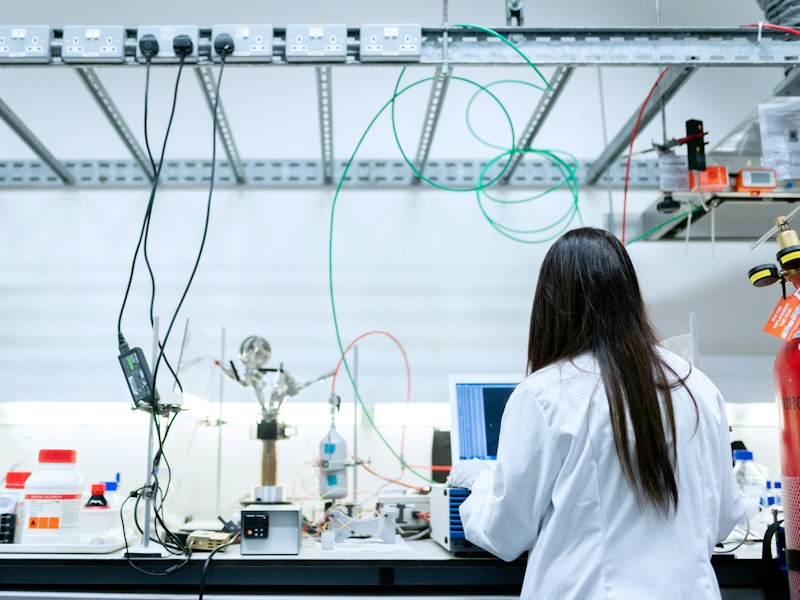
T-Up (Technology for Enterprise Capability Upgrading) is a Singapore programme that attaches research scientists, engineers and technical experts from A*STAR research institutes and institutes of higher learning to local companies for up to two years. It is administered by A*STAR, with talent drawn from A*STAR and AI Singapore. Singapore-registered companies with at least 30% local equity can receive support of up to 70% of eligible costs (SMEs and start-ups) or up to 30% (large local enterprises), capped at S$250,000 per project.
Raffles Corporate Services works with a panel of experienced Singapore law firms who offer cost-effective and efficient legal service and advice. This article is general information only and is not legal advice.
For an SME that has a real technical problem but no research team, T-Up is one of the few schemes that puts an experienced scientist or engineer inside the business rather than funding an outside consultant. This guide explains who qualifies, what the funding covers, how to register interest and how to plan the secondment so that the capability stays after the researcher leaves.
What does T-Up actually give your company?
T-Up is a talent programme rather than a cash grant for equipment or software. A*STAR seconds one or more of its research scientists and engineers to your company to work on technical challenges, strengthen in-house capability and help develop new products, processes or services. A*STAR describes the aims as expanding technical capability, developing intellectual property and process innovation, increasing commercialisation and growing revenue.
Enterprise Singapore’s programme page lists project areas such as data storage, high performance computing, microelectronics, bioprocessing and artificial intelligence or machine learning, and states that the list is not exhaustive. In practice, the scheme suits companies with a defined technical project: improving a manufacturing process, building a new product feature, testing a material, or setting up an analytics or machine-learning capability.
A*STAR also works with the Singapore Institute of Technology’s Integrated Work Study Programme, so some T-Up projects can involve students alongside the seconded researcher.
Who is eligible for T-Up?
Enterprise Singapore’s T-Up page sets out the following company criteria:
- The business entity is registered or incorporated in Singapore.
- At least 30% local equity is held directly or indirectly by Singapore citizens and/or permanent residents, determined by ultimate individual ownership.
- The company is able to finance and complete the project.
- For the SME support level, group annual sales turnover does not exceed S$100 million or group employment does not exceed 200 employees.
The 30% local equity test is the rule that most often surprises foreign-owned companies. A Singapore subsidiary of an overseas group, or a company owned mainly by Employment Pass holders, will usually fail it even though it is incorporated here. Ownership is traced to the ultimate individuals, so a Singapore holding company owned by foreigners does not count as local equity.
How much funding can you get?
| Company type | Support level | Cap |
|---|---|---|
| SMEs and start-ups (group turnover up to S$100 million or up to 200 employees) | Up to 70% of eligible costs | S$250,000 per project |
| Large local enterprises | Up to 30% of eligible costs | S$250,000 per project |
Eligible costs are the allowable costs of the contracted research scientists and engineers. Enterprise Singapore states that eligible costs can also include overseas costs such as living allowances and airfare for those researchers. The agency sets the allowable cost of each secondment, so confirm the figure with A*STAR before you budget your share.
Example: A precision engineering company with 85 employees and group turnover of S$32 million wants to add machine-vision inspection to its production line. A*STAR agrees an 18-month secondment with eligible costs of S$300,000. At 70%, support would be S$210,000, inside the S$250,000 cap, and the company funds the remaining S$90,000. If eligible costs were S$400,000, 70% would be S$280,000, so the cap would limit support to S$250,000. These figures are illustrative; the actual eligible costs and support are set in A*STAR’s offer.
How do you apply?
- Define the technical problem. Write one page on what you want to achieve, why the business cannot do it with current staff, and what success looks like (for example a working prototype, a validated process or an in-house model).
- Check eligibility. Confirm local equity on an ultimate-ownership basis and your group turnover or headcount. Your register of members and any holding-company registers will be needed.
- Register interest. Both the Enterprise Singapore and A*STAR T-Up pages carry a “register interest” form. A*STAR then discusses the project and the type of researcher needed.
- Agree scope and match. A*STAR identifies a suitable scientist or engineer and agrees the scope, duration (up to two years) and deliverables with you.
- Accept the offer and start. Read the offer terms carefully: the secondment period, your cost share, reporting duties and how intellectual property is handled.
What should you prepare?
- ACRA business profile and register of members, plus ownership charts showing the ultimate individual shareholders.
- Latest financial statements or management accounts showing the company can fund its share.
- Group turnover and headcount figures (including related companies).
- A short project brief: problem, objectives, milestones and expected business impact.
- Name of the internal staff member who will work alongside the researcher and take over the work.
- Any existing technical data, specifications or test results the researcher will need.
How does T-Up compare with other capability schemes?
T-Up is often confused with other programmes that bring expertise into a company. The difference lies in who provides the expert and what is funded.
| Scheme | Who provides the expertise | Best for |
|---|---|---|
| T-Up | A*STAR and institutes of higher learning researchers, seconded for up to two years | Local SMEs with a defined R&D or technology project |
| Capability Transfer Programme | Specialists brought in to transfer skills to local staff | Firms needing skills not readily available in Singapore |
| PACT | Larger partner companies working with SME suppliers or partners | Supplier development and co-innovation with a lead company |
T-Up funds people. If your project also needs equipment, software or consultancy, look at other schemes and check that the same cost is not claimed twice. Our guide to stacking Singapore grants explains how to separate costs, and our directory of Singapore government grants for companies lists the other options.
What happens after the researcher joins?
The value of T-Up depends on what remains when the secondment ends. Companies that get the most from it usually:
- Pair the researcher with a named employee from the first week, so knowledge is transferred, not just delivered.
- Set milestones every three to six months and record results, test data and code in company systems.
- Agree early how any intellectual property created during the project will be owned and documented.
- Plan the next stage (production roll-out, commercial launch or a further R&D project) before the end date.
Your own R&D spending around the project may also be relevant for tax. Our article on R&D tax deductions in Singapore explains how qualifying costs are treated, and grant-funded costs need careful handling so they are not deducted twice.
Common reasons T-Up applications stall
- Local equity below 30%. Ownership is traced to individuals, not to the Singapore holding company.
- A vague project. “Help us innovate” is hard to match with a researcher. A specific technical problem is much easier.
- No internal owner. Without a staff member to work with the researcher, the project is difficult to run and the capability leaves with the secondee.
- Underestimating the company’s share. Even at 70%, the company funds the balance and its own staff time.
- Expecting cash for equipment. T-Up supports researcher costs; equipment and software need other funding.
Frequently asked questions
Can a foreign-owned Singapore company use T-Up?
Only if at least 30% of its equity is ultimately held by Singapore citizens or permanent residents. Incorporation in Singapore alone is not enough.
How long can a researcher be seconded?
Up to two years, according to Enterprise Singapore’s programme page. The actual period is agreed with A*STAR based on the project.
Is there a cap on T-Up funding?
Yes. Support is capped at S$250,000 per project, at up to 70% of eligible costs for SMEs and start-ups and up to 30% for large local enterprises.
Can T-Up cover overseas work?
Eligible costs can include overseas costs such as living allowances and airfare for the contracted researchers, where the project needs work outside Singapore.
Does T-Up apply only to manufacturing?
No. The published project areas include computing, microelectronics, bioprocessing and AI or machine learning, and the list is not exhaustive. What matters is a genuine technical project.
Where do I register interest?
Through the register-interest form on Enterprise Singapore’s T-Up page or A*STAR’s T-Up page.
Information checked against official sources on 6 November 2026.
Free grant consultation: is T-Up right for your company?
Raffles Corporate Services has in-house certified grant consultants who are experienced with Singapore grant applications and the full grant process, from checking eligibility and preparing the proposal and supporting documents to submitting claims and meeting the conditions after approval. We can arrange a free consultation to review your company and identify which grants, including T-Up, may be applicable.
Email [email protected] or WhatsApp +65 8501 7133 to book a time. A*STAR decides every application, and no consultant can guarantee approval.
The Editorial Team, Raffles Corporate Services