
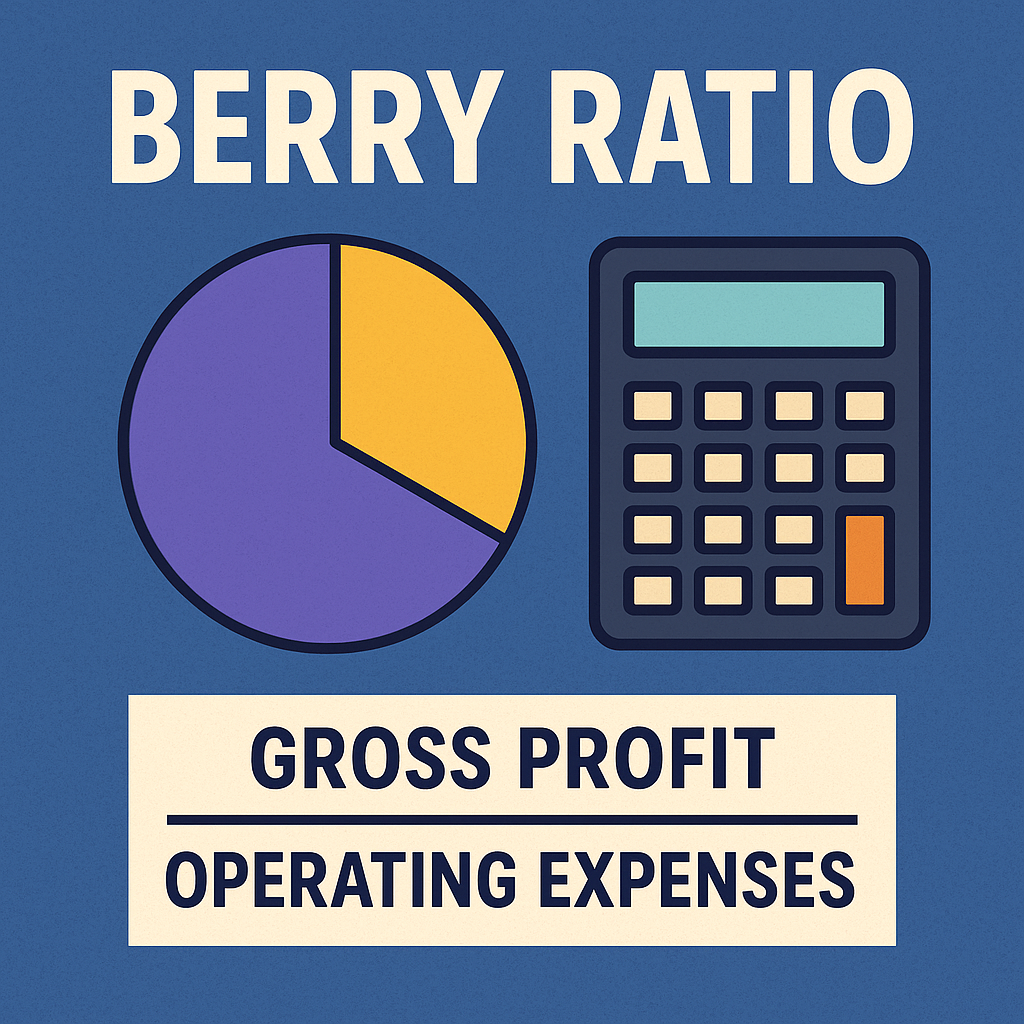
I’ve been attending classes recently as part of my journey to qualify for tax advisor accreditation. Somewhere between double taxation concepts and transfer pricing methods, something unexpected popped up in the lecture slides: the Berry Ratio.
Raffles Corporate Services works with a panel of experienced Singapore law firms who offer cost-effective and efficient legal service and advice. This article is general information only and is not legal advice.
I’ll be honest — I had never paid much attention to it before. It’s one of those things you usually hear only if you’re dealing with cross-border pricing or multinational tax planning. Definitely not something the average SME owner loses sleep over.
But the more the lecturer explained it, the more I thought:
“Wait… this is actually a really useful way to look at a business.”
So I went down a rabbit hole.
Did a deep dive.
Started modelling it against my own practice…
And suddenly the Berry Ratio made a lot of things clearer.
That’s why I’m writing this.
Because even though this ratio comes from the world of transfer pricing, it turns out to be a surprisingly powerful tool for everyday founders — especially if you run a service-based business.
What Exactly Is the Berry Ratio?
Here’s the plain-English version:
Berry Ratio = Gross Profit ÷ Operating Expenses
It answers one simple question:
“For every $1 I spend on overhead, how much gross profit comes back?”
People usually compare it with margins, so let’s do that quickly:
-
Gross profit margin tells you if your work itself is profitable.
-
Net profit margin tells you how much you keep in the end.
-
Berry Ratio tells you whether your business model can sustain itself.
It’s more of a business health indicator.
When Is the Berry Ratio Useful?
It shines especially in businesses where:
-
Your revenue depends on people
-
You don’t hold inventory
-
Software is a major cost
-
You rely on overhead (admin, marketing, tools, rent) to grow
-
Your work is recurring or project-based
Basically: accounting, agencies, consulting, IT services, corporate secretarial, legal, marketing — the whole “professional services” world.
For these businesses, the Berry Ratio reveals a lot about how healthy — or stretched — you really are.
A Simple Way to Interpret It
Here’s the quick cheat sheet:
Berry Ratio < 1.0
Gross profit can’t cover overhead → business is losing money structurally.
1.0 – 1.3
It’s working, but fragile. One slow month hurts.
1.3 – 1.6
Comfortable, sustainable, can invest in growth.
> 1.6
Healthy, scalable, and ready to take on hires or bigger marketing pushes.
A Case Study: Applying the Berry Ratio to My Own Practice
To show how this works in real life, here’s an anonymised, simplified version of my accounting unit.
(The specific numbers are smoothed out, but the economics are real.)
1. Revenue
Annual recurring revenue from accounting/bookkeeping services:
👉 $300,000
2. Direct Costs (Cost of Sales)
These are costs tied directly to delivering work.
a) Delivery team (director allocation + staff + freelancers)
Total = $108,000/year
b) SaaS (updated to 30% of revenue)
Accounting, tax, workflow, automation tools:
30% × $300,000 = $90,000/year
Total Direct Costs = $198,000
3. Gross Profit
300,000 – 198,000 = $102,000
Gross margin = 34%
This is realistic for a modern, tech-driven practice using multiple SaaS tools.
4. Operating Expenses (Reclassified Into 3 Buckets)
To keep reporting clean, I group overhead into:
A. Rent / Occupancy
(shared office repayment + utilities): $36,000/year
B. SG&A
(admin, shared marketing staff, advertising, website tools, subscriptions, misc support):
Total SG&A = $54,000/year
C. Depreciation
laptops, equipment, furniture = $3,000/year
Total Operating Expenses = $93,000/year
5. Now, the Berry Ratio
Berry Ratio = Gross Profit ÷ Operating Expenses
= 102,000 ÷ 93,000
= 1.10
At 1.10, the business is profitable, but the buffer is thin.
There isn’t much room for overhead growth without improving gross profit first.
And this is where the Berry Ratio becomes extremely useful.
What a Berry Ratio of 1.10 Tells Me
1. The business is working, but it’s fragile
Gross profit barely outpaces overhead.
A few slow months can strain cash flow.
2. I cannot comfortably add non-revenue staff yet
Another admin or marketing hire would push the ratio below 1.0 — not ideal.
3. Improve gross profit before scaling
I need to strengthen the engine before adding weight to the car.
How?
-
Increase prices slightly
-
Improve scoping and reduce over-servicing
-
Push higher-value work (advisory, SOP reviews, CFO-lite)
-
Automate repetitive bookkeeping
-
Reduce reliance on freelancers if costlier than staff
4. Fix delivery efficiency
Even small efficiency wins snowball into higher gross profit.
Think: better client onboarding, clearer COAs, cleaner monthly workflows.
5. Don’t ramp up marketing too quickly
Big jumps in ad spend (e.g., +$5k/month) would crush the ratio.
Small increases with testing are fine.
6. Reallocating my time helps
If too much of my own time sits in “delivery,” GP stays low.
Shifting toward review, advisory, and client conversations increases leverage.
7. My model can scale — after the foundation strengthens
Once the Berry Ratio moves toward 1.4 – 1.6, everything changes:
-
Hiring becomes easier
-
Cash flow becomes more predictable
-
Expansion becomes safer
-
Overhead increases feel manageable
Conclusion
The Berry Ratio may not be a mainstream business metric, but once you understand what it reveals, it becomes a clear lens for decision-making. It shows whether your gross profit engine is strong enough to support your overhead — and whether your business is truly ready to scale.
For me, modelling it against my own practice made one thing clear:
strengthen the core before growing the team or ramping up marketing.
And that’s the real value of this ratio for founders.
It cuts through gut feeling and back-of-the-napkin guesses.
It gives you one simple number that tells you whether your business is stable, scalable, or stretched.
A small, obscure tax concept — surprisingly powerful once translated into everyday business decisions.
Need help with this?
Raffles Corporate Services can handle the ACRA filings, compliance documentation and records for you, and where court proceedings or legal advice are needed, we work with a panel of experienced Singapore law firms who offer cost-effective and efficient legal service and advice.
Email: [email protected]
Call, SMS or WhatsApp: +65 8501 7133