
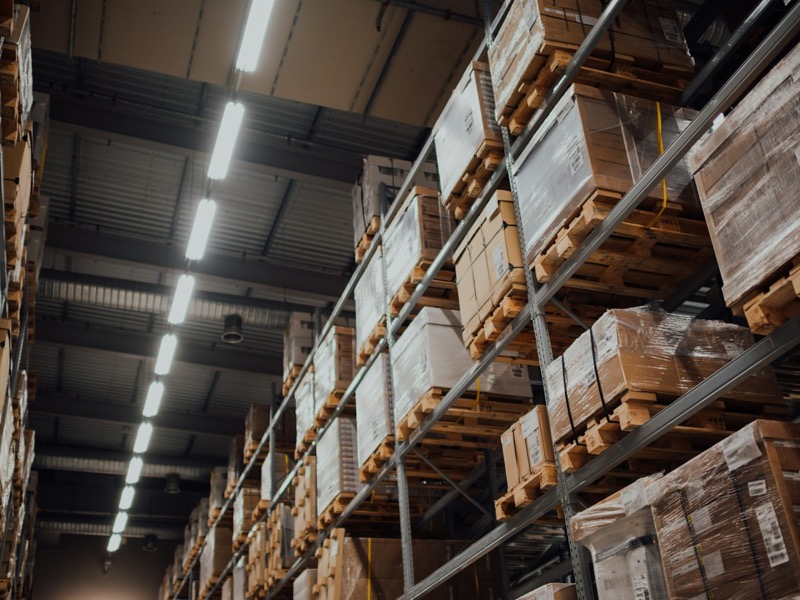
At year end, a Singapore company values its inventory at the lower of cost and net realisable value. Cost is what it took to buy the goods and bring them to their present location and condition, measured using first-in, first-out (FIFO) or weighted average cost, or specific identification for unique items. Net realisable value is what the goods will actually sell for, less the costs to complete and sell them. Where slow-moving, obsolete or damaged stock will sell for less than cost, it must be written down item by item. For tax, IRAS treats a specific provision for obsolete stock as deductible and a general provision as not deductible.
Raffles Corporate Services works with a panel of experienced Singapore law firms who offer cost-effective and efficient legal service and advice. This article is general information only and is not legal advice.
This guide picks up after the count. If you are still planning the physical count, start with our guide to the year-end stocktake, then come back to value what was counted.
Which accounting standard applies to my inventory?
Most Singapore private companies prepare financial statements under Financial Reporting Standards (FRS), where FRS 2 Inventories applies. Eligible smaller companies that choose the SFRS for Small Entities apply its section on inventories instead. Companies on SFRS(I) apply SFRS(I) 1-2. The core rule, lower of cost and net realisable value, is the same in all three. Our article on SFRS(I) and SFRS for Small Entities explains the frameworks, and the frameworks themselves are published by the Accounting Standards Committee through ACRA’s accounting standards page.
Inventory here means goods held for sale, work in progress, and materials or supplies to be used in production. It does not include equipment the company uses to run the business.
What goes into the cost of inventory?
Cost is more than the supplier’s invoice price, and less than everything the company spends. The table shows the common items.
| Include in cost | Leave out of cost (expense as incurred) |
|---|---|
| Purchase price, net of trade discounts and rebates | Abnormal wastage of materials, labour or other costs |
| Import duties and non-recoverable taxes | Storage costs, unless storage is a necessary step in production |
| Inbound freight, handling and insurance to bring goods to your warehouse | Administrative overheads that do not bring the goods to their present condition |
| For manufacturers: direct labour and a systematic share of production overheads based on normal capacity | Selling and distribution costs, including outbound delivery |
GST that a GST-registered company can claim back as input tax is not part of cost. If the company is not GST-registered, or cannot claim the GST, the GST paid becomes part of cost.
FIFO, weighted average or specific identification?
- Specific identification is required for items that are not interchangeable, such as individually built machines, artworks or made-to-order goods. Each item carries its own cost.
- FIFO assumes the oldest units are sold first, so closing stock is valued at the latest purchase prices.
- Weighted average spreads cost across all units, recalculated periodically or after each receipt.
Last-in, first-out (LIFO) is not permitted under FRS 2 or the other Singapore frameworks. Use the same formula for all inventories of a similar nature and use, and change it only if the new formula gives more reliable information, with the change accounted for and disclosed. Choose the formula your accounting system can actually run; a policy that the system cannot apply produces numbers no one can support.
How do I test net realisable value?
Net realisable value (NRV) is the estimated selling price in the ordinary course of business, less the estimated costs to complete the goods and the estimated costs to sell them. Testing it is a practical exercise, done line by line.
- Start from the count. Use the counted quantities and the condition notes from the stocktake, especially items marked damaged, expired or slow-moving.
- Age the stock. Produce an ageing report by item, showing the date of last purchase and last sale and the months of stock on hand at current sales rates.
- Find evidence of selling prices. The best evidence is actual sales after the year end, up to the date the accounts are prepared. Use clearance prices where you have already cut prices to move the goods.
- Deduct the costs to sell. Commissions, platform fees, delivery and any repacking, repair or completion costs.
- Compare with cost, item by item. Write down any item where NRV is below cost. Similar items in the same product line may be grouped, but you cannot offset a loss on one product against a profit on an unrelated one.
- Document the judgement. Keep the ageing report, the price evidence and a short note of the decision for each material line.
How do I deal with slow-moving, obsolete and damaged stock?
Many companies use an ageing policy as a starting point, for example reviewing anything with no sales in the past 12 months. That is a useful trigger for review, but the write-down itself should reflect what each item will realistically sell for. A slow-moving item that still sells at full price later in the year may need no write-down, while a fast-selling item whose replacement model has just launched may need one.
- Obsolete stock (discontinued models, superseded packaging, expired goods): write down to the expected clearance or scrap value, which may be nil.
- Damaged stock: write down to the price it can be sold at in its present condition, after repair costs. If an insurance claim is pending, account for the claim separately; do not net it against the stock value.
- Raw materials: they are not written down if the finished goods they go into are expected to sell at or above cost. If a fall in material prices shows that finished goods cost will exceed NRV, write the materials down, often to replacement cost.
- Stock to be destroyed: once a decision is made and documented, write it off. Keep the disposal record, for example a disposal certificate or photographs with the stock list.
If prices recover, or the stock sells for more than its written-down amount, the write-down is reversed in the following period, but never above original cost. Your stock records should keep both the original cost and the write-down so the reversal can be calculated.
How is a stock write-down treated for tax?
IRAS’s list of business expenses for companies places a provision for obsolete stocks that is specific, and stock obsolescence, among deductible expenses, and a general provision for obsolete stocks among non-deductible expenses. In practice:
- A write-down calculated for identified items, supported by ageing, price evidence and the NRV calculation, is generally deductible for trading stock.
- A blanket percentage of total stock, or a reserve “for contingencies” that is not tied to specific items, is a general provision. Add it back in the tax computation.
- If a write-down that was deducted is later reversed, or a general provision that was added back is later used against specific items, ask your tax agent how that year’s computation should treat it, so the same amount is not deducted twice or missed.
Keep the support with your tax computation, whichever corporate income tax form your company files, because IRAS may ask how the write-down was determined.
Example: valuing three product lines at year end
Example: A hypothetical trading company with a 31 December year end counts three product lines. It is GST-registered and recovers its input tax.
| Line | Quantity and cost | NRV evidence | Carrying amount | Write-down |
|---|---|---|---|---|
| A: current model | 1,000 units at S$20 = S$20,000 | January sales at S$30, selling costs S$2: NRV S$28 | S$20,000 | Nil |
| B: discontinued model | 500 units at S$40 = S$20,000 | Clearance price S$25, commission S$3: NRV S$22 | S$11,000 | S$9,000 |
| C: water-damaged units | 200 units at S$15 = S$3,000 | No buyer; to be scrapped | Nil | S$3,000 |
| Total | S$43,000 | S$31,000 | S$12,000 |
The director also suggests a further 5% “safety” provision on all stock. The accountant explains that it is not based on any item’s NRV, so it does not belong in the accounts under FRS 2, and it would be a general provision that is not deductible for tax. The specific S$12,000 write-down is recorded with the ageing report, the clearance price list and the scrap decision. In the following year, if 100 units of Line B sell at S$32 net, part of the write-down on those units is reversed.
Year-end inventory valuation checklist
- Signed count sheets reconciled to the stock system.
- Written inventory policy: cost formula, what is included in cost, and the ageing review trigger.
- Cost build-up for each material line, including freight and duties.
- Ageing report by item, with last sale dates.
- Evidence of selling prices after year end and of costs to sell.
- NRV calculation and write-down schedule, item by item.
- Disposal records for stock written off or destroyed.
- Insurance claim correspondence for damaged stock, kept separately.
- Tax computation note identifying specific write-downs and any general provision added back.
Frequently asked questions
Can a small company just value stock at cost and skip the NRV test?
No. Lower of cost and NRV applies under every Singapore framework, including the SFRS for Small Entities, and whether or not the company is audited. An unaudited company still has to prepare accounts that comply with the accounting standards. Our guide to audit exemption for small companies explains who must be audited.
Can we use the supplier’s latest price list instead of actual cost?
Only as a shortcut if the result approximates cost under your chosen formula. Retail businesses with many fast-moving lines sometimes use the retail method or standard costs for the same reason, but the results must be reviewed regularly against actual cost.
Is writing off stock the same as giving it away?
No. A write-down reflects a fall in value of goods the company still holds or will scrap. Taking trading stock for personal use or other non-trade purposes is a different transaction: IRAS’s e-Tax guide on appropriation of trading stock treats it as sold at open market value. Record it separately.
Do we need to tell IRAS when we write down stock?
There is no separate notification. The write-down flows through the accounts and the tax computation. Keep the evidence, because IRAS may ask for it when reviewing the return.
What if we only discover obsolete stock after the accounts are signed?
If the stock was already obsolete at the year end and the amount is material, discuss with your accountant whether the prior-year accounts need correcting. Otherwise, record the write-down in the current year.
For warranty, leave, reinstatement and other provisions, see which accounting provisions are tax deductible in Singapore.
Need help valuing your year-end inventory?
Raffles Corporate Services can maintain your inventory records in your accounting system, prepare the cost and NRV schedules and the year-end write-down entries, prepare your corporate income tax computation with specific and general provisions correctly treated, and coordinate with your auditor on stock balances. Contact us at [email protected] or on WhatsApp at +65 8501 7133.
Kevin Yeo, Raffles Corporate Services